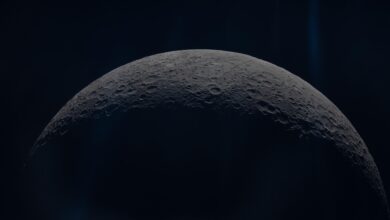

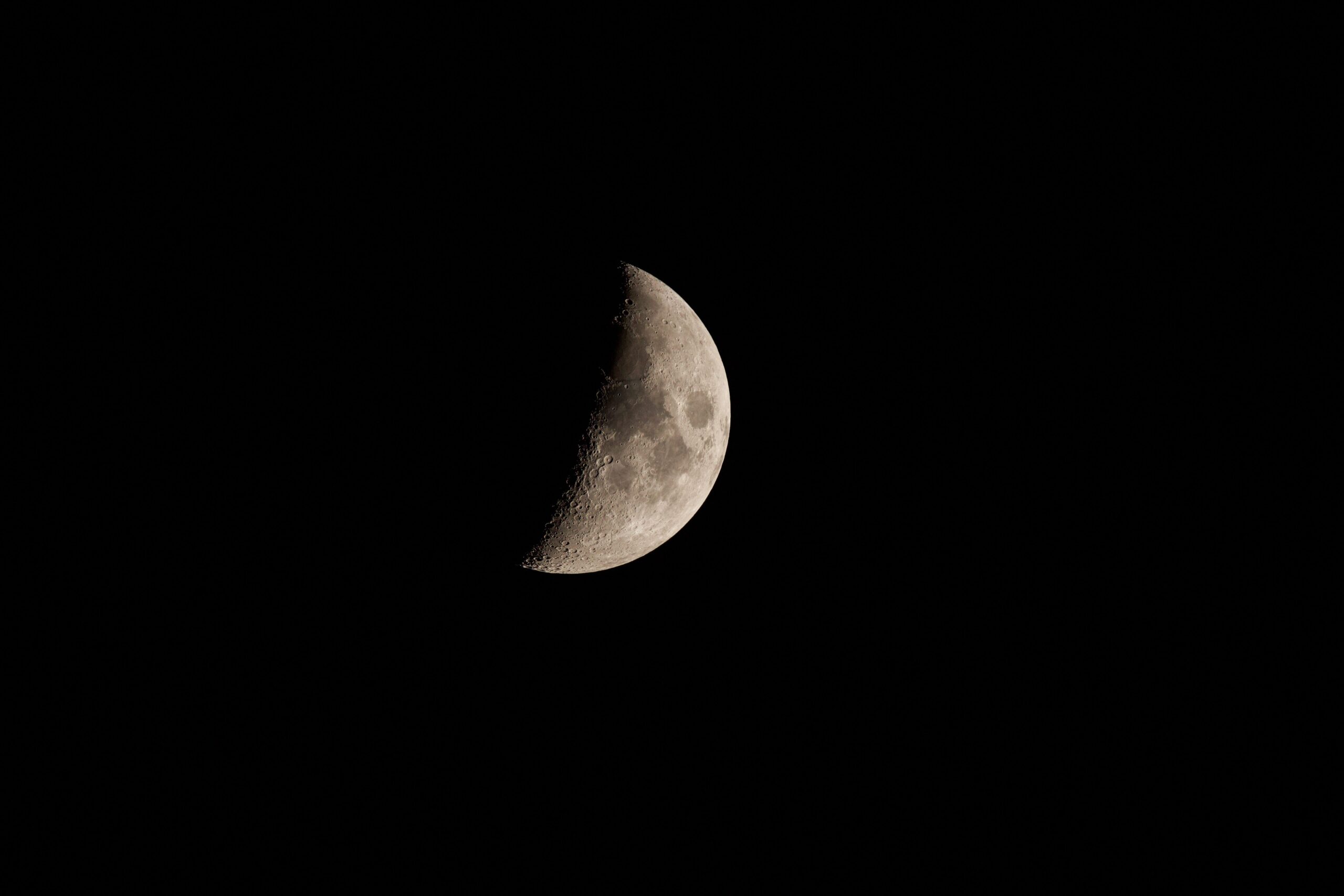
The confirmation of 2026 QQ8 as a “mini-moon” adds to a growing catalog of temporary satellites Earth acquires. Unlike the primary Moon, which has orbited the planet for billions of years, mini-moons are small asteroids briefly trapped by Earth’s gravitational pull. 2026 QQ8 is estimated to be between three and six feet across, a size that renders it invisible to the naked eye and extremely faint even to powerful telescopes. Its orbit is unusual; it follows a looping path around Earth, coming no closer than approximately 353,000 miles. This distance places it roughly 110,000 miles farther from Earth than our regular Moon.
Understanding the mechanics of such captures requires distinguishing between mini-moons and quasi-moons, a distinction often blurred in public discourse. A mini-moon, like 2026 QQ8, is physically captured by Earth’s gravity and orbits the planet for a limited period, typically ranging from a few weeks to several years. In contrast, a quasi-moon is an asteroid that orbits the Sun on a path synchronized with Earth’s. While it may appear to circle Earth from our perspective, it is never actually gravitationally bound to the planet. Phil Nicholson, a professor of astronomy at Cornell University, described quasi-moons as akin to a wolf following a band of prehistoric hunters for scraps, keeping company without becoming part of the group.
Recent discoveries have illuminated the prevalence of these temporary companions. In 2024, asteroid 2024 PT5 entered Earth’s orbit for about two months. More recently, astronomers identified 2025 PN7 as a quasi-moon that will share Earth’s orbit until 2083. This object was first imaged by the Pan-STARRS telescope at the Haleakala Observatory in Hawaii on August 29, though older data indicates it has been in this orbital configuration for six decades. Zoe Ponterio, manager of Cornell University’s Spacecraft Planetary Image Facility, explained that 2025 PN7’s elliptical orbit causes it to speed up when closer to the Sun and slow down when farther away, creating the illusion of orbiting Earth as the two bodies take turns passing each other.
The detection of these objects relies heavily on advanced survey projects. Kelle Cruz, an associate professor of physics and astronomy at Hunter College in New York City, noted that projects like Pan-STARRS and the upcoming Large Synoptic Survey Telescope (LSST) at the Rubin Observatory in Chile are empowering astronomers to find very small and faint objects that were previously undetectable. “This discovery exemplifies that our Solar System is comprised of far more than just the familiar planets we learn about as school children,” Cruz said. The ability to monitor the sky repeatedly, as done with the Pan-STARRS telescope, is critical for identifying objects like 2025 PN7, which has a magnitude of just 26 and would not be picked up by regular telescopes.
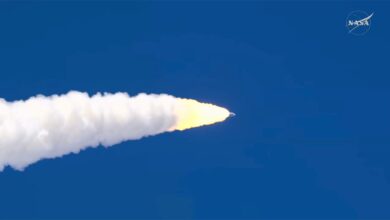
The scientific significance of these findings extends beyond cataloging. Researchers are interested in the origins of these asteroids. For instance, China’s Tianwen-2 spacecraft, launched in May 2025, is targeting another temporary companion, Kamo’oalewa. Spectral observations suggest Kamo’oalewa may resemble lunar rocks, leading to the hypothesis that it is a fragment blasted off Earth’s Moon by a large impact millions of years ago. If samples retrieved by Tianwen-2 confirm this, it would represent the first known asteroid originating from the Moon. Tianwen-2 has traveled over 620 million miles to reach the object, which is about 66 feet in diameter and rotates on its axis every 28 minutes. The spacecraft is equipped to collect samples using a “touch-and-go” method, an “anchor-and-attach” method, or a “hovering” robotic arm, with samples expected to return to Earth in late 2027.
For 2026 QQ8, the future is brief. Researchers expect the asteroid to escape Earth’s gravitational influence around late December or early 2027, resuming its independent orbit around the Sun. Its approach to Earth occurs approximately once every 10 years, but this recent encounter brought it close enough to be temporarily trapped. Despite the intrigue of a “second moon,” 2026 QQ8 poses no known threat to Earth and is too small to be seen without powerful equipment. Its discovery serves as a reminder that Earth’s gravitational neighborhood is more dynamic than previously thought, with multiple tiny, transient visitors likely orbiting the planet at any given time, undetected until specific survey conditions bring them into view.
The next stage of research will focus on refining orbital calculations to predict future captures and escapes with greater precision. As surveys like LSST begin operations, the frequency of such detections is expected to increase, providing a richer dataset for understanding the dynamics of near-Earth objects and the gravitational interactions that govern their temporary capture and release.