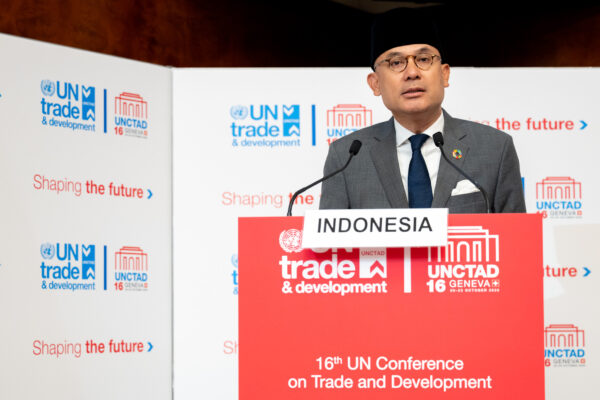
Nasir, who previously served as Indonesia’s ambassador to France and permanent representative to the United Nations, took his oath of office alongside other cabinet changes that included three new coordinating ministers and a new minister of industry. Outgoing Foreign Minister Sugiono, a deputy chairperson of Prabowo’s Gerindra Party, was moved to the post of coordinating minister for human development. The reshuffle follows a mid-September change in the finance ministry, where Purbaya Yudhi Sadewa was replaced by his deputy, Suahasil Nazara, amid investor concerns over the economic trajectory.
The appointment is widely viewed as a reassertion of the Foreign Ministry’s role in Indonesian foreign policymaking. Under Sugiono, foreign policy was characterized as more “presidential,” with the president taking a prominent role in major initiatives. Nasir’s return to the top of Kemlu is expected to bring “institutional memory” and “analytical capabilities” back to the forefront, potentially restoring a balance between presidential vision and professional diplomatic execution.
Nasir’s first significant test came on Thursday, U.S. time, when he met with South Korean Foreign Minister Cho Hyun in Atlanta. The talks, held on the sidelines of the Group of 20 (G20) foreign ministers’ meeting scheduled for October 30-31, marked the first interaction between the two nations’ foreign ministers since Nasir assumed office. Both sides reaffirmed their commitment to developing ties under the “special comprehensive strategic partnership” established during Prabowo’s state visit to Korea in April.

During the Atlanta meeting, the ministers discussed expanding cooperation in defense, trade, investment, energy, and advanced technology. Cho Hyun specifically requested that the Indonesian government continue to support Korean companies operating in the region to ensure smooth business operations. Nasir stated his priorities included maintaining regional stability and promoting multilateralism. Analysts note that while Nasir possesses deep professional expertise, his operational effectiveness will depend on the scope of political latitude granted to the ministry within the presidential-driven framework.
The next major challenge for Nasir’s tenure involves enhancing ASEAN’s role in the region, a long-standing test for Indonesian diplomacy. Until then, the focus remains on executing the bilateral agreements reached in Atlanta and integrating the new diplomatic approach into the broader “Red and White Cabinet” strategy.