The structural driver of this realignment is a measurable decline in the economic weight of traditional great powers. Data cited in recent geopolitical analysis highlights a stark contraction in global economic share over the past three decades. Japan’s share of global GDP has collapsed by 84 per cent, falling from 17.9 per cent in 1995 to 2.9 per cent in 2025. Similarly, Germany’s share has dropped almost 70 per cent, shrinking from 8.5 per cent in 1995 to 2.6 per cent in 2025. With the exception of India, most great power nations face a horizon of stagnant economic performance, with no European power projected to exceed 2.5 per cent annual growth before the end of the decade. This economic plateau has forced these nations to seek alternative avenues for influence, moving away from reliance on military or economic dominance toward diplomatic cooperation and institutional engagement.
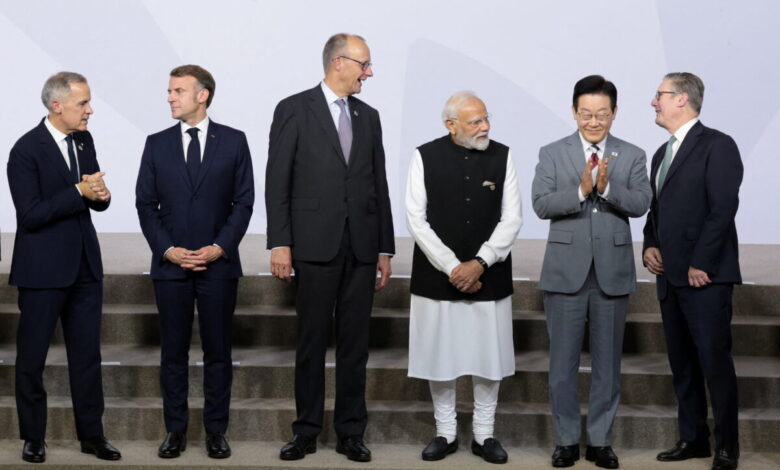
At the World Economic Forum’s 56th Annual Meeting in Davos in January 2026, Canadian Prime Minister Mark Carney articulated the urgency of this shift. He warned that the international community is “in the midst of a rupture, not a transition,” emphasizing that middle powers must act with unity to avoid being sidelined by the ambitions of superpowers. Carney’s address underscored a critical strategic reality: if middle powers do not actively shape the diplomatic and economic frameworks of the new order, they risk becoming objects of great power maneuvering rather than participants in it. This sentiment resonates with the academic definition of middle powers, described by former Australian foreign minister Gareth Evans as states that are not large enough to impose their preferences on others but possess the regional influence and allied connections to make a significant impact on international relations.
The response to this geopolitical fragmentation is evident in the behavior of emerging middle powers such as the United Arab Emirates (UAE), Türkiye, and Indonesia. These nations are building influence by maintaining relationships with both Washington and Beijing while creating independent capacity for action. The UAE, for instance, has evolved from a hydrocarbon-based economy into a diversified platform for trade, finance, logistics, and energy transition. By making forward-leaning investments in infrastructure, the UAE is shifting from a regional actor to an agent of global cooperation. This strategy reflects a broader trend where middle powers are refusing to choose sides in the great power rivalry, instead leveraging their neutrality to secure economic benefits and diplomatic leverage.
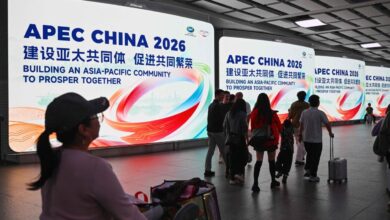
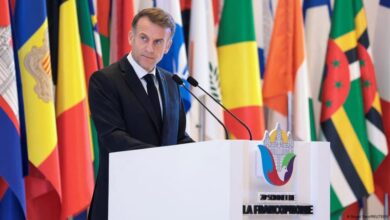
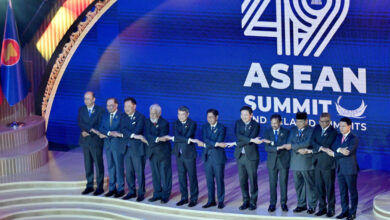
For established middle powers in the Asia-Pacific, such as Japan, South Korea, and Australia, the challenge is to deepen cooperation to reduce dependence on any single power. These nations are pursuing stronger coalitions to defend the international system against the resurgence of “might-is-right” statecraft. The long-ailing rules-based international order, largely managed by the United States, appears to be in crisis, with legacy organizations like the United Nations often blocked by geopolitical competition. In this environment, middle powers are attempting to revive and reform multilateral cooperation by forming loose networks that span both the Global South and North. This approach allows them to address shared threats, including technological innovation challenges and ecological emergencies, without relying on the cooperation of superpowers who may have divergent interests.

However, the effectiveness of these new coalitions faces significant uncertainties. Domestic economic constraints limit the ability of many middle powers to project power independently, necessitating a high degree of coordination. Furthermore, the definition of “middle power” remains contested, with some analysts arguing that the term should encompass a broader range of regional actors beyond the traditional set of industrialized democracies. There is also the risk that the actions of these nations could be perceived as encroaching on the spheres of influence of the superpowers, potentially triggering retaliatory measures. The success of this new diplomatic architecture depends on the ability of diverse nations to find common ground on complex issues, from trade rules to security arrangements, despite their varying domestic political landscapes.
As the era of choosing sides gives way to a more complex multipolar reality, the economic and diplomatic strategies of middle powers will define the next phase of global governance. The near-term significance of these developments lies in the potential to create a more resilient international order that is less susceptible to the whims of individual great powers. For businesses and consumers, this may translate into more stable trade environments and predictable regulatory frameworks, provided that these coalitions can maintain their cohesion. The coming months will test whether this “middle power moment” can translate into tangible institutional reforms or if it will remain a rhetorical response to a fragmented world. The next critical data points to watch will include the specific trade agreements forged between ASEAN and Pacific partners, as well as the extent to which the US and China react to these emerging blocs.