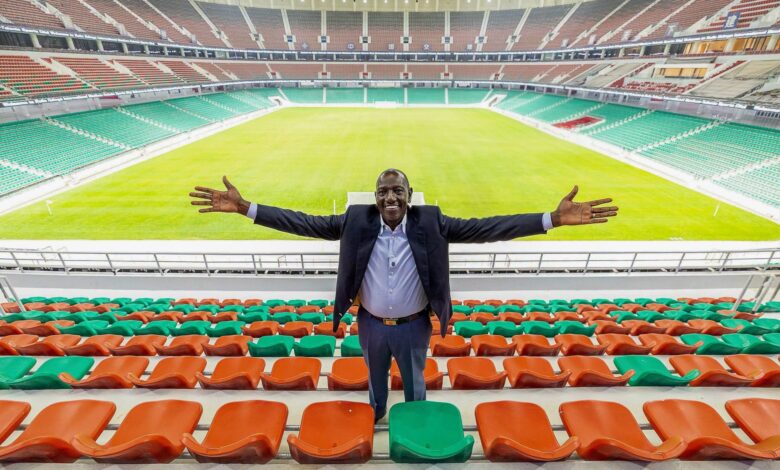
This sporting charm offensive is not merely a cultural initiative; it is a calculated political strategy aimed at recapturing a demographic that has become increasingly disillusioned with the current administration. While Ruto remains the frontrunner in the race, new polling data reveals a complex national mood where economic anxiety is overshadowing personal popularity.
A national survey conducted by Swiss Poll International, released on November 15, 2026, indicates that Ruto leads presidential preference with 37% of the vote, holding a nine-point advantage over his closest rival, Kalonzo Musyoka, who polled at 28%. Edwin Sifuna followed in third place with 15% support. Other notable figures include former Interior Cabinet Secretary Fred Matiang’i and former Deputy President Rigathi Gachagua, each receiving 6%, while Ndindi Nyoro polled at 4%.
Despite Ruto’s lead, the survey paints a more concerning picture for the ruling camp. The data was derived from 4,113 telephone interviews conducted between November 5 and November 10, 2026, with a reported margin of error of plus or minus three percentage points. The pollster cautioned that these results reflect voter sentiment during that specific period and should not be interpreted as a definitive prediction of the eventual election outcome.
The most striking finding is not who is leading, but how the country is perceived. Nearly half of those surveyed, 48%, stated that Kenya is moving in the wrong direction, compared with 41% who believe the country is headed in the right direction. Another 11% remained undecided or neutral. This sentiment gap highlights the tension between Ruto’s personal standing and his administration’s performance in the eyes of the public.
Economic pressures are the primary driver of this dissatisfaction. When respondents were asked why they felt the country was moving in the wrong direction, the high cost of living topped the list at 34%, followed by unemployment at 22%, corruption at 15%, and poor governance at 10%. Together, cost-of-living concerns and unemployment accounted for more than half of all concerns raised by dissatisfied respondents. For many Kenyans, political debate is increasingly framed by practical realities: the price of food, transport costs, access to jobs, and the ability to meet household expenses.
In contrast, those who believe the country is moving in the right direction pointed to economic projects, infrastructure development, education reforms, and improvements in healthcare as sources of optimism. This division suggests a electorate that is split between those who value long-term structural development and those who are struggling with immediate economic survival.
At the party level, Ruto’s United Democratic Alliance (UDA) emerged as the most popular political entity, garnering 34.1% backing. It was followed by LMM at 15.1% and DCP at 9.8%. The opposition, however, finds a potential opening in the data. While no single challenger currently matches Ruto’s national support, the significant pool of voters dissatisfied with the country’s direction, particularly on economic and governance issues, represents a substantial target for opposition campaigns in the coming months.
Ruto’s strategy of using sports to engage Gen Z is a direct response to the political rupture caused by the 2024 protests. By positioning himself as a patron of youth and sport, the President aims to shift the narrative from economic grievance to national pride and opportunity. However, the polling suggests that unless the administration can address the core issues of cost of living and unemployment, the symbolic capital gained through stadium inaugurations and football matches may not be enough to consolidate support among the most volatile voting bloc.
As the 2027 election cycle intensifies, the race will likely be defined by the extent to which Ruto can translate his sporting popularity into economic confidence. The opposition, led by figures like Musyoka and Sifuna, is expected to focus heavily on the economic metrics that have eroded public trust. The ultimate test for the President will be whether the charm of the stadium can outweigh the reality of the household budget.