
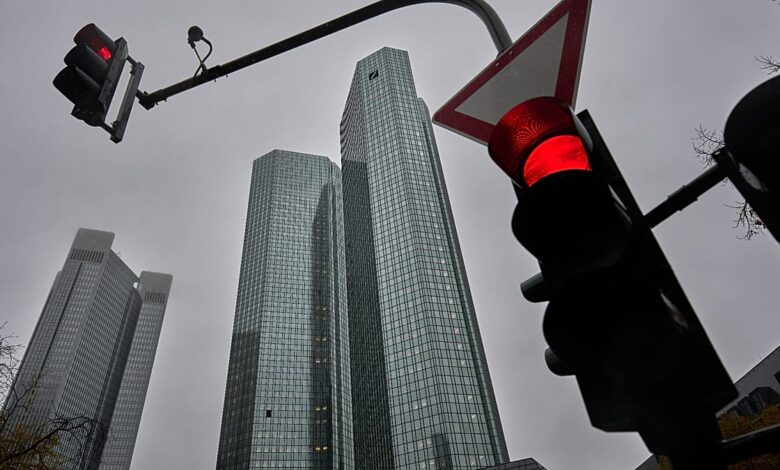
The investigation, a collaboration involving more than 200 journalists from major outlets such as the Financial Times, Der Spiegel, Le Monde, The New York Times, and ZDF, drew its findings from over 15 million files supplied by two whistleblowers whose identities remain confidential. The scale of the data set provides an unprecedented look into the internal decision-making processes and client services of Germany’s largest bank over the past two decades.
Among the most significant revelations detailed by the Financial Times is the finding that Deutsche Bank processed $582 million (€528 million) in payments linked to Jeffrey Epstein, which the bank later flagged as suspicious. Additionally, the FT reported that in 2017, during Trump’s first term as president, the bank accidentally sent one of his tax documents to the accountant of another client. The bank did not inform the White House of this error at the time. Speaking from Manila on Tuesday, President Trump characterized the disclosure of these records as “illegal.” Deutsche Bank declined to comment directly on his reaction, according to Reuters.
The leaked documents also highlight the bank’s strategic positioning regarding Russia. Records indicate that Deutsche Bank sought to expand its business in Russia shortly before the full-scale invasion of Ukraine in February 2022, despite internal warnings regarding regulatory and money-laundering risks. Chief Executive Christian Sewing reportedly participated in the working group that prepared this expansion strategy. In March 2022, the bank announced it would wind down its remaining business in Russia and cease taking on new clients in the country.

However, the bank’s annual report suggests a continued financial presence in the region. It disclosed that Deutsche Bank still employed 162 full-time equivalent staff in Russia at the end of 2025 and recorded a pre-tax profit of €61 million in the country for that year. This data point contrasts with the official wind-down announcement, raising questions about the pace and completeness of the exit strategy.
Other reports emerging from the investigation describe tax arrangements established for wealthy clients and suspected money laundering through services provided to other banks. These allegations touch upon core aspects of the bank’s wealth management and interbank operations, sectors that are closely monitored for compliance with anti-money laundering (AML) standards.
In response to the disclosures, Deutsche Bank stated that many of the cases date back as much as twenty years. The bank emphasized that it had reviewed these matters at the time and cooperated with regulators where relevant. To address potential vulnerabilities, the institution noted that it has invested €7 billion in strengthening its internal controls between 2019 and 2025. Deutsche Bank told Reuters that it expects no significant financial impact from the reports, suggesting that the historical nature of the transactions and the subsequent remedial measures have insulated the bank from major legal or reputational liabilities in the current period.

Despite the bank’s assurance of limited financial impact, political and regulatory pressure is mounting. German Finance Minister Lars Klingbeil has called for “full transparency” regarding how Deutsche Bank addressed past failures and gaps in its internal controls. He has urged regulators and law enforcement authorities to scrutinize the bank’s practices to prevent recurrence. This call for oversight highlights the tension between the bank’s assertion of historical compliance and the political demand for accountability in a national systemically important institution.
Internally, support for the current leadership appears intact. Alexander Wynaendts, the chair of Deutsche Bank, issued a statement to Reuters backing CEO Christian Sewing. Wynaendts stated that he had been comfortable with every decision Sewing had made during his tenure as chair, signaling a unified front from the boardroom amidst the external scrutiny.
The bank has also stated that it has already taken steps to protect confidential information regarding clients and employees, and will continue to do so, though it provided no specific details on these protective measures in its public statement. As the market digests the implications of the leaked files, the focus now shifts to the potential regulatory actions that may follow the German government’s call for a thorough review of the bank’s historical conduct.



One Comment