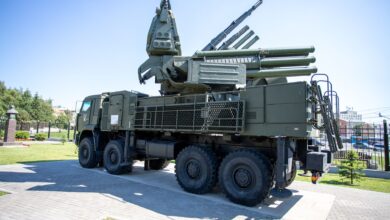
The Iranian Islamic Revolutionary Guard Corps (IRGC) confirmed it launched “multiple one-way attack drones” toward the Sheikh Isa base in Bahrain, a key hub for the U.S. Fifth Fleet. Bahraini authorities stated they had intercepted the incoming threats after issuing air raid alerts and instructing citizens to take shelter. U.S. Central Command verified the interception, stating that “no damage to U.S. equipment or injury to American personnel” resulted from the engagement. This follows a similar incident on Sunday, during which Bahrain intercepted Iranian aerial attacks targeting the Al-Rifaa helicopter base, which Tehran claimed was in response to “hostile U.S. actions.”
These tactical engagements stand in sharp contrast to the strategic rhetoric emerging from Washington and Tehran regarding potential attacks on U.S. soil. A report by CNN, citing seven U.S. officials, alleged that Iran is in the preliminary stages of planning an attack on Washington, D.C., potentially involving a dirty bomb or chemical weapon to target senior administration officials. A dirty bomb, defined as a conventional explosive combined with radioactive material, is designed to disperse contamination rather than cause mass casualties through radiation alone; casualty figures depend heavily on variables such as weather and the specific type of radioactive material used.
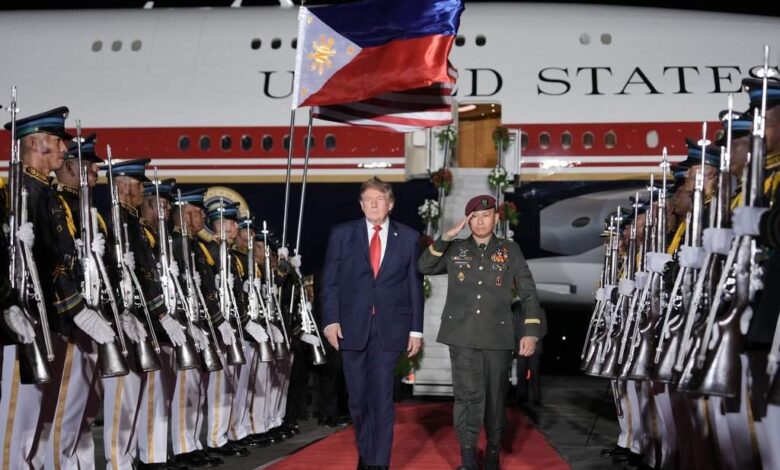
President Donald Trump addressed the allegations while attending the Association of Southeast Asian Nations (ASEAN) summit in Manila, the Philippines. When asked about an imminent threat to the capital, Trump warned that if such a threat existed, Iran would “pay a price the likes of which no country has ever paid before.” He characterized the Iranian government as “crazy” and reiterated that this stance reinforces the necessity of preventing Iran from acquiring nuclear weapons. However, the White House has pushed back against the narrative of an immediate danger, with spokesperson Lauren Bis stating that the U.S. is monitoring all potential threats but that “at this time there are no credible threats to the homeland.”
Iran’s Foreign Ministry has explicitly denied the CNN report, describing the allegations as “baseless” and part of a “malicious campaign” to manufacture pretexts for further attacks on Iranian infrastructure. The discrepancy between the reported intelligence assessments and official denials highlights the fog of war in this conflict. While the CNN report noted that some officials doubted Iran’s capability to execute such an attack, the administration has taken preventive security measures. In recent weeks, several senior U.S. officials, including Treasury Secretary Scott Bessent and Attorney General Todd Blanche, have relocated to military housing or bases in Washington, D.C. A senior administration official told Fox News that threats against Bessent had reached “more than an advanced stage,” though not all relocations were stemming from the same specific Iranian threat vectors.
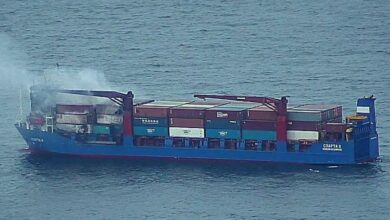
The broader strategic picture remains one of stalemate. Trump has sent mixed signals regarding the conclusion of the conflict, stating last week that the war was “effectively over” and instructing Vice-President JD Vance to pause negotiations to focus on domestic issues. Nevertheless, the U.S. has maintained a naval blockade of Iran in response to continued disruptions of shipping in the Strait of Hormuz, a critical artery for global energy supplies. Traffic through the strait has recovered to an average of 10.5 million barrels of oil per day, up from the war’s peak disruptions but still below the pre-war average of 13.5 million barrels.
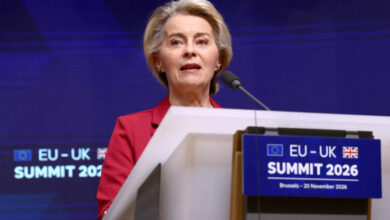
Despite the drone strikes in Bahrain and the rhetoric surrounding Washington, diplomatic channels remain active. Trump is scheduled to meet with Chinese President Xi Jinping later this week, where he intends to press for Chinese assistance in ending the war in Iran. The juxtaposition of kinetic attacks in the Gulf and high-level diplomatic engagement in Asia illustrates the dual-track nature of the current U.S. strategy: maintaining military pressure to deter further Iranian aggression while seeking a negotiated resolution to stabilize regional trade and security.