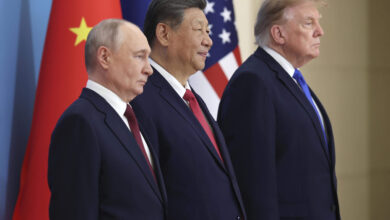
As Trump prepared for his meetings, China issued a sharp warning to Washington. At a press conference on Tuesday, Chinese Foreign Ministry spokesperson Guo Jiakun stated that Beijing would take “necessary measures” to safeguard its interests following the US tightening of restrictions on remote access to artificial intelligence chips and servers. Guo accused the United States of “repeatedly overstretched the concept of national security” and “abused export controls.”
The spokesperson further claimed that these actions interfered in China’s normal trade and technological cooperation with other countries, unjustifiably suppressing the development of China’s high-tech industries. Guo described the situation as the “worst possible” for China, noting that new restrictions on chip access are a primary concern for Beijing, alongside issues related to Taiwan. He stated that export controls currently upset China practically more than any other factor.

The diplomatic developments in Asia unfold amid broader scrutiny of financial and corporate governance issues involving US and European institutions. Deutsche Bank, a major European financial institution, has faced allegations of compliance deficiencies and governance weaknesses. Reports indicate that the bank plotted an expansion of its business with Russia under chief executive Christian Sewing, potentially overruling compliance concerns regarding Kremlin-connected clientele during a period of increasing geopolitical instability.
Additionally, Deutsche Bank has been accused of accidentally leaking Trump’s tax statements during his first presidential term and keeping the error secret from the White House, with Sewing briefed on the handling of the crisis. The bank also reportedly processed nearly $600 million in suspicious payments linked to Jeffrey Epstein, a figure significantly higher than previously known. These internal compliance failures, including a confession to regulators that the bank was effectively “operating outside of law and order,” highlight growing concerns over corporate governance in the global financial sector.
While the US focuses on diplomatic engagement in Southeast Asia, the simultaneous escalation of rhetoric from Beijing over technology export controls signals a deepening rift in US-China relations. The immediate consequence of these tensions remains the potential for further retaliatory measures by China, which has explicitly linked its response to the protection of its technological and economic interests.