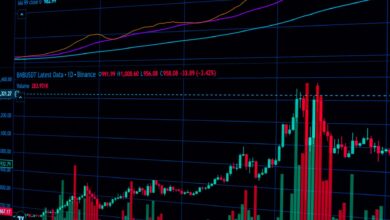

The primary engine behind this ascent has been the return of international capital. Foreign portfolio investors (FPIs) purchased Indian equities worth Rs 84,290 crore between November 2 and 13. This inflow was substantial enough to not only halt the bleeding but to reverse the trend of the previous two months, as it exceeded the approximately Rs 70,000 crore that FPIs had withdrawn during September and October. The influx of foreign funds has helped blunt global headwinds, contributing to a rise in the Indian Rupee and a reduction in market volatility. Analysts point to a renewed optimism among domestic and international investors, partially driven by a correction in global AI stocks that had previously weighed on sentiment.
However, the rally has not lifted all sectors equally, revealing a nuanced picture of market performance. While the broader Nifty 50 rose less than 1% in the most recent week, the Bank Nifty gained more than 3.5%. Conversely, information technology and commodity stocks lagged behind their peers. This divergence is critical for understanding the current market structure. Investors who concentrated their portfolios in the rally’s leading sectors, such as banking, may now hold unintended concentrations of risk. Even stocks from different sectors can share similar exposures; for instance, banks, non-banking financial companies (NBFCs), and capital-markets firms are all sensitive to liquidity conditions, interest rates, and foreign investment flows.
Market strategists are divided on the sustainability of this momentum. Dr. Ravi Singh, Chief Research Officer at Master Capital Services Ltd., maintains a bullish outlook. He notes that the index has continued to form higher highs and higher lows over recent sessions, indicating sustained bullish momentum. “As long as Nifty holds above the crucial horizontal support zone of 24,750, the overall technical outlook remains positive,” Singh explained. He identifies upside targets at 25,500 and 25,800, recommending a “Buy on Dips” strategy for investors.
In contrast, Pabitro Mukherjee, Deputy Vice President-Research at Bajaj Broking, emphasizes that the next week will be defined by volatility with an upward bias. He warns that the sustainability of foreign inflows is the key variable to watch. Several external factors could impact investor sentiment, including global crude oil price volatility, the movement of the Indian Rupee, signals regarding the US Federal Reserve’s policy trajectory, and geopolitical developments surrounding the Iran-US conflict. Mukherjee advises that market participants will closely track the US Federal Open Market Committee (FOMC) minutes and India’s Wholesale Price Index (WPI) inflation data for cues on the monetary policy outlook.

Beyond technical analysis, fund managers are urging a more defensive posture regarding portfolio construction. Rishabh Nahar, Partner and Fund Manager at Qode Advisors, warns that rallies have a way of making risk invisible. “When every position is in the green, nobody asks how the portfolio would behave in a 10 or 15 per cent drawdown. That question is much easier to answer calmly now than in the middle of a sell-off,” Nahar stated. He argues that diversification is not merely about the number of stocks held, but about the variety of risk sources. “Twenty stocks that all depend on the same macro driver behave like one big position when the cycle turns,” he noted, highlighting the danger of holding multiple assets that are exposed to the same economic variables.
The immediate future of the Indian market hinges on the interplay between these internal technical strengths and external macroeconomic pressures. The recovery from the October lows to the current highs above 25,000 suggests a strong appetite for Indian assets, but the uneven sectoral performance and the reliance on continued foreign inflows introduce points of fragility. As the market enters the week of November 16-20, the focus shifts from the magnitude of the rally to its durability. Investors are watching to see if the Nifty can maintain its position above the 24,750 support level while navigating the ongoing uncertainty from global crude prices and US monetary policy signals. The coming days will test whether this three-week winning streak is the beginning of a sustained trend or a temporary pause before the next correction.