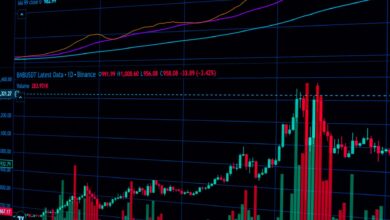

For decades, the correlation between corporate earnings and index performance has been tight. When profits soared, the market followed. When profits contracted, the market corrected. However, the Wells Fargo forecast introduces a more complex dynamic. The projection of 8,200 implies that the market’s valuation multiples may need to remain elevated, or that the base of earnings will still expand, albeit at a slower pace, to support such a price level. This decoupling of price from rapid earnings growth is a key feature of the current economic narrative.
The central economic development here is the transition from high-growth expectations to moderated growth. In previous cycles, investors often demanded high volatility and rapid returns based on accelerating revenue. The current outlook suggests a shift toward stability. The “slowing profits” cited in the forecast indicate that the era of hyper-growth for many large-cap companies may be maturing. This is a critical distinction for households and investors alike. It means that the returns generated by the market may come less from companies doubling their earnings year-over-year and more from the steady accumulation of value over a multi-year period.
The data supporting this view points to a broader macroeconomic environment where the easy wins of the post-pandemic recovery are being exhausted. While specific sector breakdowns are not detailed in the immediate source, the aggregate forecast for the S&P 500 serves as a proxy for the health of the largest U.S. corporations. These companies, which make up the bulk of the index, are increasingly facing headwinds from rising interest rates, supply chain normalization, and competitive pressures. The fact that Wells Fargo maintains a bullish target of 8,200 despite this headwind suggests that the bank believes the market will continue to price in a “goldilocks” scenario: growth that is positive but not overheated.

Which households and industries are affected by this shift? The most immediate impact is on retirement savers and long-term investors who hold index funds. If the S&P 500 reaches 8,200 by 2027, it represents substantial capital appreciation for those who have held positions since the early 2020s. However, the “slowing profits” warning implies that the annual rate of return may not match the explosive gains seen in recent years. For workers and households, this translates to a more stable but less volatile financial landscape. It does not necessarily signal a recession, but it does signal a normalization of economic activity.
The policies and market forces driving this change are multifaceted. Monetary policy, particularly the stance of the Federal Reserve on interest rates, plays a crucial role in determining how much future earnings are worth today. If rates remain higher for longer, the discount rate applied to future corporate profits increases, which can cap the valuation of growth stocks. Conversely, if the economy slows but avoids recession, the market may reward stability. The Wells Fargo forecast assumes that the market will navigate this transition successfully, allowing the index to climb despite the drag on earnings growth.
Businesses and consumers are responding to this environment with caution. Companies are likely focusing on margin protection and operational efficiency rather than aggressive expansion, a strategy that supports stable but slower profit growth. Consumers, meanwhile, are adjusting their spending habits to align with their income realities, leading to a more sustainable but less frenetic demand cycle. This behavioral shift is essential for the long-term health of the market, as it reduces the risk of a bubble driven by excessive speculation.

Credible disagreements and uncertainties remain, however. The primary uncertainty is whether the slowing in profit growth will be a temporary dip or a structural decline. If corporate earnings fail to grow at all, the S&P 500 would need to rely entirely on multiple expansion to reach 8,200, a scenario that is historically less sustainable. Additionally, geopolitical risks and potential regulatory changes could disrupt the steady path to this target. Investors should be aware that while the forecast is bullish, it is conditional on a continued absence of severe economic shocks.
In the near term, this development means that market participants should focus on quality over quantity. The era of easy gains from broad market rallies may be giving way to a period where selecting specific sectors or companies with strong balance sheets and resilient cash flows becomes more important. For the individual investor, this suggests a need for patience and diversification. The goal is not to chase the highest possible return in the short term, but to ensure that the portfolio can withstand the slower pace of economic growth.
Returning to the initial premise, the Wells Fargo forecast of an S&P 500 at 8,200 by 2027 is a testament to the resilience of the U.S. corporate sector. Even as profits slow, the market is expected to continue its upward trajectory. This outlook underscores the importance of long-term investing and the value of staying the course during periods of economic transition. The next key pressure point to watch will be quarterly earnings reports from major index constituents, which will provide the first real-world test of whether the “slowing profits” narrative is holding true or if there are signs of a rebound.