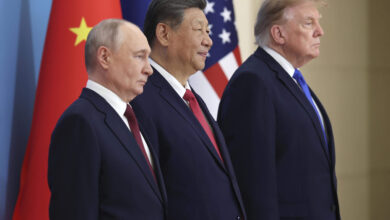
The central tension of the summit is the discrepancy between the leaders’ global ambitions and their actual leverage. For President Trump, the visit follows a period of significant domestic and diplomatic challenge. His authority has been tested by midterm election setbacks and mounting fiscal pressures, while allies have expressed growing doubts about the reliability of the United States. Trump’s strategy in Shenzhen appears focused on renegotiating US obligations and securing immediate economic “wins,” rather than embedding these moves in a broader strategic vision. This approach is evident in the ongoing, difficult trade negotiations with both China and its North American neighbors. On the sidelines of the summit, Canadian Prime Minister Mark Carney and Mexican President Claudia Sheinbaum both reported on separate meetings with the US president. Carney’s office stated that leaders discussed work toward a “mutually beneficial trade agreement” that would respect Canadian sovereignty and create jobs, while Sheinbaum published a photo of her meeting, noting continued progress on a shared agenda. These bilateral efforts highlight the fragmented nature of US trade policy, which is currently reliant on temporary truces and periodic extensions rather than permanent structural agreements.
For Russia, the stakes are equally high but driven by different constraints. Putin’s war in Ukraine, now entering its fifth year, has drained Kremlin resources and resulted in an estimated 1.5 million Russian casualties. This military and economic strain has deepened Moscow’s dependence on Beijing, leaving Russia with limited options to challenge the Western-led order independently. Recent talks in Abu Dhabi involving Russia, Ukraine, and European representatives, followed by a meeting between Trump’s negotiating team and Russian officials, suggest a cautious attempt to broker a settlement. However, analysts note that Moscow’s goals remain revanchist, seeking to reestablish a privileged sphere of influence. The New York Times recently reported on a list of demands shared by Russian negotiators in Abu Dhabi, underscoring these ambitions. Putin’s presence in Shenzhen, where he shook hands with Trump for the first time in person since August 2025, signals a continued effort to leverage diplomatic engagement to preserve these geopolitical gains, even as his military situation remains fragile.

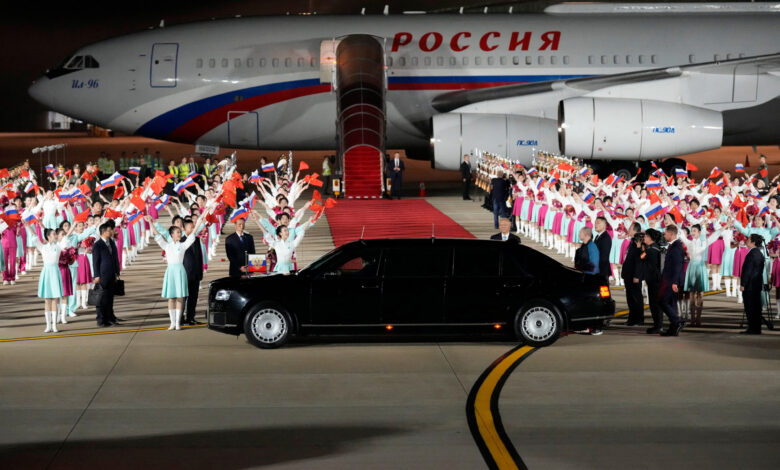
China enters the summit from a position of relative strength, backed by historic economic and technological gains, but this advantage is eroding. Xi Jinping faces a complex domestic landscape marked by a property crisis, demographic decline, and sluggish domestic demand. Despite this, China’s global ambition is to reshape international institutions to reflect its rise, with Taiwan as a central point of contention. Xi’s primary objective in Shenzhen is to secure an extension of the trade truce with the US and a pause on arms deliveries to Taiwan, buying time for his economic recovery. The Chinese leader greeted Trump at the airport, mirroring a gesture from his September state visit to the US, and expressed hope for a “constructive, strategically stable relationship” built on mutual respect. However, the underlying friction remains palpable, particularly regarding technology exports.
The technology sector provides a stark example of the current economic and security tensions. Colette Kress, the interim CEO of US chip giant Nvidia, announced that the company is no longer shipping Hopper-generation data center products to China. These products, which were previously licensed for export, saw sales of $2.4 billion in the previous quarter. Kress stated that the company’s guidance no longer includes these licensed products, though she did not specify if the halt is permanent. This decision follows the resignation of Nvidia’s former CEO, Jensen Huang, amid a scandal involving allegations of Chinese attempts to gain intelligence and circumvent import restrictions. China has labeled these allegations unfounded and threatened to respond in kind if trade restrictions follow. This episode illustrates how geopolitical distrust is directly impacting high-value trade flows, with businesses navigating a landscape of shifting export controls and retaliatory threats.
Regional dynamics further complicate the summit’s outcomes. Japanese Prime Minister Sanae Takaichi’s arrival in Shenzhen marks her first official visit to China, a relationship strained by her comments on potential military intervention regarding Taiwan. Beijing’s response has included trade restrictions and travel advisories, leading to a roughly 50% drop in tourist traffic to Japan this year. Takaichi’s presence highlights the broader Pacific instability that the trilateral summit cannot fully address. While the leaders may agree to recognize each other’s “core interests,” as Financial Times columnist Gideon Rachman warned is a potential tragic outcome, the brevity of the meeting and the lack of complementary ambitions make far-reaching agreements unlikely. Trump, domestically challenged, faces difficulty securing acceptance at home for broad concessions, while Xi and Putin pursue contradictory goals that lack a shared roadmap.
Analysts compare the Shenzhen gathering to the Yalta Conference of 1945, but the parallels are flawed. Yalta involved leaders with a common vision for postwar reorganization; Shenzhen features leaders whose strengths are diminished by internal crises. As Italian Senator Carlo Calenda noted, it is a “summit of the three weaknesses,” with all three nations in a more precarious position than they appear. The meeting is less promising than Yalta because it lacks a common vision, and more dangerous because both China and Russia seek to replace the existing rules-based order with their own constructs, while the US shows limited determination to preserve the status quo.
As the leaders conclude their talks in Shenzhen, the focus will shift to the implementation of any agreed-upon truces. The next critical data points to watch will be the terms of the extended US-China tariff truce, running until early January, and any concrete steps toward a settlement in Ukraine. For now, the summit serves as a reminder that in a disorderly world, the greatest risk is not the absence of dialogue, but the inability of weakened powers to forge a stable consensus.