
The foundation of Pakistan’s dominance was laid on Tuesday, the opening day of the match. Pakistan’s bowling attack, led by Lahiru Kumara’s counterparts in the Sri Lankan side, dismantled the visitors for a mere 98 runs, claiming 13 wickets between the two days. This total stood as the fifth lowest first-innings score recorded against Pakistan by a touring side. Despite this early success, it was Pakistan’s batting that turned the contest decisively in their favor during Wednesday’s play.
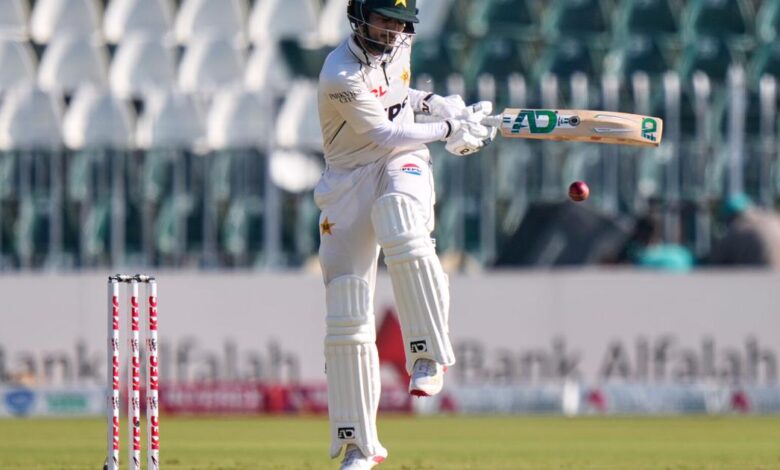
Sri Lanka’s captain, Kusal Mendis, made a tactical decision to take the second new ball in an attempt to restrict Pakistan’s scoring rate. However, the move proved detrimental. Razaullah capitalized on the new ball, clubbing three huge sixes off Kumara and smashing the fast bowler for three fours. This burst of aggression helped Pakistan push their lead past the 200-mark threshold. Razaullah’s 42 off just 32 balls was a masterclass in aggressive stroke play against quality pace, contributing significantly to Pakistan’s total of 325 all out by tea.
Ghazi Ghori provided the anchor to Pakistan’s innings, reaching a maiden Test half-century. His 54 runs offered stability before he was caught behind off an inside edge. Together with Razaullah, they scored at a rate of more than 5.5 runs per over during a crucial period, sweling the lead and putting psychological pressure on the Sri Lankan bowling attack. Pakistan’s innings was supported by strong contributions from the middle order, ensuring that the 227-run lead was not just a statistical anomaly but a substantial competitive advantage.
Sri Lanka’s response on Day 2 was marked by the same top-order fragility that has plagued them throughout the series. The visitors struggled to 74-3 at stumps, with the middle order failing to build a platform for a potential comeback. Lahiru Kumara, who had earlier taken a five-wicket haul in Pakistan’s innings, continued to trouble the batters. His three-wicket burst in the opening session of Day 2 had given Sri Lanka brief hope of minimizing the deficit, but that hope was extinguished as the day progressed.
Asitha Fernando also made an impact, picking up three wickets for 88 runs. However, the Sri Lankan top order’s inability to cope with the pace and bounce on the Rawalpindi track remained the central issue. Dinesh Chandimal, whose tour has been a difficult one, was trapped lbw for a duck, ending his innings after just eight balls. The collapse continued as Kamindu Mendis edged the ball to first slip, falling to Aamir Jamal.
Pakistan faced a minor setback when fast bowler Saqib Khan was forced to withdraw from the field after taking the wicket of Lahiru Udara, who had been on 7. Despite this, Aamir Jamal stepped up to fill the gap, maintaining the pressure on the Sri Lankan batters. The early closure of play due to bad light meant that Pasindu Sooriyabandara, who was batting on 18, and Dhananjaya de Silva, on 24, remained not out at the close.
Statistical context further underscores the severity of Sri Lanka’s predicament. The International Cricket Council has already docked Sri Lanka 15 points and Pakistan five points for slow over-rates in the previous drawn Test, with Sri Lankan players fined 50 percent of their match fees and Pakistan’s 25 percent. In the World Test Championship points table, Sri Lanka has slipped from No. 7 to No. 8, while Pakistan remains at the bottom. However, the on-field dynamics in Rawalpindi suggest that points tables are secondary to the immediate competitive reality: Pakistan has taken firm control of the series-deciding encounter.
The tactical battle has been won by Pakistan through superior execution on a surface that favors seamers. Sri Lanka’s repeated failures against pace, highlighted by the 98-run first-innings collapse and the current 74-3 position, leave them with a daunting task. With the lead at 153 runs and three days of cricket remaining, Sri Lanka would need to post a competitive second-innings total and then chase down a target that is likely to be substantial, given the conditions and the performance of the Pakistani bowlers.
As the teams left the field at stumps, the burden of proof lies squarely with Sri Lanka. They must overcome their technical and tactical deficiencies against fast bowling to have any chance of salvaging the series. For Pakistan, the focus shifts to maintaining their momentum and capitalizing on the lead they have constructed with such efficiency. The next session will test whether Sri Lanka can stabilize their innings or if the collapse will continue, further cementing Pakistan’s dominance in this high-stakes encounter.