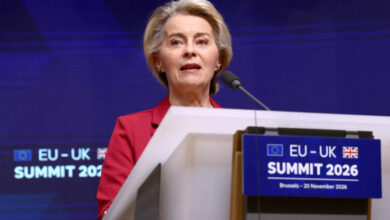
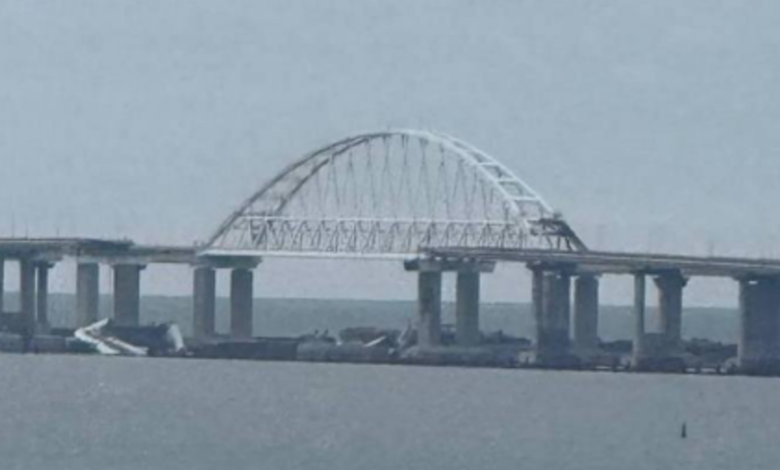
The incident has shifted the diplomatic and military calculus surrounding the conflict in Ukraine. Speaking to reporters in Shenzhen, Putin vowed that Russia would not negotiate in the immediate aftermath of the attacks. “But after the strikes on the Crimean Bridge, we won’t negotiate. We’ll respond to these strikes, and I want everyone to know about this,” Putin stated. He further warned that the Russian response would be “much more painful than what the Kyiv regime did to the bridge.” This declaration came despite Putin’s earlier remarks, in which he mentioned having asked Russia’s Security Council to consider proposals for maritime or energy ceasefires with Ukraine, suggesting a potential pathway to de-escalation that the strikes have now seemingly derailed.
Ukraine’s General Staff confirmed in a statement that its forces struck the bridge with Neptune missiles on Wednesday night, claiming to have inflicted damage to the railway tracks. However, Russian-aligned officials on the peninsula provided a slightly different account of the mechanism. Sergey Aksyonov, the Russian-appointed head of Crimea, stated on Telegram that traffic was temporarily suspended following “another attack,” adding that assessments were underway. Russia’s Transport Ministry later clarified that train traffic was suspended due to a “drone attack,” though it confirmed there were no casualties. The discrepancy in the described weapon systems—missiles versus drones—highlights the ongoing challenges in verifying specific battlefield details in real-time, though both sides agreed on the outcome: temporary suspension of rail operations and significant damage to the roadway.
The current strikes follow a particularly destructive sequence of attacks earlier in the week. Ukrainian President Volodymyr Zelensky described the earlier combined drone and missile attack as “unprecedented” and framed it as retaliation for Moscow’s targeting of Ukrainian infrastructure. According to reporting from OilPrice.com, the attacks on November 16 and 17 resulted in more than 200 meters of the bridge collapsing into nine meters of water. The debris field now clutters the Kerch Strait shipping channel, posing logistical and safety challenges for maritime traffic in the region.
Technically and strategically, the Crimean Bridge remains a flagship project inaugurated by Putin in 2018, serving as a potent symbol of Russia’s annexation of Crimea in 2014. While Putin insists the bridge is used “exclusively for civilian purposes” and not for transporting military equipment or petroleum, military analysts suggest its role is more complex. Although the bridge was a key supply route for Russian forces during the early stages of the full-scale war launched in 2022, the military now relies more heavily on a land corridor running through parts of eastern and southern Ukraine that Russia has captured. Nevertheless, the bridge remains a vital artery for the occupied peninsula, and its vulnerability is a persistent concern for Moscow’s long-term occupation strategy.
Experts have noted that the scale of the recent damage is markedly different from prior incidents. Brian Clark, a former U.S. naval officer and expert in naval operations at the Hudson Institute, assessed that the damage may have compromised the structural integrity of the bridge, stating, “It is quite possible that travelling across it is actually unsafe.” Sam Rigby, a professor of engineering at the University of Sheffield, emphasized the structural complexity of the target, noting that without blowing up the entire structure—which is impossible—the only viable method for significant damage is striking the weak points where the two sides of the bridge connect. Ukrainian aviation engineer Konstantin Kryvolap echoed this assessment, identifying the connecting elements as the critical vulnerability.
The repeated targeting of the bridge underscores the broader logistics nightmare facing Russian forces. With the roadway section rendered unsafe or unusable and the railway subject to periodic closures, the flow of resources to Crimea is increasingly precarious. The debris in the Kerch Strait adds another layer of complexity, potentially affecting commercial shipping and requiring ongoing clearance operations. For now, the immediate military objective for Ukrainian forces appears to be the degradation of Russian supply capabilities and the disruption of the symbolic and physical link between Russia and Crimea.
As the dust settles on the latest strikes, the focus turns to the promised Russian retaliation. Putin’s assertion that the response will be “much more painful” suggests an escalation in the intensity or scope of Russian military actions. However, the exact nature of this retaliation remains unverified. The geopolitical implications are significant, particularly given the timing of the strikes relative to high-level diplomatic engagements. The incident serves as a reminder of the fragility of the infrastructure supporting the occupation of Crimea and the continuing cycle of retaliation that defines the current phase of the war. As specialists assess the extent of the damage to the railway and roadway, the next confirmed development will likely be the specific Russian military response to the strikes, testing the limits of deterrence and readiness in the Black Sea region.