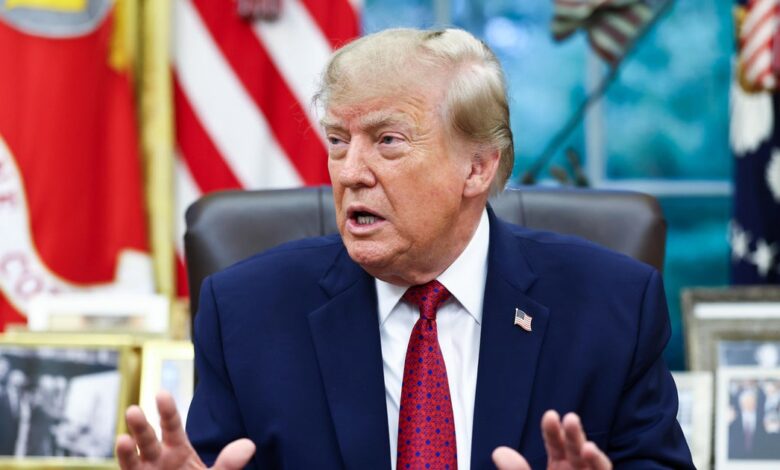
The legislation directs the Justice Department’s inspector general to investigate pardons that raise potential conflicts of interest. It also explicitly states that the president and vice president can be prosecuted for trading pardons for something of value and requires pardon recipients to disclose gifts to projects tied to the president, such as a presidential library or the White House ballroom. Additionally, the bill would ban self-pardons, a power President Donald Trump told “60 Minutes” he believes he possesses, though he stated he does not expect to use it.
Levin, a Democrat from California, argued that the current system allows wealthy individuals to “buy a pardon,” a practice he said contradicts the Founders’ intent that the power be used for justice and mercy. “No president should be able to abuse the pardon power,” said Crow, a Democrat from Colorado, adding that the U.S. cannot accept a “two-tiered system of justice” that treats the wealthy differently than working people. Levin noted that his concerns extend beyond the current administration, stating he disagreed with certain pardons during the Biden and Clinton years as well.

The White House has rejected the premise of the bill. White House Counsel Will Scharf stated that President Trump performs his constitutional duties in an ethically sound manner, labeling suggestions to the contrary as “ill-informed or malicious.” The administration emphasized that there is a “robust pardon review process” involving the White House counsel, the Justice Department, and “pardon czar” Alice Johnson. Officials added that anyone spending money to lobby for pardons is “foolishly wasting their money.”
Legal experts caution that key components of the bill may be unconstitutional. Samuel Morison, a former Justice Department pardon attorney-adviser, stated that the constitutional remedy for misuse of the pardon power is impeachment, not legislative regulation. Josh Blackman of South Texas College of Law Houston argued that the bill’s “conflict of interest” standard is so broad it could criminalize the political process, potentially covering controversial pardons from previous administrations. Brian Kalt of Michigan State University described the ban on self-pardons as “purely symbolic,” noting that if the power exists, a statute cannot remove it; if it does not, the statute changes nothing.

CBS News reported that about 70% of second-term clemency actions have bypassed the Justice Department’s pardon office, a figure that rises to 92% when counting Jan. 6 defendants. Levin maintained that the bill does not undermine the Constitution but rather uses Congress’s power of the purse to ensure independent investigation. The bill faces significant political and legal hurdles, with analysts noting it has almost no chance of surviving a presidential veto.