The ruling injects a layer of institutional scrutiny into Rollins’ administration of the USDA, a department tasked with overseeing vast agricultural and food safety programs. While the specific legal remedy or next steps were not detailed in the available reports, the judge’s characterization of the emails as excessive signals a significant point of contention between the Secretary’s personal beliefs and her official duties. For an agency that serves a diverse national workforce, such a determination raises questions about the tone and compliance standards within the department’s leadership.
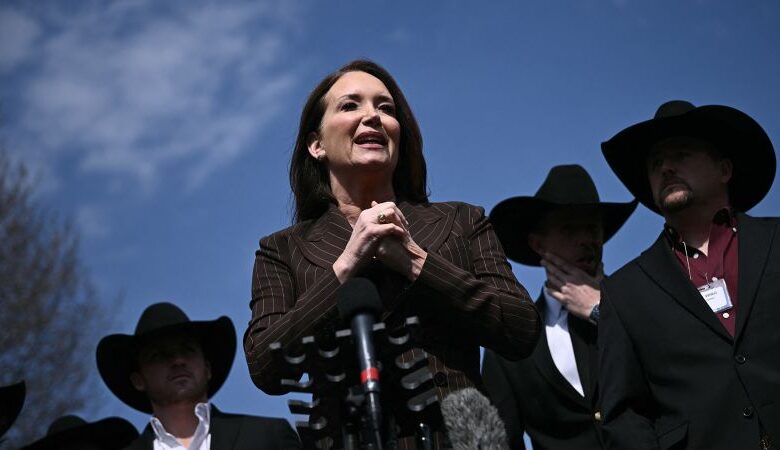
Beyond the legal dispute, Rollins is actively managing complex geopolitical and economic pressures that affect American agriculture. Recently, she addressed the escalating trade war with Canada, acknowledging the “concern” among farmers and ranchers caused by retaliatory measures. Speaking to reporters outside the White House, Rollins noted that Canada had announced retaliatory tariffs on approximately $20 billion worth of American goods in response to tariffs imposed on Canadian imports, including dairy products.
“There’s no doubt that it causes concern amongst our farmers and ranchers,” Rollins stated, while urging the agricultural community to trust President Donald Trump, whom she described as the “ultimate negotiator.” She expressed confidence that once the current round of negotiations concludes, “America will certainly be the better for it, and that our farmers and ranchers will benefit the most.” Her remarks reflect a strategy of aligning departmental messaging with the White House’s broader trade posture, even as market uncertainties persist.
Simultaneously, the USDA is executing a large-scale biocontrol initiative along the southern border. The department has released one billion sterile flies along the US-Mexico border since February, a measure aimed at managing pest populations that threaten crop yields. Officials describe these efforts as moving with urgency, underscoring the operational intensity within the agency despite the political and legal turbulence surrounding its leadership.
Rollins’ path to the Agriculture Department was unconventional, characterized by a background in legal advocacy and conservative think tanks rather than traditional agricultural administration. A former lawyer from a farm town outside Fort Worth, Texas, she co-founded the America First Policy Institute with economist Larry Kudlow. Critics have pointed to her lack of direct experience with USDA operations, but allies emphasize her practical, detail-oriented approach. Boening of the Texas Farm Bureau recalled a meeting where Rollins listened to 13 state directors, writing down their specific concerns and subsequently addressing each one individually. “She wrote down every one of those issues, and she went back and addressed them to every person,” Boening said, citing her methodical nature.
Her political career began when Trump’s team approached her in 2016, following her success in expanding the Austin-based Texas Public Policy Foundation. Colleagues describe her philosophy as that of a “do tank” rather than just a think tank, focused on practical implementation. She served as an economic adviser on Trump’s first campaign but did not join the administration until 2018, when she was tasked with bringing the “Texas model” of free-market policies to the federal level. She later led the Office of American Innovation and the White House Domestic Policy Council. Despite her long-standing loyalty, she was the last nominee named to a Cabinet-level position in the second Trump administration, a delay that two people familiar with transition discussions described as reflecting a lack of an “obvious place” for her initially.
As one of the few women remaining in Trump’s Cabinet, Rollins finds herself in a role that demands rapid damage control and consensus-building. The judge’s ruling against her religious emails adds a new dimension to this challenge, forcing a reckoning with how executive authority is exercised within the federal workforce. While the USDA continues its aggressive operational campaigns—such as the billion-fly release and trade negotiations—the legal precedent set by this ruling may influence future internal communications and compliance protocols within the department.
The immediate political significance of the judge’s comment is not just a critique of individual behavior, but a test of the limits of religious expression in federal employment. As Rollins continues to defend the administration’s trade policies and agricultural initiatives, the unresolved tension between her personal advocacy and institutional neutrality remains a focal point for both supporters and critics. The next development will likely hinge on how the USDA responds administratively to the judicial finding, potentially involving revised communication guidelines or further legal appeals.