This verbal jab occurs against a backdrop of significant natural disaster in the southern Philippines. While the political sparring continues in the capital and in social media spheres, Senator Lacson has simultaneously sought a Senate truce, urging his colleagues to set aside partisan disputes to focus exclusively on the needs of Mindanao earthquake victims. The dual nature of Lacson’s public stance—engaging in personal political attacks while advocating for institutional cooperation—reflects the complex dynamics of Philippine legislative politics, where immediate humanitarian crises often compete with entrenched political rivalries for attention and resources.
The central development here is not merely a single statement, but a strategic positioning within the Senate. By linking the specific grievance of Taguig’s flood issues to a broader call for a “truce,” Lacson is attempting to frame the current political climate as one where governance failures (such as inadequate flood control) coexist with urgent national emergencies. The political significance lies in the attempt to shift the narrative from individual blame to collective responsibility, or alternatively, to use the urgency of the earthquake relief as a platform to highlight the administrative shortcomings of political opponents.
Senator Alan Cayetano, a key figure in the National Democratic Institute (NDI) and a vocal critic of the current administration, is the target of the specific flood control critique. The mention of Taguig is significant as it is a jurisdiction where flood control projects have been a subject of public scrutiny and political debate. By invoking the risk of flooding, Lacson is likely referencing the tangible, physical consequences of policy decisions and infrastructure maintenance, contrasting the abstract nature of legislative debate with the immediate danger faced by residents. This tactic serves to ground political discourse in material reality, a common strategy in populist political communication.

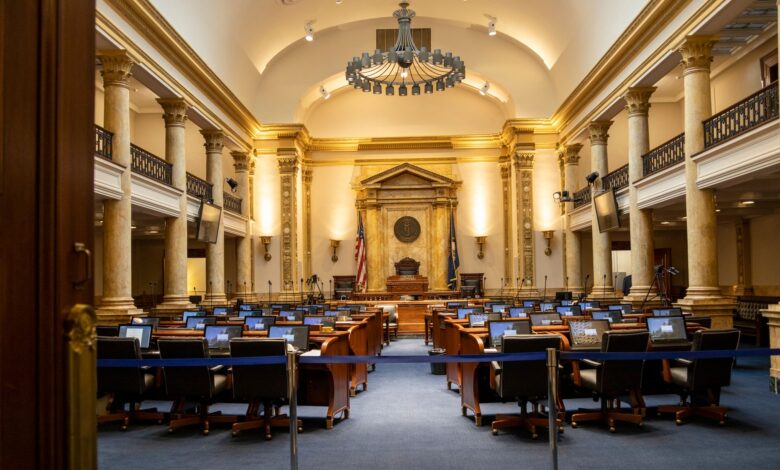
Concurrently, the push for a Senate truce addresses the institutional mechanics of relief distribution. In the aftermath of the Mindanao earthquakes, the Senate’s role shifts from legislative debate to oversight of disaster response and allocation of emergency funds. A “truce” in this context implies a temporary suspension of the ideological and partisan conflicts that typically characterize Senate sessions. This is not an unprecedented move; Philippine legislators have historically called for such pauses during major typhoons, earthquakes, or other disasters. The rationale is that partisan gridlock can delay the passage of emergency bills, the release of funds, and the coordination of agencies, thereby exacerbating the suffering of affected communities.
The principal actors in this scenario are the Senate leadership, the specific factions represented by Lacson and Cayetano, and the broader public in Mindanao who are the beneficiaries of the relief efforts. Lacson, representing a faction that often aligns with the ruling party but maintains a degree of independence, is positioning himself as a pragmatist. He is seeking to demonstrate that his primary concern is the welfare of the earthquake victims, while simultaneously holding his political rivals accountable for other governance failures. This dual approach allows him to maintain a critical stance toward the opposition without fully abandoning the coalition politics necessary for government stability.
The political process at play involves the Senate’s committee structures, which oversee infrastructure and disaster response. Flood control projects typically fall under the purview of the Department of Public Works and Highways (DPWH) and local government units, but their funding and legislative oversight are determined by Congress. The “mess” in Taguig, as labeled by Lacson, suggests a failure in either execution, funding allocation, or political will. By publicizing this, Lacson is exerting pressure on the relevant institutions to act, using the threat of public embarrassment as a lever for accountability. This is a form of political accountability that operates outside of formal legal or administrative channels, relying instead on public opinion and media amplification.
Opposing positions to Lacson’s call for a truce are not explicitly detailed in the source material, but the nature of the political landscape suggests inherent resistance. Senators from the opposition, including Cayetano’s allies, may view the call for a truce as a tactic to obscure broader systemic issues or to distract from the opposition’s agenda. They might argue that partisan accountability is essential for long-term governance improvement and that pausing political scrutiny during a crisis does not resolve the underlying causes of infrastructure failures like those in Taguig. Furthermore, there is a risk that the “truce” is perceived as superficial, with political rivalries resuming immediately after the immediate emergency phase passes, leaving structural problems unaddressed.

The impact on governance and the public is multifaceted. For the residents of Mindanao, the call for a truce is a request for faster and more coordinated relief. If the Senate complies, it could lead to a more streamlined process for approving emergency funds and coordinating with local agencies. For the public in Taguig and other flood-prone areas, the renewed focus on the “flood control mess” may lead to increased scrutiny of DPWH projects and potential audits, although the immediate political impact is more about narrative control than immediate policy change. The public effect is a mixed signal: a promise of unity for the victims, coupled with a reminder of the ongoing political fractures that affect service delivery.
Uncertainties remain regarding the actual implementation of the truce. Will other Senate members join the call? How long will the truce last, and what specific terms will define it? There is also the question of whether the flood control issue in Taguig will be resolved through political pressure or if it will remain a point of contention in the next election cycle. The intersection of these two distinct political narratives—local infrastructure failure and national disaster response—creates a complex web of accountability that is difficult to untangle. The success of Lacson’s strategy depends on whether the Senate can sustain the truce long enough to achieve tangible results in earthquake relief, thereby legitimizing the political maneuvering.
As the Senate continues its deliberations, the focus remains on the balance between political rivalry and humanitarian duty. The taunt over Taguig’s flooding serves as a reminder that political issues are not abstract; they have physical consequences for citizens. The plea for a truce, meanwhile, acknowledges the limits of political division in the face of natural disaster. The next political development will likely hinge on the Senate’s ability to translate this call for unity into concrete action, both in the distribution of relief goods in Mindanao and in the oversight of infrastructure projects in the National Capital Region. Until then, the political landscape remains a space where conflict and cooperation coexist, driven by the competing demands of accountability and emergency response.