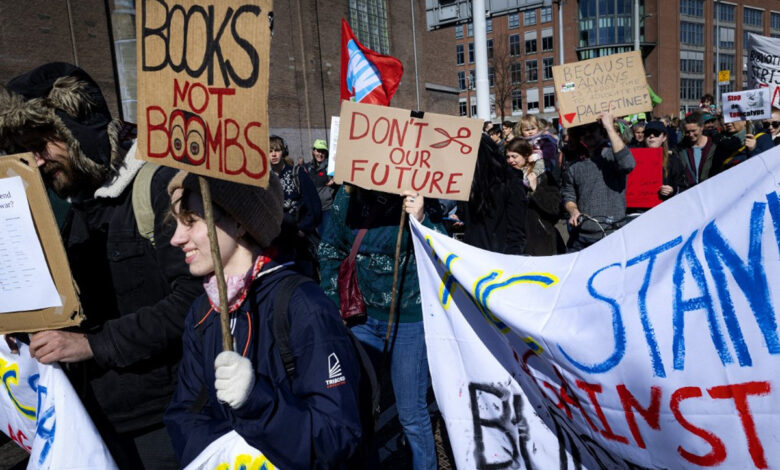
The protests occurred against the backdrop of escalating tensions between The Hague and Moscow, specifically following the incident on November 19 in which a Russian drone damaged the Dutch Embassy in Kyiv. While the Netherlands has not enforced active military service since 1997, the suspension of conscription does not mean the elimination of the legal framework. Under current law, all men aged 17 to 45, and women since 2020, remain on the national registry. The government has proposed a multi-stage system that would allow for the selective call-up of registered individuals in times of crisis, escalating from voluntary questionnaires to mandatory medical examinations and service.
Protesters argue that the proposed shift toward compulsory service is part of a broader “war fever” that prioritizes military expenditure over social stability. Evy Kras, chairwoman of the LSVb, stated that funds are being diverted from healthcare, education, and housing to defense. “Young people feel betrayed and say: so far and no further,” Kras told RTL Nieuws. The organizers highlighted that while the government increases military budgets, life costs for young people remain unaffordable. A report published by the LSVb and the activist group Stop Wapenhandel earlier this week cited €260 million in annual defense spending on recruitment campaigns within schools and online.
The demonstrators raised three core demands: the abolition of conscription, the removal of Ministry of Defense presence from educational institutions, and a redirection of investment toward the future of young people rather than weaponry. They specifically opposed the growing influence of defense ministries and arms companies on higher education, noting instances such as the Ministry of Defense innovation center located at Delft University of Technology. “They pretend it’s all very adventurous and flashy, but fighting in a war is not flashy,” Kras added, criticizing the recruitment narratives used by the defense ministry.
The sentiment among the student body appears significant. Simon, a 19-year-old student in Groningen, described receiving his conscription registration letter at age 17 as a formality that carried little weight before the recent policy shifts. “I get scared sometimes. I really don’t want to go into the army,” he said. Data supports this apprehension; a poll conducted by UKrant last year found that 64.4 percent of 360 surveyed students at the University of Groningen were opposed to compulsory conscription. Laurens van der Berg, a philosophy student and faculty council member, pointed to a recent parliamentary motion that failed to guarantee that refusing military service would not result in jail time, interpreting this as an intent to enforce compliance through heavy consequences.
The walkouts in Amsterdam, Utrecht, and Groningen marked a visible escalation in domestic opposition to the military buildup. This follows a large-scale anti-war protest in Amsterdam on September 27, where an estimated 5,000 to 10,000 people gathered to oppose what organizers termed a “reckless path of militarisation and social dismantling.” The September demonstration was organized by the New Peace Movement, FNV youth, and the LSVb, signaling a sustained effort by civil society to challenge the defense policy trajectory. As the government moves forward with discussions on strengthening the defense posture in response to regional security threats, the friction between national security imperatives and public resistance to compulsory military service remains a central political issue in the Netherlands.