Polish Defence Minister Wladyslaw Kosiniak-Kamysz confirmed that the projectiles fell in the country’s southeast at Nowy Lipowiec, Rudnik nad Sanem, and Molodycz. A Kh-101 cruise missile crashed approximately 35 kilometers (22 miles) from the site of ongoing European military exercises, while a jet-powered drone landed roughly 30 kilometers (20 miles) from the Ukrainian border. Polish Prime Minister Donald Tusk characterized the event as an “intentional provocation,” noting its timing relative to the two-week military drills that began on November 9. These exercises involve forces from 11 nations and are explicitly designed to prepare for a potential post-war stabilization mission in Ukraine.
The incursion into Polish airspace coincides with a massive Russian attack on Ukraine, in which President Volodymyr Zelenskyy reported the launch of more than 400 drones and at least 110 missiles, including 27 ballistic missiles. Ukrainian authorities confirmed at least eight civilian deaths and over two dozen wounded. NATO Secretary-General Mark Rutte condemned the Polish incident as a “grave violation” and “clearly dangerous,” attributing it to the consequences of Russia’s ongoing war. However, the legal bar for triggering Article 5 of the NATO treaty—which mandates that an armed attack on one member is considered an attack on all—remains high, particularly in the absence of casualties or verified deliberate intent to harm NATO infrastructure.
Analysts suggest the strikes represent a calculated escalation in Russia’s pattern of testing NATO’s response thresholds. Scott Lucas, a professor of international politics at the Clinton Institute, University College Dublin, noted that Moscow has previously tested the alliance’s resolve by flying drones and fighter jets into the airspace of Baltic states and Poland. “This time, Moscow has gone a bit further,” Lucas said, suggesting the Kremlin aims to unsettle Europe and divide the alliance while US-led peace talks proceed. The timing is significant, as US Special Envoy Jared Kushner and Steve Witkoff have been actively engaging with both Ukraine and Russia to revive negotiations, a process some European allies view as sidelining their security concerns.
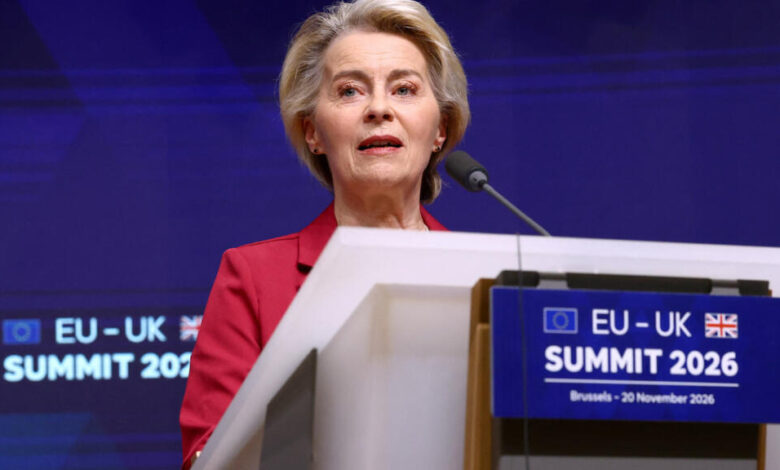
In parallel with the military escalation, the European Union is grappling with a separate but related security threat. On Saturday, European Commission President Ursula von der Leyen condemned an alleged Russian intelligence plot to assassinate a US-Ukrainian citizen in Denmark. “This was an attack on EU soil. And it is unacceptable,” von der Leyen stated. Denmark announced that authorities had foiled the plot, a claim the Russian embassy in Copenhagen rejected, stating the accusations were “not backed with proof.”

The assassination attempt has prompted a diplomatic push for stricter countermeasures. Denmark has urged EU member states to take “concrete actions” against Moscow, proposing a halt to tourist visas for Russian citizens and a Schengen-wide policy of non-recognition for Russian non-biometric passports. These proposals are set to be presented at a meeting of EU ambassadors in Brussels on Monday. Von der Leyen added that the EU will soon propose a new European Security Strategy to reinforce deterrence and preparedness against such hybrid threats.
While the missile strikes on Poland did not result in immediate military retaliation or a formal NATO response, they underscore the increasing volatility of the alliance’s eastern flank. The juxtaposition of kinetic strikes near military exercises and covert intelligence operations within EU territory illustrates a multi-vector pressure campaign. As European forces continue their drills in southeastern Poland, the focus remains on whether these incidents will lead to a formalized shift in NATO’s defensive posture or remain isolated acts of provocation within the broader context of the US-mediated peace efforts.