
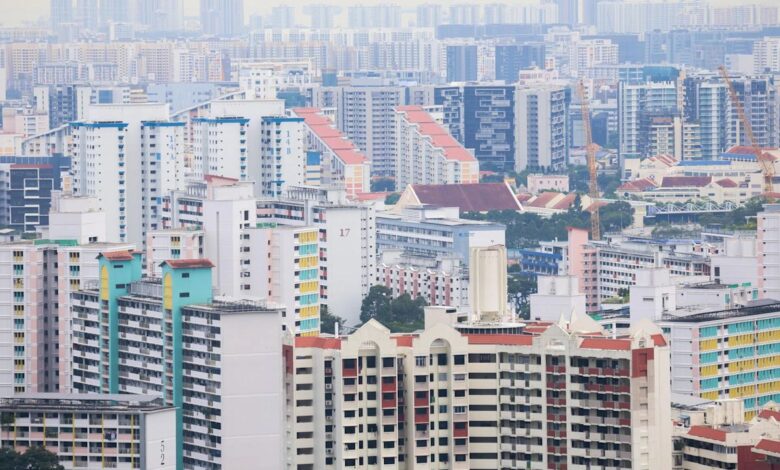
The rebate structure distinguishes between public and private housing. Owner-occupied Housing and Development Board (HDB) flats will receive a 15% rebate on their property tax bill. For owner-occupied private residential properties, the rebate is set at 10%, with a cap of S$100 (approximately US$78). The authorities stated that the rebates are intended to help Singaporeans manage property tax payments amid broader cost-of-living concerns. This marks the fifth consecutive year of such rebates, a practice that began in 2023 when the government started phasing in higher, more progressive property tax rates.
While the rebate percentages for 2027 remain consistent with those provided in 2026, the cap for private residential properties has been lowered significantly, from S$500 in the previous year to S$100. According to the MOF and IRAS, after the application of these rebates, owner-occupiers of three-room and larger HDB flats are expected to see an average monthly property tax increase of S$2 to S$4. For most owner-occupiers of private residential properties, the average monthly increase is projected to be approximately S$6. Owners of one-room and two-room HDB flats will continue to be exempt from paying property tax entirely.
The rebates will be automatically offset against the property tax payable in the 2027 bills. These bills are scheduled to be issued by December 2026, with payments due by January 31, 2027. Homeowners can settle these bills through GIRO in interest-free instalments of up to 12 months or via a one-time deduction. Eligible retirees may also apply for extended payment terms.

In a separate but related move, the MOF announced that the annual value thresholds used to assess eligibility for social support schemes will be raised starting March 1, 2027. This adjustment is a direct response to the updates in AVs for many residential properties since 2025, which were revised to better reflect prevailing market rents in their respective towns. The AV is defined as the estimated annual rent of a property if it were to be rented out. In Singapore’s fiscal framework, the AV of a residential property serves as a key indicator of means, used alongside income to determine support levels.
Under the new thresholds, the first AV tier will increase from S$21,000 to S$24,000. Simultaneously, the upper limit of the second tier will rise from S$31,000 to S$32,000. The MOF emphasized that these increases are critical to ensure that Singaporeans living in HDB flats and lower-value private properties remain eligible for social support despite the upward revisions in their homes’ assessed values.
The social support schemes affected by these threshold adjustments include the permanent Goods and Services Tax (GST) Voucher scheme, MediShield Life premium subsidies, and the Workfare Income Supplement scheme. These programs provide tiered benefits, ensuring that individuals with greater financial needs receive more substantial support. Eligibility for benefits in a given year is typically determined based on the preceding year’s data; therefore, the 2027 benefits will be determined using the property’s 2026 annual value.

By raising the AV thresholds, the government aims to prevent a “cliff-edge” effect where households might lose eligibility for essential support solely due to administrative updates in property valuation, rather than a genuine increase in their financial capacity. The MOF noted that the overall residential property tax system remains progressive, with higher-value and non-owner-occupied properties taxed at higher rates, as originally outlined in the 2022 Budget.
The interplay between the rising base rates of property taxes and the targeted rebates illustrates a policy trade-off: maintaining revenue from a broader tax base while providing targeted relief to lower- and middle-income households. The reduction in the private property rebate cap from S$500 to S$100 suggests a narrowing of the net benefit for higher-value private home owners, aligning with the progressive nature of the tax system. For the broader economy, these measures are designed to stabilize household disposable income in the face of inflationary pressures, ensuring that tax reforms do not inadvertently displace vulnerable segments of the population from social safety nets.
The implementation of these changes is set for early 2027, with the first impact on social support eligibility occurring on March 1, 2027. The property tax bills will be finalized in late 2026. The next significant economic data point for Singapore will be the release of quarterly GDP figures and inflation indices in the coming months, which will provide context for the effectiveness of these cost-of-living measures.