
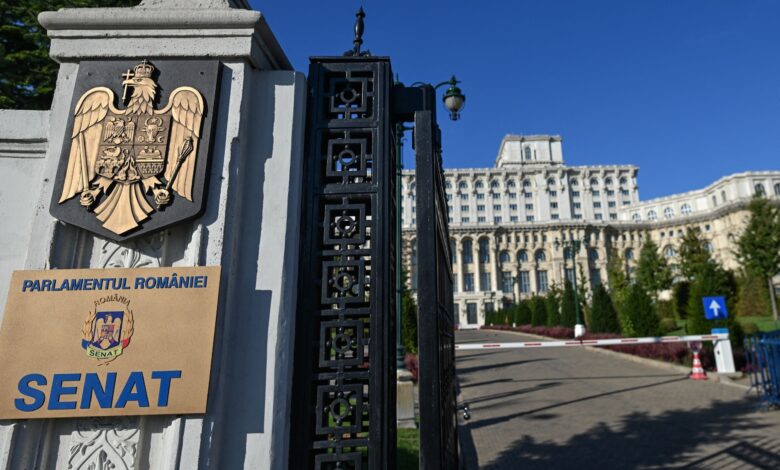
The approval of Niculescu’s cabinet resolves the immediate procedural crisis, but it does so through a fragile and unconventional alliance. A 55-year-old diplomat with no formal political affiliation, Niculescu is the fourth candidate to attempt to form a government during this crisis. His cabinet is a hybrid of ministers from the center-left Social Democratic Party (PSD), the largest party in the country, and independent technocrats. This configuration was necessitated by the fragmented nature of the current legislature, where far-right parties hold approximately one-third of the seats, and by the refusal of the liberal and ethnic Hungarian parties to join the government despite their parliamentary support for it.
The political significance of this appointment lies in its attempt to stabilize state institutions at a critical geopolitical juncture. President Nicusor Dan, a pro-European centrist, nominated Niculescu earlier this month, citing his diplomatic experience as the best chance to secure a parliamentary majority. Prior to his diplomatic career, which included serving as Romania’s ambassador to France and overseeing the country’s bid to join the Organisation for Economic Co-operation and Development, Niculescu was a prominent journalist. His appointment signals a preference for institutional continuity and international alignment over partisan purity, a strategy aimed at countering the rising influence of the far-right Alliance of the Union of Romanians (AUR).
The AUR, which has led opinion polls in recent months with support approaching 40 percent, rejected the new cabinet, labeling it a “puppet government.” The party, which has repeatedly called for snap elections, views the current arrangement as an illegitimate maneuver by the establishment. Conversely, the PSD, which had supported the no-confidence vote that brought down the previous government led by acting Prime Minister Ilie Bolojan in May, now backs Niculescu. PSD leader Sorin Grindeanu framed the vote as an opportunity to correct a “course of action that has caused a great deal of harm to Romanians and the economy.” This reversal highlights the volatile dynamics of the current legislature, where alliances shift rapidly based on immediate political survival rather than long-term ideological alignment.
Bolojan’s liberal party, along with the ethnic Hungarian party UDMR, chose to support the Niculescu government from the opposition benches. Bolojan described the vote as one of “necessity,” arguing that Romania requires a functioning government to prevent the collapse of public institutions and basic services. This decision reflects a broader consensus among pro-European forces that the risks of prolonged instability outweigh the benefits of pursuing snap elections. President Dan had previously ruled out both a coalition with the far-right and new elections, warning that a fresh vote would prolong the crisis and further strain state finances.
The political process that led to this outcome was marked by significant disruption. The annulment of the December 2024 presidential election left the country without a definitive head of state for a considerable period, complicating the formation of a stable executive. The subsequent parliamentary elections produced a fragmented legislature, making it difficult for any single party or traditional alliance to command a durable majority. The collapse of the Bolojan government in May, driven by a dispute over austerity measures, exacerbated this fragmentation, leaving the country without a full government for months.
Niculescu’s mandate is not without significant challenges. The cabinet’s composition, combining PSD ministers with technocrats, is described by Niculescu as a “less common formula in Romania but one that is appropriate to the situation.” Political analysts suggest that this arrangement may be inherently unstable. Sergiu Miscoiu, a political analyst, predicted that tensions between the PSD ministers and the technocrats could lead to a “new round of hostilities” in the coming months. Miscoiu characterized Niculescu’s role as that of a “firefighter,” tasked with putting out immediate crises rather than implementing long-term structural reforms.

Both the PSD and the liberal parties have indicated that they will reassess their support for the government in the coming months, keeping open the possibility of another political rupture. The uncertainty is compounded by the external security environment. Niculescu emphasized the urgency of the situation, stating, “We live in an increasingly uncertain world. There is a war on Romania’s borders, and the threats to European security are greater than they were a few years ago.” As an EU and NATO member sharing a border with Ukraine, Romania’s domestic stability is viewed by its international partners as integral to regional security.
The approval of the Niculescu government provides a temporary reprieve from the worst effects of political deadlock, allowing the state to function and engage with international institutions. However, the underlying tensions that led to the crisis remain unresolved. The far-right’s strong polling position, the fragmented legislature, and the provisional nature of the current coalition suggest that Romania’s political journey is far from over. The coming months will test the durability of this technocratic-partisan hybrid and determine whether it can withstand the pressures of both domestic opposition and external geopolitical realities.



One Comment