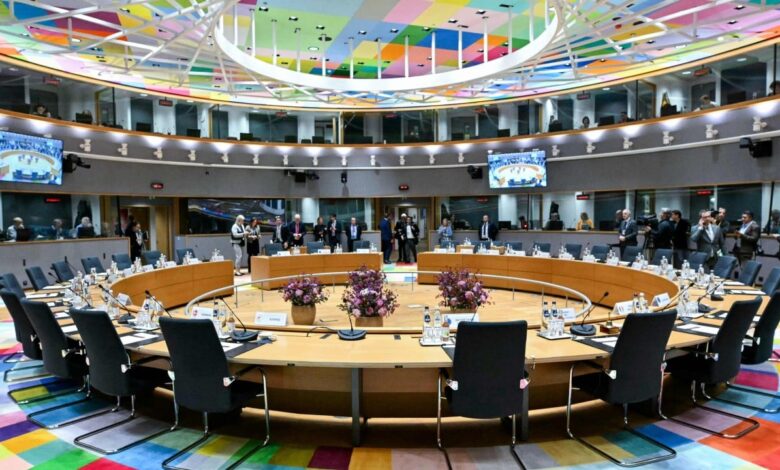
The breakdown in talks marks a critical juncture in the EU’s fiscal planning. The 2028–2034 budget, which is expected to amount to between 1% and 1.2% of the EU’s average gross national income, is far more than a simple financial ledger; it is a statement of the continent’s broader ambitions. However, the negotiations have been plagued by tensions, reproaches, and even boycotts, with leaders split into opposing camps that refused to abandon their pre-established red lines. French President Emmanuel Macron, whose country faces looming debt issues and April elections that the hard right appears likely to win, ruled out any chance of immediate agreement. He stated that he would be ready to sign a “good agreement” when the leaders meet again on December 17–18, but warned that after December 31, he would not be able to relaunch discussions as the process would be too close to the French presidential elections.
The central conflict of the summit revolved around the size and distribution of the budget. Costa had proposed a compromise worth €1.78 trillion in current prices across seven years, representing a 10% cut from the original draft. This proposal was met with fierce pushback from both sides of the divide. The “Frugals”—a group of seven nations including the Netherlands, Germany, Austria, and Sweden that pay more into the budget than they receive—were bent on further slashing the budget. Dutch Prime Minister Rob Jetten, a staunch member of this group, was equally dismissive of the urgency. “There’s no need to hurry,” Jetten said. “For me, there’s no deadline.” He argued that the budget needed to be modernized and downsized to strike a deal, echoing the sentiments of German Chancellor Friedrich Merz, who noted that Europe must fulfill its tasks reliably but “can’t and we mustn’t take on more debt.”
Opposing them were the 17 “Friends of Cohesion,” led by France and Italy, who are determined to protect funds for agriculture and infrastructure projects in relatively poorer member states. These two categories each constitute about a third of the total budget. Czech Prime Minister Andrej Babiš defended the necessity of these funds, citing the need to build hospitals and highways to ensure a similar level of life across different regions. Italian Prime Minister Giorgia Meloni, who arrived at the summit with a skeptical tone, told reporters that a deal was “light years away.” She rejected the concept of a time limit, stating, “I don’t have a time limit. I have specific conditions. When the agreement is one that I consider valid and fair for Italy, then I’ll sign it.”
The dynamics of the negotiation were further complicated by the issue of Ukraine. The spending package foresees a €110 billion envelope for the government in Kyiv over seven years, but leaders had to decide on a new loan and whether the costs of servicing it should be drawn from the general budget. Earlier in the month, Chancellor Merz had threatened to hold up a budget agreement if there was no “collective commitment” to Ukraine. Hungarian Prime Minister Péter Magyar took to social media to declare that he had seen “zero results” from Thursday’s talks and suggested that an agreement by Christmas looked unlikely. This skepticism mirrored the mood within the council room, where the “Frugals” felt unfairly targeted by Costa’s breakout sessions, which some perceived as an attempt to pile pressure on them in favor of the “cohesion friends.”
Costa, whose leadership is now tested by this impasse, attempted to maintain a constructive tone. “This meeting was a necessary step in the process,” he said during the closing press conference. “Everybody knows that we cannot fail Europe, and we need to have a new budget from the 1st of January 2028.” He called for an approach with an “open mind, a constructive approach and the sense of compromise,” emphasizing that unanimity is required to secure agreement on the budget’s size, fund distribution, and new revenue streams, such as the proposed EU-wide tax on digital services, which could raise $5.5 billion a year.
Despite Costa’s appeals, the summit ended with no movement from either side. Leaders had huddled with their respective groups, waiting for others to move first, a stalemate that diplomats described as a failure of will rather than a lack of technical solutions. The immediate consequence is that the negotiation process has now entered a high-stakes phase where the political calendar, rather than just fiscal logic, dictates the pace. With Macron setting a hard stop at the end of the year to avoid spilling the debate into the 2027 electoral cycle, the pressure on Costa to force a compromise before December 17 has intensified. The next move will likely come from the “Frugals,” who must decide whether to accept a smaller budget with protected cohesion funds or risk a prolonged standoff that could leave the EU without a legal financial framework in 2028.