
The shootdown follows a summer of escalating incidents that have prompted urgent diplomatic and military responses. Intelligence assessments cited in August indicated that Russia may test NATO’s resolve with a limited incursion as early as this fall. In response, CIA Director John Ratcliffe made a surprise visit to Moscow on August 25, where he reportedly urged the Kremlin against escalating tensions with US allies, particularly the Baltic states. While Baltic diplomats confirmed the existence of intelligence regarding potential Russian false-flag operations, they noted there was no indication of an imminent conventional attack. These concerns are not isolated to the Baltics; recent cases of suspected Russian involvement in sabotage, fires, and drone incursions in Germany, Poland, and Slovakia suggest a broader pattern of hybrid warfare aimed at destabilizing NATO’s eastern flank.
Fortifying the Eastern Flank
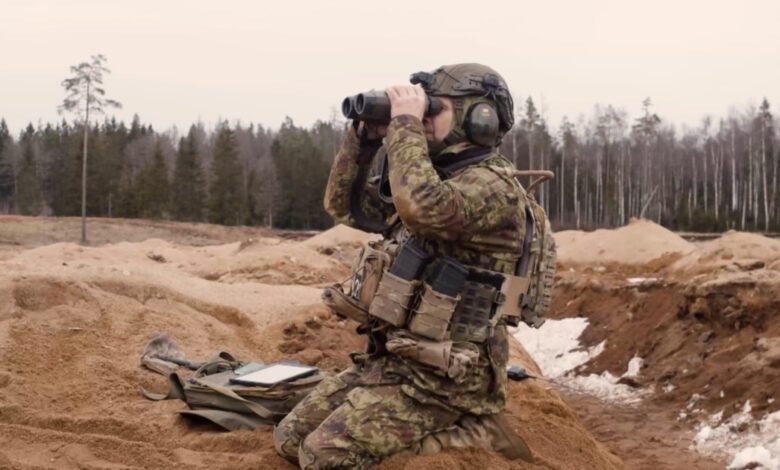
In response to these threats, the three Baltic states have significantly bolstered their defenses. All nine NATO battlegroups deployed to the region are now integrated into the alliance’s command structure to ensure readiness and responsiveness. A cornerstone of this defensive posture is the Baltic Defense Line, a project agreed upon by the three governments in early 2024. The line features a complex array of fences, tank obstacles, patrolled roads, and natural barriers, all monitored by electronic sensors. This infrastructure is designed to prevent the “little green men” tactics used by Russia in Ukraine in 2014, where unmarked military personnel crossed borders to foment conflict. Security experts note that such a surprise incursion is no longer feasible in the Baltic region given the current level of surveillance and physical fortification.
However, the threat landscape is not uniform across the three states. Latvia, which shares a 280-kilometer border with Russia and a 173-kilometer border with Belarus, is considered the most geographically vulnerable, as it has few natural obstacles to impede an invader. Estonia’s 294-kilometer border is largely aquatic, comprising the Narva River and Lake Peipus, while Lithuania’s vulnerability stems from its shared border with Belarus, which would require President Alexander Lukashenko’s cooperation for a Russian ground offensive. These geographic and demographic factors influence local defense strategies, particularly concerning the significant Russian minorities in Latvia and Estonia, where ethnic Russians comprise 25 percent and 20 percent of the population, respectively. In Latvia’s second-largest city, Daugavpils, Russians form a majority, a demographic reality that poses complex challenges to national security and social cohesion.
Assessing the Risk of Invasion
Despite the heightened anxiety, Baltic security analysts believe a full-scale Russian invasion remains unlikely in the near term. The primary constraint is Russia’s ongoing war in Ukraine, which has severely depleted its manpower and equipment. Intelligence assessments indicate that the Kremlin currently lacks the resources to mount a successful military incursion into NATO territory while sustaining operations in Ukraine. The consensus in Tallinn, Riga, and Vilnius is that Moscow cannot overcome the combined armed forces of the Baltic states without first resolving its manpower deficit in Ukraine.
Furthermore, the political dynamics within the Baltic Russian-speaking communities have shifted. While a minority remain sympathetic to Russian nationalism, the appeal of the Kremlin’s imperial agenda is limited by the significantly higher standard of living in the Baltic states compared to Russia. Baltic security services monitor these communities closely, and the potential for local separatist movements is regarded as minimal. The focus of Russian aggression, therefore, is widely viewed as an attempt to deter European support for Ukraine and isolate Kyiv, rather than a precursor to a territorial conquest.
As the situation evolves, the Baltic states remain vigilant, monitoring any military buildup near their borders and preparing for the possibility of miscalculation. The integration of new technologies and the fortification of the eastern flank represent a lasting change in Europe’s defense posture, shifting from reliance on distant deterrence to active, on-the-ground readiness.