The attack on the Crimean bridge, which links the Russian mainland to the occupied Ukrainian peninsula across the Kerch Strait, was confirmed by Sergei Aksyonov, the Russian-appointed head of Crimea. Speaking on the Telegram channel “Krymsky Veter,” Aksyonov stated that the enemy had struck the bridge, necessitating the restriction of traffic until approximately midday. He reported that all necessary services were deployed to address the consequences and that an operational headquarters had been established in Kerch. According to subscribers of the channel, the impact occurred at 5:38 a.m. on one of the arcs of the navigable span, with specialists currently assessing the structural integrity of the damaged section. Aksyonov also directed residents to monitor information regarding ferry services between Crimea and the port of Kavkaz, asserting that he was keeping the situation under personal control.
The Crimean bridge is a critical logistical artery for Russia, consisting of dual road and railway crossings that supply the occupied peninsula. Ukraine has repeatedly emphasized the illegality of the structure, built after the 2014 occupation of Crimea, and has designated it as a legitimate military target. This incident marks at least the third significant attack on the infrastructure. The first successful strike occurred on October 8, 2022, utilizing a truck wrapped in film and filled with explosives. The second major attack took place on July 17, 2023, when Ukrainian maritime drones, part of an operation named “Sea Baby,” targeted the bridge. Following that incident, Russian forces reportedly deployed barges south of the bridge to serve as barriers against maritime unmanned aerial vehicles.
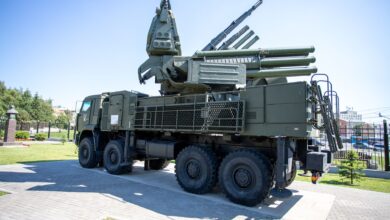
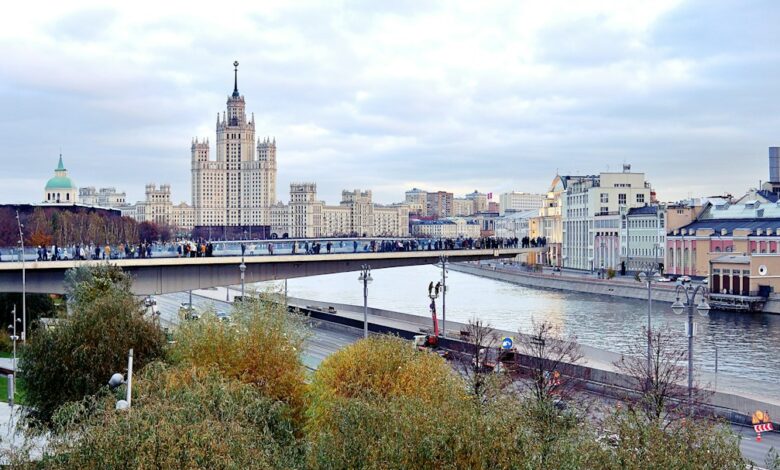
Simultaneously, the Russian capital faced a massive drone barrage. Moscow Mayor Sergey Sobyanin announced that air defense systems intercepted approximately 600 drones flying toward the Moscow region overnight and into Monday morning. Sobyanin noted that the majority of the threats were neutralized by the Defense Ministry’s air defense systems at distant approaches, while 191 drones were stopped closer to the city. The Russian Defense Ministry claimed a total of over 1,300 Ukrainian drones were intercepted across the country during the same timeframe.
The scale of the attack has drawn international attention, particularly as it precedes a scheduled summit in Shenzhen involving Russian President Vladimir Putin, US President Donald Trump, and Chinese President Xi Jinping. US officials have indicated that the war in Ukraine is not expected to be a primary focus of these talks. Meanwhile, Swedish Foreign Minister Maria Malmer Stenergard commented on the emerging “absurd” Russian demands, stating that Russia remains uninterested in serious peace discussions. United Nations Secretary-General Antonio Guterres, speaking at the ASEAN summit in Manila, called for an immediate and unconditional ceasefire, though he expressed skepticism regarding the prospects for peace given the duration of the conflict.

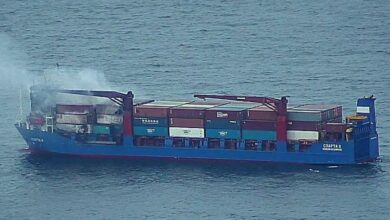
Beyond the bridge and Moscow, the drone campaign affected other Russian territories. In the Rostov region, the governor reported that a drone attack on the town of Azov injured three people and caused fires at four industrial facilities. Debris from the drones also damaged three private homes and a gas pipeline in the village of Rogalik. Additionally, the Russian Defense Ministry announced that its forces had struck a cargo ship in the Black Sea, which Moscow described as carrying military cargo for Ukraine.
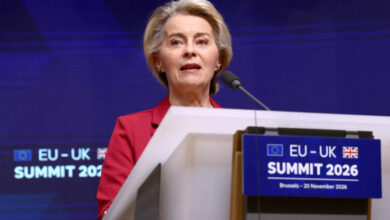
On the economic front, the Financial Times reported that the European Commission is preparing to propose a €45 billion ($50 billion) loan to support Ukraine, using a financing mechanism similar to the previous €90 billion package. This proposal is set to be shared with member states on Wednesday. The convergence of high-intensity military operations, diplomatic maneuvering, and significant financial support mechanisms underscores the complex and multi-layered nature of the ongoing conflict, with no immediate signs of de-escalation despite diplomatic summits.