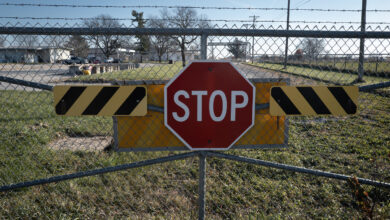
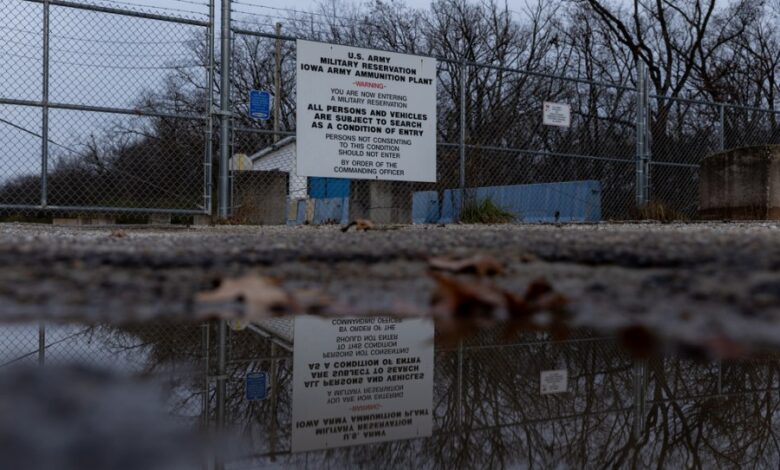
The lead azide, a chemical used in munitions production, was not originally manufactured for disposal. According to Robert Cekada, director of the Bureau of Alcohol, Tobacco, Firearms and Explosives, the stockpile was transported to the Iowa facility from various military bases across the United States in 2009. The materials were stored in barrels as a reserve in case the military required the compound again. However, a routine monitoring process revealed the chemical was degrading, transforming a stored asset into an acute safety hazard.
The logistical and technical complexity of the detonation has required extensive preparation. The Army has constructed additional “blast barriers” around the bunkers where the barrels are situated. These barriers, described as being two stories high, are composed of concrete and sand. To mitigate the environmental impact of the explosion, the site includes ballistic gels and foams designed to absorb lead dust. Furthermore, military personnel plan to douse the materials with thousands of gallons of water immediately after detonation to suppress any airborne plume. Acting Secretary of the Army Adam Telle urged the public not to panic, assuring residents that these barriers should limit the spread of the plume.

Despite these safety measures, the operation has generated significant public concern, particularly regarding health and environmental impacts. Government officials have encouraged residents within a five-mile (8-kilometer) radius of the site to evacuate to avoid exposure to airborne lead dust. For those in the wider area, the Federal Emergency Management Agency (FEMA) issued alerts to residents within a 20-mile radius, instructing them to stay indoors with windows closed to avoid noise, vibration, and potential dust exposure. FEMA’s alert, issued for the November 25 detonation, provided a hotline for evacuation details and shelter information.
Geographic and meteorological factors are central to the operational plan. Officials overseeing the detonation indicated that wind patterns on Wednesday are expected to carry any remaining plume southwest toward Missouri. This trajectory is intended to direct the potential fallout away from Burlington, a city of nearly 25,000 people located along the Mississippi River. The U.S. Department of Agriculture and the Iowa Department of Agriculture estimated that approximately 350 farms could be impacted based on the anticipated direction of the plume. The detonation date had been changed three times, according to court documents, in response to public backlash and to allow additional time for implementing safety measures and securing favorable wind conditions. The Army noted that a more precise start time would be communicated only after evaluating changing weather patterns to ensure the safest possible conditions.
The decision to proceed with the blast has also drawn political attention. Former Representative Marjorie Taylor Greene (R-Ga.) criticized the administration, arguing that while billions of dollars are allocated for international military actions, the government is reluctant to spend taxpayer funds on domestic safety measures related to the detonation. Similarly, an attorney representing victims of the September 11, 2001, terrorist attacks who suffered from toxic exposure, described the Army’s plans as “insane.” These critics highlight a broader debate regarding the management of hazardous military materials and the transparency of the process.
The Army’s primary objective is the neutralization of an immediate threat. Lead azide is highly sensitive and unstable; its degradation increases the risk of an uncontrolled explosion, which would pose a far greater danger to the surrounding community than a managed detonation. While the controlled blast carries risks of lead dust and noise, the military assessment is that the probability of a catastrophic, uncontrolled release from the degrading stockpile is higher in the short term. The operation represents a significant shift in how the U.S. military handles legacy hazardous materials, prioritizing immediate risk reduction over long-term storage.
As the scheduled time approaches, the focus remains on the execution of the safety protocols. The evacuation of the immediate five-mile zone and the shelter-in-place instructions for the broader 20-mile radius are the primary mechanisms for protecting civilian health. The outcome of the detonation will be closely monitored, not only for the success of the blast containment but also for the environmental data regarding lead dispersion. The next confirmed development will be the official assessment of air quality and soil contamination following the 9 a.m. detonation, determining whether the barriers and water suppression systems functioned as intended.