
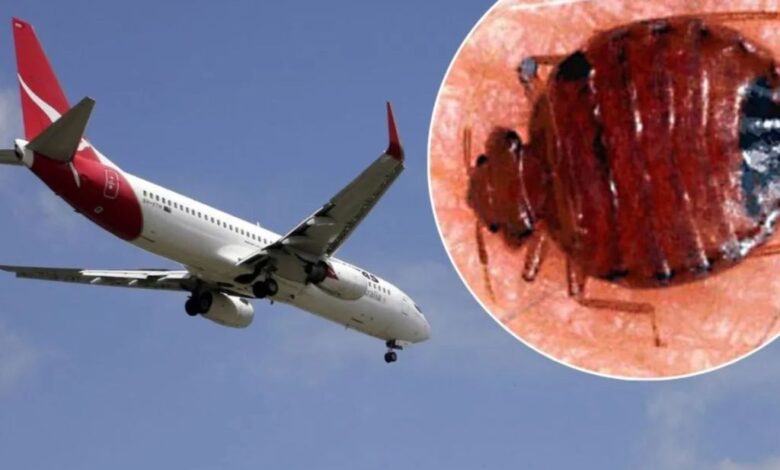
The aircraft, a Boeing 787 Dreamliner, was grounded in Rome to allow engineers and maintenance teams to carry out a deep clean and fumigation of the cabin. A Qantas spokesperson stated that the issue was identified on a small number of economy seats, necessitating the immediate halt of the aircraft’s operations to ensure passenger safety and hygiene.
“We sincerely apologise to customers for the cancellation of Saturday’s Rome to Perth service, which allowed our engineers and maintenance teams to carry out a deep clean of the aircraft after an issue was identified on a small number of economy seats,” the spokesperson said. Passengers affected by the cancellation were provided with accommodation and were rebooked on alternative flights within 48 hours of their original departure time. Consequently, some travelers were left stranded in Rome for up to two days while the airline arranged alternative transport.
During the initial Perth-to-Rome flight, medical staff on board administered antihistamines to affected passengers to alleviate the itching caused by the bites. However, supplies of the medication reportedly ran out during the journey, adding to the discomfort of those affected.
This incident has drawn attention to the broader operational challenges facing the Australian carrier. While Qantas maintains that its planes are disinfected every 50 days and that cabin cleaning is conducted to an “extremely high standard,” the recent outbreak has fueled criticism regarding the airline’s service quality and reliability. The disruption comes at a time when Qantas is already under pressure from high-profile passengers who have publicly questioned the carrier’s standing in the international market.
Former world No. 1 golfer Greg Norman recently took to social media to criticize Qantas for flight delays, baggage handling issues, and the lack of in-flight Wi-Fi on certain routes. Norman, who traveled on a Sydney-to-Dallas flight that departed approximately three hours late, argued that the airline has lost its historical reputation as one of the world’s best carriers. He suggested that passengers might consider competitors like Emirates, citing their reliability and modern amenities, and urged Qantas management to restore the pride in the airline’s identity as “The Spirit of Australia.”
While the bedbug incident is a specific hygiene and maintenance failure, it compounds the narrative of operational strain that critics have been raising. Bedbugs, small wingless parasites that feed on human blood, are a known nuisance in the travel industry. Although their bites are generally itchy and do not cause serious long-term health problems, they are difficult and expensive to eradicate. Infestations in the travel sector are not unprecedented; similar incidents have recently disrupted rail services in England and have plagued other major carriers, including British Airways and Turkish Airlines, in the past.
For Qantas, the immediate priority is to reassure customers of its commitment to hygiene and service recovery. The airline’s response—providing accommodation and rapid rebooking—aligns with standard passenger protection protocols, but the underlying issue of maintaining a high standard of cabin cleanliness on long-haul routes remains a critical operational challenge. As the airline works to repair its brand image, the incident serves as a reminder of the tangible risks that can arise from maintenance oversights, particularly on lengthy international routes where passenger exposure is prolonged.
The next phase for the grounded aircraft will involve verification that the fumigation has been successful before it returns to service. Industry observers will be watching to see if Qantas implements additional preventive measures or revised cleaning protocols in response to the incident, as the airline seeks to stabilize its reputation amid ongoing domestic and international scrutiny.