The currency’s drop was triggered by strong US inflation data that prompted a hawkish repricing of the Federal Reserve’s interest rate path. The monthly core Consumer Price Index (CPI) for October came in at 0.3%, above the consensus expectation of 0.2%. Deutsche Bank strategists noted that this was the third consecutive month with core CPI at 0.3%, resulting in an annualized pace of 3.75%, the fastest since April 2024. Consequently, investors have increased expectations for further US rate hikes. TD Securities now anticipates 25-basis-point increases in December, January, and March, while PIMCO economist Tiffany Wilding warned that the risk of stickier inflation argues for hikes at both the December and January meetings.
Compounding the AUD’s weakness is a sentiment shift in the artificial intelligence sector. Commonwealth Bank economist Samara Hammoud cited concerns over the AI boom, including underwhelming yearly results and a scandal involving former Nvidia CEO Jensen Huang, who resigned last week following reports of extramarital affairs, one with a suspected Chinese spy. Nvidia shares fell as much as 14% following the news. Hammoud stated that the Australian dollar is increasingly exposed to the AI cycle through global risk sentiment and the growing importance of data-center investment to Australia’s growth outlook. The US midterm elections also contributed to the decline, as Republicans, who had supported AI infrastructure, suffered a defeat, while some elected Democrats expressed opposition to data centers and AI expansion.
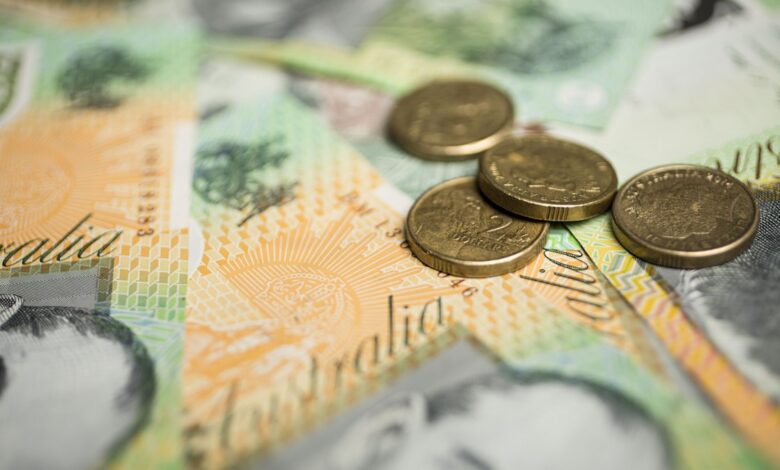
The AUD’s depreciation has broadened across major currency pairs. Westpac senior economist Pat Bustamante reported that the Australian dollar fell 0.6% against the yen, 0.4% against sterling, 0.2% against the euro, and 0.4% against both the Canadian and Singapore dollars. This weakness creates a dual challenge for the Reserve Bank of Australia (RBA). A weaker currency makes imports more expensive, potentially adding pressure to already-high inflation. However, the RBA has limited room to respond. MUFG analysts noted that the RBA has already hiked rates five times this year, bringing the policy rate to 4.85%, the highest since 2008. With the OIS curve showing a flat trajectory and pricing in a 15-basis-point rate cut by the fourth quarter of 2027, investors view the RBA as having run out of scope for additional tightening while the Fed may continue to hike.
The Reserve Bank of Australia is set to publish the minutes from its November meeting on Tuesday, where it voted to implement its fifth interest rate hike of the year in a split decision. Two days later, the Australian Bureau of Statistics will release unemployment figures for October. Market participants will closely watch these releases for signals on how the RBA intends to manage the trade-off between exchange rate stability and domestic inflation control.