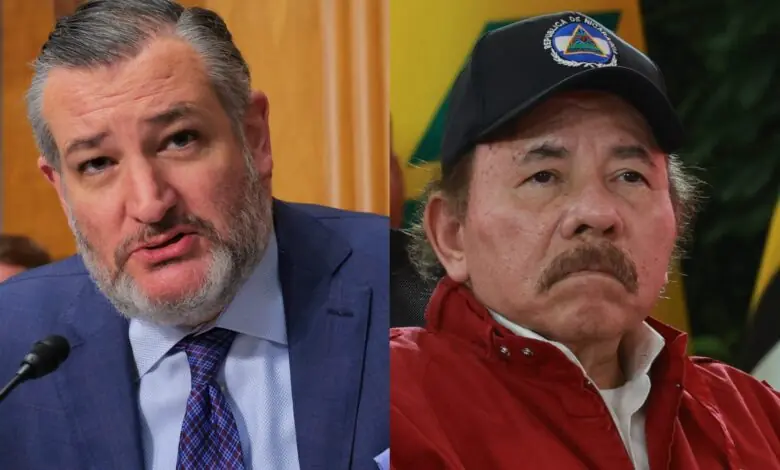
The central development in the United States is the introduction of new legislation in both chambers of Congress designed to reauthorize and significantly broaden the scope of US sanctions. In the Senate, a bipartisan measure backed by Senator Ted Cruz of Texas and Senator Tim Kaine of Virginia seeks to vastly expand economic penalties against the Ortega-Murillo regime. The bill builds upon the Nicaragua Investment Conditionality Act, or NICA, which was signed into law in 2018 to restrict the country’s access to international financial loans and American funding due to documented human rights abuses. The new Senate proposal specifically targets Nicaragua’s lucrative gold sector and seeks to penalize the regime for its persecution of Christian groups operating within the country.
Simultaneously, in the House of Representatives, Representative Maria Elvira Salazar, Chairwoman of the Subcommittee on the Western Hemisphere, and Representative Chris Smith introduced H.R. 7055, the Restoring Sovereignty and Human Rights in Nicaragua Act of 2026. This bill amends previous legislation by compelling the US government to immediately cease any investment in the Nicaraguan economy and oppose financial assistance from the Central American Bank for Economic Integration. It also mandates targeted sanctions on economic sectors that generate revenue for the Ortega family, particularly following the arrest or prosecution of individuals on politically motivated charges.

The legislative push is grounded in a detailed record of state-sponsored violence and the erosion of democratic institutions. United Nations evidence indicates that the regime has enforced the disappearance of 75 persons, with detention periods ranging from several weeks to over two years. Between April 2025 and mid-January 2026, at least 199 individuals, including active and retired military officials and relatives of exiles, were arrested for political reasons. The crackdown extends beyond political opponents to include faith-based organizations. In 2023, the regime arrested 11 Nicaraguan pastors affiliated with a Texas-based Christian ministry and issued arrest warrants for three US citizens connected to the group. Although the State Department intervened to secure the release of these pastors and approximately 100 other political prisoners in September 2024, the systematic targeting of religious institutions continues.
The diplomatic response is increasingly framed as a matter of hemispheric security. The new legislation seeks to hold the regime accountable for contributing to regional instability, forced migration, and transnational repression. Gil Guerra, testifying before the Senate Foreign Relations Committee, argued that the regime’s deepening ties to America’s adversaries and its consolidation of power through violence necessitate a firm and rapid response. The proposed sanctions are conditional, ensuring they will not be lifted until Ortega commits to holding competitive, free, and fair elections that meet democratic standards and permit credible international observation.

This bipartisan alignment in Washington mirrors the stance of the European Union, which has extended its sanctions regime through 2027. Both the US and EU measures reflect a shared assessment that diplomatic engagement alone is insufficient to reverse the democratic backsliding in Nicaragua. As the legislation moves through the congressional process, the focus remains on leveraging economic pressure to compel a return to democratic norms. For now, the political crisis deepens, with the regime continuing to suppress civil society while the international community tightens the economic noose around the Ortega-Murillo government.