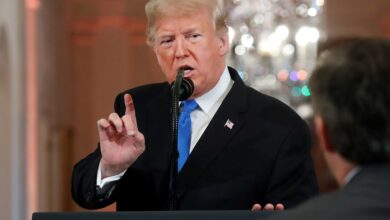
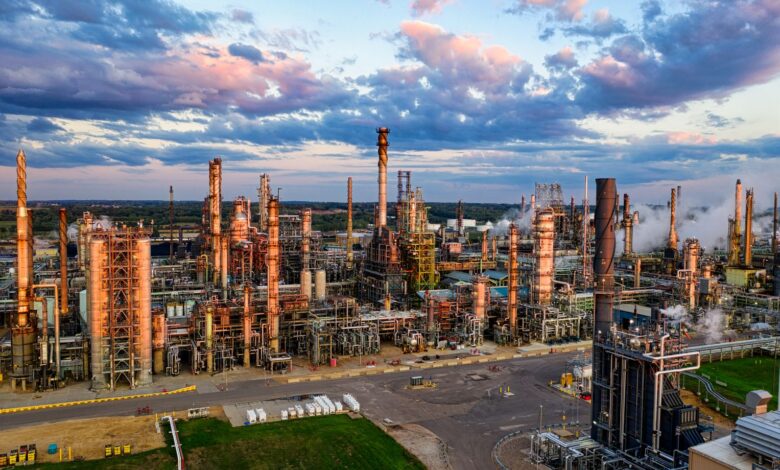
This diplomatic friction arises from a recent agreement between US President Donald Trump and Russian President Vladimir Putin regarding diesel fuel supplies. The deal, which involves lifting sanctions on Russian diesel, was reached after President Volodymyr Zelensky did not comply with US demands to stop targeting Russian energy infrastructure. The development has created a new crisis in US-Ukraine relations, potentially derailing fresh diplomatic initiatives aimed at securing a peace agreement.
President Zelensky responded to the news of the US-Russia agreement by rejecting the premise that pressure from the West could force Ukraine to compromise its security. Speaking after a visit by a bipartisan delegation from the US Congress to Kyiv, Zelensky addressed the question of what is necessary to end the conflict. He emphasized that the answer must be decisive, citing the need for sanctions in accordance with the Lindsey Graham law, continued support for Ukraine’s defense, and sustained pressure on Russia.

“There is never peace through weakness. Today, representatives of the US Congress — a bipartisan delegation — were in Kyiv. I am grateful to them for visiting Ukraine at such a difficult time. They asked: ‘What does it take to end the war?’ The answer must be decisive. There must be sanctions in accordance with the Lindsey Graham law, there must be support for Ukraine in defending lives, and there must be pressure on Russia for the war. And today there was a conversation between the leaders of America and Russia. A conversation that leads elsewhere,” said Volodymyr Zelensky.
Zelensky countered the US position by proposing a conditional compromise. He stated that Ukraine would agree to stop attacking Russian oil refineries only if Russia ceased its destruction of Ukraine’s energy infrastructure. The Ukrainian president argued that the United States possesses sufficient influence to secure this mutual restraint.
“We offer America precisely such an agreement and believe that the United States has enough influence to achieve this compromise,” Zelensky said. The statement highlights a fundamental divergence in strategy: Washington is seeking to leverage its relationship with Moscow to halt Ukrainian strikes, while Kyiv views the Russian attacks on its power grid as the primary driver of its own military response. The US threat to withhold intelligence, a critical asset in Ukraine’s war effort, underscores the high stakes of this diplomatic rift. As the Trump administration continues to pursue a negotiated end to the conflict, the inability to align Kyiv and Moscow on energy infrastructure strikes remains a significant obstacle to progress.
The situation leaves the path to a ceasefire uncertain. While the US Congress maintains a presence in Kyiv, signaling continued political support, the executive branch’s willingness to make concessions to Moscow is testing the limits of the transatlantic alliance. The next phase of negotiations will likely hinge on whether Washington can convince Kyiv that the intelligence threat is a credible deterrent or if Kyiv holds firm to its position that security guarantees must be mutual.