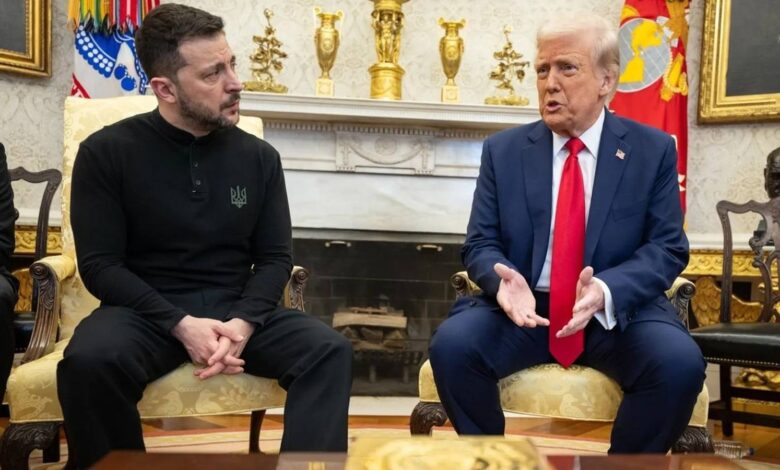
This diplomatic crisis has not occurred in a vacuum; it is the culmination of 18 months of diplomatic maneuvering by European leaders who worked to persuade Trump to maintain American support for Kyiv while increasing pressure on Moscow. According to the WSJ, the recent escalation threatens to undermine these sustained efforts. The core of the current disagreement involves specific military and intelligence matters, primarily the Ukrainian military’s strikes against Russian oil refineries and the flow of U.S. intelligence to Kyiv.
The tensions were palpable during closed-door negotiations held in Miami on October 10. According to four sources cited by the WSJ, Trump’s special envoy, Steve Witkoff, and his son-in-law, Jared Kushner, led the American delegation. They repeatedly reminded the Ukrainian representatives of the extensive assistance Washington provides, specifically highlighting access to U.S. intelligence capabilities. A primary point of contention was the American demand that Kyiv halt its military strikes against Russian oil-processing facilities.
However, the precise nature of the pressure applied in Miami remains a subject of conflicting reports. Two participants in the negotiations maintained that U.S. officials never explicitly threatened to suspend intelligence sharing with Ukraine. Other sources offered a different interpretation, arguing that the possibility of cutting off intelligence support had been clearly implied. Western media had previously reported that Washington was considering suspending intelligence transfers if Ukrainian forces continued attacking Russian refineries. American officials, however, have publicly denied that any such ultimatum had been issued.
President Zelensky has responded to the U.S. pressure with a firm stance on sovereignty. He has insisted that only Ukrainians can decide who leads their country, rejecting the premise that Washington can demand a leadership change. In a diplomatic counter-offer, Zelensky proposed a 60-day ceasefire to allow for elections, attempting to address the U.S. concern for political stability without ceding control over domestic political processes.

The backdrop to this diplomatic standoff is a broader recalibration of U.S. foreign policy. Prior to 2022, Western leaders supported Kyiv as a means of defending democracy and sovereignty on a global scale. However, the conflict has exacted a heavy human and financial toll on Ukraine, and Washington’s approach is shifting away from open-ended military and financial commitments. As noted in recent analyses, the relationship is now characterized by public criticism and policy demands from Washington, reflecting a move toward conditional support rather than unconditional backing.
The structural foundations of this influence predate the full-scale war. Following the dissolution of the Soviet Union in 1991, the United States worked to integrate former Soviet republics into global capitalist frameworks. Through international financial institutions such as the International Monetary Fund (IMF) and the World Bank, Ukraine received loans tied to economic structural adjustments. These programs historically required the deregulation of domestic markets, the privatization of state-owned enterprises, and cuts to social spending. While these economic levers have been a constant feature of the relationship, the current crisis is driven more by immediate military and intelligence considerations than long-term economic restructuring.
The disagreement over Russian refinery strikes highlights the intersection of military strategy and diplomatic leverage. For the U.S., the strikes may complicate broader negotiations or pressure on Moscow, while for Ukraine, they represent a tactical necessity to degrade Russian military capabilities. The conflicting accounts from the Miami talks suggest that the line between diplomatic pressure and ultimatum is blurred, creating uncertainty for Kyiv regarding the continuity of U.S. support.
As the rift deepens, the focus shifts to the next policy decisions and data releases that will indicate the trajectory of the alliance. The proposed 60-day ceasefire for elections is a potential de-escalation point, but its acceptance by both the U.S. and Russia remains uncertain. The outcome of the next round of negotiations will determine whether the U.S. moves toward explicit threats of suspending intelligence sharing or maintains a stance of implied leverage. For now, the relationship stands at a critical juncture, defined by public rhetoric and private disagreements over the terms of continued support.