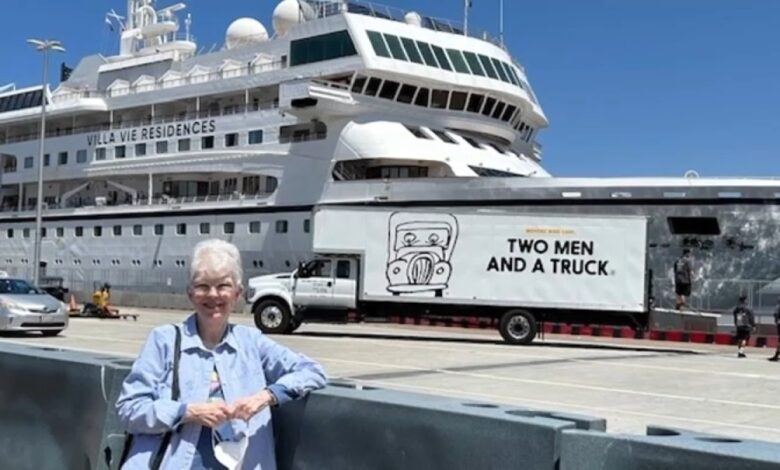
Villa Vie Residences, the Florida-based company that owns and operates the 642-foot vessel, cited soaring fuel costs as the primary reason for halting the ship on Tuesday. CEO Mikael Petterson stated in a phone interview with CBS News that the company is now preparing to file for Chapter 11 bankruptcy. The financial collapse stems from a dramatic shift in energy markets following a war with Iran that began in late February. Petterson disclosed that before the conflict, the company paid an average of $700 per ton for fuel. Since the war began, that cost has surged to between $2,000 and $3,000 per ton.
The Odyssey’s consumption is substantial, requiring between 700 and 800 tons of fuel per month. Petterson noted that when these costs are divided among the roughly 300 people on board, the burden becomes “backbreaking.” The company’s monthly expenses, which had previously averaged $400,000, have spiked to approximately $2 million. “When you divide it over 300 people on board, it’s just backbreaking,” Petterson said. “And this has been going on for nine months. We’ve tried to do everything we can do.” The operator stated it was unwilling to pass these rising costs directly to its passengers, leading to a search for a financial partner that ultimately failed, leaving the company at a “breaking point.”
The Odyssey launched in October 2024 with a unique proposition: a continuous around-the-world journey where passengers could purchase permanent cabins for several hundred thousand dollars. In exchange, residents were given a 15-year minimum guarantee of residency aboard the ship. For many, this was not a vacation but a permanent relocation. Sharon Lane, a 78-year-old retiree from Orange County, California, is one such passenger. In a summer 2025 interview, Lane expressed excitement about spending the next 15 years on board. However, the reality of the voyage deteriorated well before the final suspension.

Lane, who had sold most of her belongings in anticipation of a life at sea, described a gradual decline in the ship’s operations. She noted fewer meals served, with dinner times slipping from lunchtime to almost 7 p.m., and an increase in “sea days” where the ship idled in the ocean rather than traveling. “We were literally floating out in the ocean, not spending gas to propel ourselves in any one direction or the other,” Lane said. She also reported that operators asked passengers to pay additional fuel fees several times over the past few months, a move she viewed as a sign of the ship’s inability to “stay afloat.” Lane eventually left the ship in August due to health issues, but many of her friends remain aboard or have been left in Cambodia.
The human cost of the bankruptcy is significant for a demographic that often relies on fixed incomes. Lane noted that some of her friends on the ship lived on Social Security and had sold their homes to afford the cabin purchase. “They sold everything, and they live on Social Security, and they did not have high-end jobs when they were working,” Lane said. The company’s decision to halt operations leaves these residents without a home, as their cabins are no longer operational assets. The ship, which featured amenities such as a nail salon, spa, medical center, pool deck, jacuzzis, and a pickleball court, is now a vessel of displacement rather than leisure.
The geopolitical context of the fuel crisis highlights the vulnerability of long-term maritime contracts to regional instability. The war with Iran, which began in late February, quadrupled the cost of fuel for the Odyssey. Villa Vie Residences attempted to mitigate the impact by slowing its itinerary and spending five or six days in each port, hoping for a resolution in the Middle East. This strategy proved insufficient against the sustained price increases. The company’s per-cabin fuel costs rose from an average of $1,800 per month to between $6,000 and $8,000. Petterson explained that the company had borrowed money and stretched payrolls as far as possible, but the $1.6 million monthly deficit became unmanageable.
Villa Vie Residences has not responded to recent inquiries from NBC Los Angeles regarding the immediate next steps for the stranded passengers. The resolution of the bankruptcy process will determine whether the passengers can recover any financial assets or if they will be left to navigate relocation on their own. For now, the 200+ individuals remain in Cambodia, a temporary host country for a community that intended to make the open ocean their permanent address. The situation underscores the risks inherent in committing to indefinite, long-term financial arrangements in a volatile global energy market.
The Odyssey’s journey, which began as a symbol of modern nomadic luxury, has ended in financial ruin. As the bankruptcy proceedings advance, the focus shifts from the ship’s amenities to the legal and logistical challenges of rehousing a group of elderly residents who have no other home. The unresolved tension between the company’s debt obligations and the passengers’ right to the residency they paid for remains the central issue, with no immediate resolution in sight.