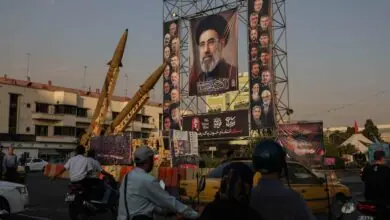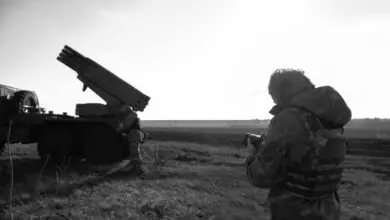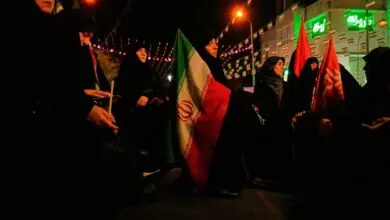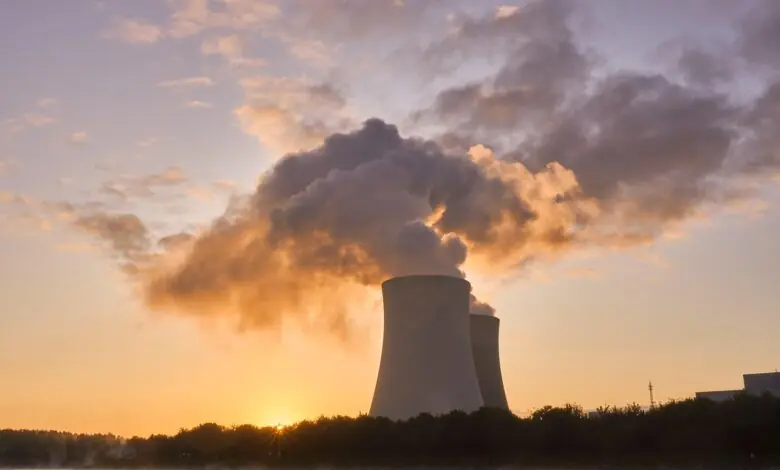
The strategic significance of Mount Pickaxe has been amplified by recent statements from US President Donald Trump. Trump recently remarked that the “Pickaxe Mountain issue” needs to be addressed quickly, fueling speculation that it is the primary target for any next round of US military action. This rhetoric follows the “Midnight Hammer” operation on June 22, 2025, in which the US targeted Iran’s nuclear facilities in Fordo, Natanz, and Isfahan. While Washington and Tel Aviv declared these strikes a severe blow to Iran’s nuclear program, subsequent satellite imagery revealed new construction and fortification activities around Mount Pickaxe. The mountain is reported to be up to 600 meters deep, with excavations reaching between 80 and 100 meters below the surface where critical nuclear materials are allegedly stored.
The history of this facility is tied to Iran’s response to previous disruptions. Following sabotage incidents at Natanz in 2020 and 2021, former head of the Iranian Atomic Energy Organization Ali Akbar Salehi stated that centrifuges would be moved to a safe location to maintain the production chain. While Salehi did not explicitly name the destination, commentators interpreted his remarks as an indication that the material was moved to Mount Pickaxe. However, Iranian officials have pushed back against this narrative. Ahmed Behshayesh Erdestani, a member of the Iranian Parliament’s Security Committee, claimed that the actual nuclear materials are not at Mount Pickaxe, arguing that Salehi’s earlier comments were misunderstood. Despite these denials, the presence of a third Iranian nuclear facility near Isfahan, which Iranian Foreign Minister Abbas Araghchi noted was damaged but not yet operational, has kept suspicions high.
The potential for renewed conflict is inextricably linked to the political landscape in the United States. With midterm elections approaching on November 3, reports indicate that a vulnerable president might consider restarting a large-scale bombing campaign. Critics argue that Trump, facing low approval ratings and anger over rising energy prices, may view a military strike as a way to project strength. One US official told Axios that if Trump feels “disenfranchised” by a Republican defeat, he might do something “bold.” This risk is compounded by the influence of Israeli Prime Minister Benjamin Netanyahu, who is urging Trump to resume bombing to support his own political survival after his coalition failed to secure a majority in recent Israeli parliamentary elections.
However, the economic stakes of such a conflict are staggering. During the initial clashes, Iran largely closed the Strait of Hormuz, a waterway through which more than a fifth of the world’s oil supply passes daily. This closure, alongside the destruction of oil pipelines and gas fields in neighboring Gulf countries, drove global energy prices higher, contributing to the cost-of-living pressures that have eroded public support for the US administration. Iranian leaders have used their control over the strait as leverage, demanding the lifting of port blockades and the release of billions of dollars in frozen assets in exchange for reopening the waterway.

Amidst the military posturing, diplomatic efforts continue. Negotiators from Qatar have organized multiple rounds of talks with Iranian officials, reportedly making progress on an interim deal. Under this proposed agreement, Iran would reopen the Strait of Hormuz within two days of Washington agreeing to lift the blockade on Iranian ports and release frozen assets. Yet, deep mistrust persists. Trump’s vacillation between seeking a deal and threatening to “annihilate” Iran has further complicated negotiations. At the UN General Assembly in September, Trump posed the question of whether a deal would allow Iran to rebuild or if he would “drive them into hell,” a rhetoric that Iranian leaders view as a threat rather than a negotiating tactic.
The uncertainty surrounding Mount Pickaxe reflects a broader impasse. While the US military argues that an “intensive” multi-day attack could force Iran to make concessions, skeptics note that this approach mirrors the logic that initially dragged the US into the conflict. The mountain remains a symbol of this stalemate: a hardened, deep underground site that represents both Iran’s resilience and the limits of aerial power. As the November 3 election date approaches, the world watches to see whether political pressure in Washington and Jerusalem will tip the balance toward diplomacy or toward a new, potentially devastating, military confrontation.