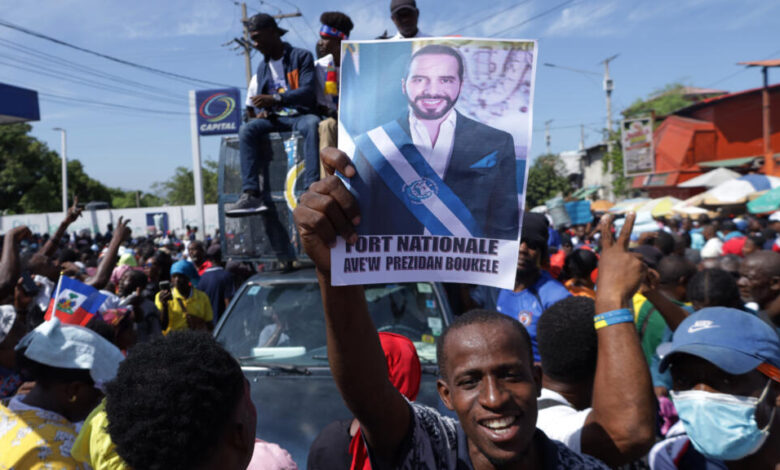
This public display of support marks a significant geopolitical shift in Haiti’s ongoing security crisis. The rally came as Haitian Justice Minister Patrick Pélissier, currently in El Salvador, told reporters that there is “no date” for the Salvadoran troops to leave. He stated that their support is necessary to reinforce Haitian police at least until elections are held next year, and that officials are working on establishing a legal framework to allow for a longer stay. The Haitian government’s Council of Ministers ratified a cooperation deal between the two countries on Tuesday, though specifics were not immediately provided.
The deployment stems from a specific incident on October 18, when four Salvadoran soldiers were attacked and remain missing in gang-controlled territory. In response, Bukele deployed approximately 2,500 troops to Haiti. Since then, fighting between gangs and foreign forces backed by Haitian authorities has intensified. The context is grim: more than 20,000 people have been killed in Haiti over the past five years, and gangs control an estimated 70% of Port-au-Prince.
For many residents, the arrival of Salvadoran forces represents a lifeline. Maxseau Lomba, who joined Tuesday’s march, described the devastation inflicted by the gangs, stating, “The gangs drove us out; they burned our houses and killed our children. They even killed pregnant women. We have lost everything.” Marie Michelle Dorville, a 55-year-old street vendor, echoed this sentiment, noting that gangs killed her partner and left her to raise three children. “Bukele is an air of hope,” she said, calling for the gangs to be eliminated “once and for all.”
Sam Vigersky, a fellow with the Council on Foreign Relations, noted that this enthusiasm is understandable given the disparity in military capability. “El Salvador’s deployment of more troops in two weeks than the UN-backed mission did in over one year has generated a long-dormant sentiment among many Haitians: hope,” Vigersky wrote. The Salvadoran forces have been able to utilize assets that Haitian security forces lack, including helicopters and explosive drones. However, this reliance on heavy weaponry has come at a humanitarian cost. According to the UN, at least 87 civilians, including 21 children, were killed by drones from July 2025 to September 2026.
Despite the visible momentum on the ground, experts warn that the current situation is fragile. By Tuesday afternoon, police fired tear gas to break up the crowd as it headed toward a national stadium recently secured by Haitian and foreign forces. The stadium had been in gang hands for more than two years, preventing Haiti from playing its World Cup qualifiers at home. While the reclamation of such symbolic spaces is significant, analysts argue that without a comprehensive domestic strategy, the gains may be temporary.
Diego Da Rin, an analyst with International Crisis Group, warned that “this enthusiasm … could turn into anger against the government if the troops withdraw.” The group published a report on Tuesday, based on more than 100 interviews with officials in Haiti and abroad, which detailed government failures and missteps. The report urged Haitian officials to develop a plan to prevent the country from imploding once international forces leave. “The new foreign mission promises temporary relief from the bane of gangs, but its goal is to weaken, not dismantle them,” the report stated.
The core of the problem, according to International Crisis Group, is the lack of a national strategy to identify threats, coordinate efforts, and reduce violence long-term. Plans to establish a National Security Council to create such a strategy two years ago never materialized. The report cited former senior government officials who expressed concern that the council would oversee intelligence gathering, a function previously used by Haitian leaders to target political opponents. Additionally, top officials reportedly resisted redirecting intelligence funds due to fears of losing access to those resources.
The structural weaknesses of Haiti’s National Police are compounded by this strategic vacuum. As of last year, the force had no more than 8,000 active officers for a population of nearly 12 million. Many of these officers occupy administrative or command positions rather than patrolling the streets, while others lack combat training. The government shortened police training from seven months to less than four to quickly increase headcount, but the report notes that promotions rarely follow criteria of seniority or merit. Consequently, some rank-and-file officers have opted to work with gangs or turn to private security and arms trafficking for additional income, with lower-ranking officers earning only about $300 a month before deductions.
The security landscape in Haiti is currently a patchwork of actors. Alongside the Salvadoran troops, the UN-backed gang suppression force, self-appointed vigilantes, and Vectus Global—a private security firm founded by Erik Prince—are all engaged in operations against gangs. However, without a unified command structure and a clear long-term plan, these efforts remain fragmented. A recent cartoon in Le Nouvelliste depicted Haitians cheering for Bukele near a table with a paper labeled “PLAN ANTI GANG” written in crayon, highlighting the perceived gap between public hope and governmental reality.
As the humanitarian indicators continue to move in the wrong direction, with 5.8 million Haitians facing acute hunger and 1.5 million displaced, the stakes for the coming months are high. The rally in Port-au-Prince on Tuesday illustrates a population desperate for stability, but it also underscores a critical tension: the reliance on foreign intervention without a parallel, robust domestic strategy. As the Salvadoran troops continue to battle gangs in the streets of Port-au-Prince, the question remains whether Haiti’s government can translate this temporary reprieve into a sustainable peace before the political and military landscape shifts again.