
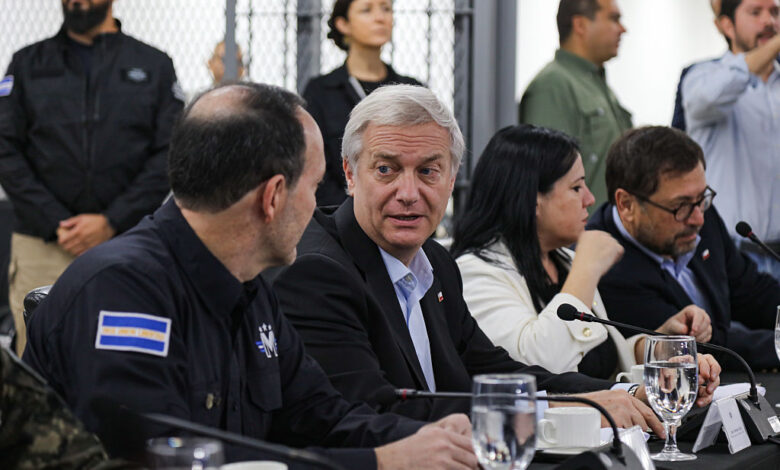
The central question facing Kast’s new government is whether he will govern as a pragmatic conservative or a radical-right populist. Claudio Fuentes, a political scientist at Diego Portales University in Santiago, noted that Kast is expected to emphasize immigration issues first, likely increasing the military presence on borders. “Dealing with this will be key to his success,” Fuentes said. Kast has labeled his four-year term an “emergency” government, citing what he describes as a growing security and economic crisis, although Chile remains one of Latin America’s safest and most prosperous nations.
Kast’s political career is deeply rooted in the defense of the legacy of General Augusto Pinochet’s dictatorship (1973–1990). He served for 16 years in the Chamber of Deputies as a member of the Independent Democratic Union (UDI), the party most closely associated with the Pinochet era. During his time in congress, he voted against the limited legalization of abortion and divorce legislation. In 2016, he resigned from the UDI, criticizing it for straying from its founding principles, and founded the Republican Party in 2019. The party is built on the “defense of human life since conception,” family values, and a market economy. Kast gained international attention for attending the Shield of the Americas summit hosted by U.S. President Donald Trump, as well as meetings with leaders such as Italy’s Giorgia Meloni, Hungary’s Viktor Orbán, Argentina’s Javier Milei, and El Salvador’s Nayib Bukele.
Despite his far-right reputation, analysts suggest Kast may need to adopt a moderate approach to build a working legislative majority. He lacks the political capital to force moderate-right parties and centrists in Congress to adopt his radical agenda on issues such as massive deportations, the digging of a ditch on the Chilean-Bolivian border, and punitive policies for criminals. Instead, he will likely need to find common ground to maintain support among the Chilean people. His platform also includes neoliberal economic policies, such as strengthening private education vouchers, expanding private health providers, and loosening environmental protections to facilitate investment.
Kast’s background remains a source of division in Chile. In his native town of Paine, a quiet agricultural area south of Santiago, residents hold mixed views of the Kast family. While some remember them as a pious clan that built a successful meat and restaurant business, others are concerned about his defense of the Pinochet regime. Gerson Ramírez Guajardo, whose father was forcibly disappeared by soldiers after the 1973 coup, stated, “Our work, our memorials, our history, it’s all at risk.” Paine was the site where more than 70 people were forcibly disappeared under the dictatorship, more than in any other municipality in Chile. Kast’s father, Michael Kast, was a German-born member of the Nazi Party who fought in the Wehrmacht before settling in Chile after World War II.
The next scheduled milestone for Kast’s administration will be the implementation of his initial security and immigration decrees, which are expected to face legal and legislative challenges from opposition groups. The government’s ability to balance its hardline social agenda with economic pragmatism will determine its stability in the coming months.




2 Comments