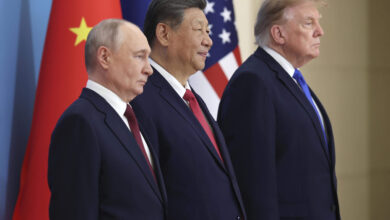
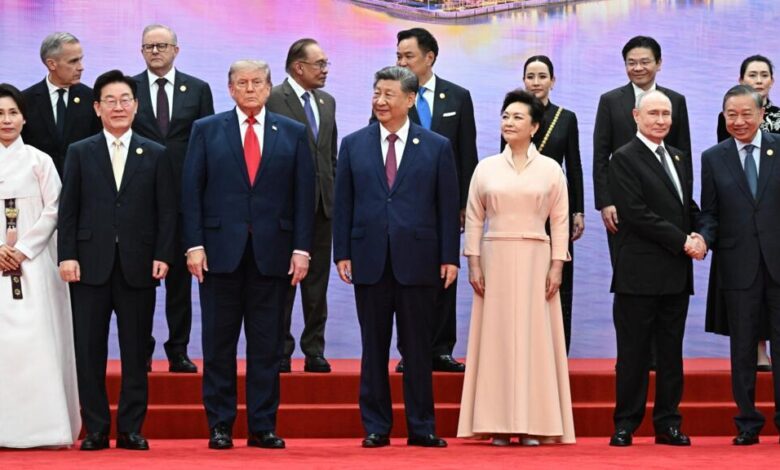
The gathering, occurring on Thursday, November 19, 2026, is being viewed by analysts as a pivotal, if contentious, moment in international relations. While the Kremlin stated that the trilateral talks would last for “no more than an hour,” the symbolic weight of the meeting far exceeds its duration. The juxtaposition of these three nuclear powers has drawn immediate comparisons to the 1945 Yalta meeting, a historical precedent often associated with great-power deals imposed on smaller nations. This parallel has unsettled European leaders and smaller states in the region, who fear their interests may be disregarded in a potential carve-up of the globe into spheres of influence.
The diplomatic atmosphere in Shenzhen has been marked by high-stakes maneuvering. President Trump, speaking at the start of the APEC summit, described the upcoming meeting with Xi and Putin as already a “win” before it took place, citing the warm welcome he received from China. In a Fox News interview, Trump boasted about the pomp surrounding his arrival, contrasting it with the more muted greeting received by other leaders, including Putin. He emphasized that the US has been a Pacific power for hundreds of years and would continue to work toward promoting growth, stability, sovereignty, and peace in the region. However, the underlying agendas of the three leaders remain starkly different.
Nuclear non-proliferation is expected to be a primary focus of the discussions, alongside the ongoing war in Ukraine, the US conflict in Iran, global trade dynamics, and the rapid advancement of artificial intelligence. For the United States, the summit represents an opportunity to assert influence and manage strategic competition with both Beijing and Moscow. China, as the host, seeks to position itself as a key mediator and a champion of “safeguarding world peace,” aiming to advance a “constructive, strategically stable relationship” with the US based on mutual respect, fairness, and reciprocity, as President Xi stated upon Trump’s arrival. Russia, meanwhile, faces global urgency to end its full-scale invasion of Ukraine, yet Kremlin sources indicated that no full-scale negotiations on the conflict would occur during this brief window. A separate bilateral meeting between Trump and Putin was anticipated but remains uncertain, with some reports suggesting it might not materialize while both leaders are in China.
The economic backdrop against which these leaders convene is fraught with tension. International Monetary Fund Managing Director Kristalina Georgieva warned at the summit that energy supply shocks and surging demand for artificial intelligence were accelerating global inflation to 4.7%. She called for a tightening of monetary policy in many economies, highlighting the macroeconomic pressures that complicate any potential trade agreements. On the sidelines, trade tensions with regional partners also surfaced, as Trump held conversations with Canadian Prime Minister Mark Carney and Mexican President Claudia Sheinbaum.

Amidst the high-level diplomacy, speculation abounds regarding the potential appearance of North Korean leader Kim Jong-un, who has not yet been confirmed to attend. President Trump stated that he is open to engagement with the North Korean leader, adding another layer of unpredictability to the summit. The possibility of a quad-rilateral interaction, though unconfirmed, underscores the complex web of alliances and rivalries that define the current geopolitical landscape.
As the leaders sit down in Shenzhen, the world watches closely. The meeting is unlikely to produce major, binding agreements, analysts note, but its mere occurrence signals a shift in how the world’s most powerful states interact. The outcome will be measured not just by signed documents, but by the signals sent to allies and adversaries alike. For now, the focus remains on the three men at the table, whose decisions on nuclear safeguards, trade, and regional security could ripple across the globe, leaving smaller nations to navigate a world increasingly shaped by the interests of the “Big Three.”