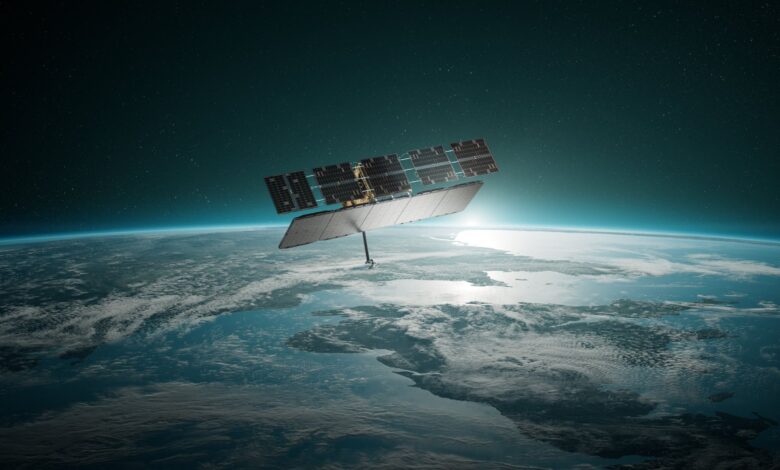
The approach, which began in late September 2026, involved a series of precise orbital adjustments. According to analyses by the Center for Strategic and International Studies (CSIS) and Integrity ISR, Cosmos 2612 raised its orbit by approximately 46.5 kilometers in September to match the orbital plane of ICEYE-X36. On October 12, a second maneuver adjusted its velocity by about 27.9 meters per second, placing it roughly 475 kilometers behind the target satellite. By October 16, Cosmos 2612 was stationkeeping within 5 kilometers of ICEYE-X36, and by October 19, tracking data from satellitemap.space indicated a minimum separation of 26 meters. Jonathan McDowell, an astronomer at the Center for Astrophysics, noted that to his knowledge, this is the first LEO rendezvous of two active satellites where the owner of one did not give approval.
ICEYE-X36, launched in March 2024 on a SpaceX Falcon 9, is a synthetic aperture radar (SAR) satellite capable of imaging through cloud cover and darkness. It orbits at an altitude of approximately 554.7 kilometers in a sun-synchronous orbit. While ICEYE has dedicated satellite capabilities to Ukraine since 2022, the company has not confirmed whether ICEYE-X36 specifically supports Ukrainian operations. A Ukrainian official told Axios it remains unclear if this specific satellite is part of the support fleet. The U.S. Space Force has identified four Russian satellites positioned near Western commercial radar satellites used by Ukraine, with CSIS and Integrity ISR counting five in the cluster launched in April 2026.
The fuel expenditure required for these maneuvers suggests the action was deliberate rather than accidental. Changing a satellite’s orbital inclination requires significant velocity adjustments, but once aligned in the same plane, a satellite can approach a target with less fuel. CSIS analysts note that sharing an orbital plane enables close-proximity operations, which could serve purposes ranging from structural inspection and espionage to potential interference. Neither the payload nor the specific intentions of Cosmos 2612 have been publicly established. LeoLabs, a satellite monitoring service, stated in a Friday statement that the movement “appears to be a deliberate approach” with uncertain intent that “warrants continued monitoring.”
Uncertainties in publicly available orbital data prevent a reliable calculation of the precise minimum separation, though estimates range from a few hundred meters to as low as 26 meters. Langbroek, a Dutch satellite tracker, found no orbital evidence that ICEYE-X36 had been struck or disturbed, but only its operators can confirm if it remained fully operational. As of October 19, 2026, ICEYE had made no public statement regarding the incident or the satellite’s status. The encounter raises concerns in the West, where previous Russian close approaches, such as in 2017 with the Athena-Fidus satellite, were viewed as espionage attempts. The incident occurs amid broader tensions over space warfare, with the U.S. acknowledging it possesses on-orbit space control weapons and Russia having previously conducted destructive anti-satellite tests.