
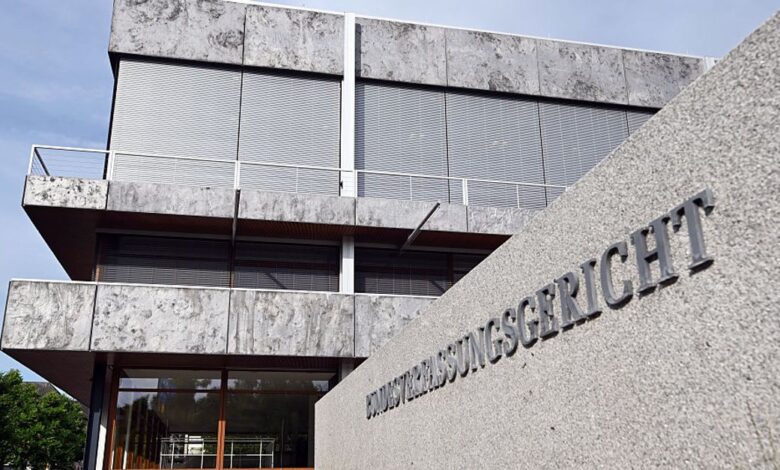
The Legal Basis: The Debt Brake and Procedural Limits
The legal dispute centers on the compatibility of the CTF with Germany’s “debt brake” (Schuldenbremse), a constitutional limit enshrined in 2009 which stipulates that new state debt must not exceed 0.35 percent of annual economic output. This constraint was temporarily suspended during the coronavirus pandemic, allowing the government, then led by Chancellor Angela Merkel with Olaf Scholz serving as Finance Minister, to secure substantial financial leeway for economic support measures.
As the pandemic receded in late 2021, approximately 60 billion euros in new debt authorizations remained unused. The subsequent coalition government, comprising the Social Democratic Party (SPD), the Green Party, and the Free Democratic Party (FDP), rededicated these unused authorizations to fill the CTF. The CTF, originally established as the Energy and Climate Fund in 2011, was utilized to finance urgent climate and energy transition policies outside of the regular budget cycle. The coalition argued that these investments would simultaneously aid in overcoming pandemic-related economic difficulties, a measure greenlit by the German parliament shortly before the energy price crisis triggered by Russia’s war on Ukraine in early 2022.
Court Reasoning and Findings
The Constitutional Court ruled that this rededication was unconstitutional, focusing its analysis on principles of budget policymaking and fiscal discipline rather than the merits of environmental policy. The judges found that the government failed to establish a “sound factual connection” between the original pandemic response and the specific climate action measures funded by the CTF. Specifically, the court reasoned that the government had improperly mixed long-term policy goals with short-term crisis management and failed to plan ahead by using funds from a previous year to finance current expenditures.

It is crucial to distinguish this ruling from the court’s landmark 2021 decision, which explicitly backed the urgency and validity of climate and energy transition policies. In this 2023 judgment, the court did not question the necessity of climate action; rather, it upheld the procedural integrity of the debt brake. The ruling mandates that the government withdraw the funds from the CTF but simultaneously tasks it with identifying alternative funding sources to ensure that key climate action measures are not disrupted.
Political and Economic Consequences
The decision has introduced significant uncertainty for policymakers, industry, and citizens awaiting the implementation of new projects. Chancellor Olaf Scholz has pledged that key climate measures will remain intact, but the ruling has forced a rapid reshuffling of the government’s budget. This has triggered a broader debate regarding the utility of the rigid constitutional debt brake in the context of a climate emergency, with discussions focusing on potential cuts and new sources of income.
Observers note that this case highlights the specific operational culture of the German court. Unlike some other supreme courts, the Bundesverfassungsgericht justices generally operate as a cohesive team, following their own legal construction rather than partisan logic. There is a distinct lack of “democratic sensibility” or public debate regarding the power of courts to review democratic decisions in Germany; for many citizens, the court’s authority is viewed as largely beyond reproach. This institutional legitimacy allows the court to impose strict fiscal constraints on the executive branch without facing the same level of political backlash seen in other jurisdictions.

European Context and ECB Response
The ruling also carries implications for the broader European monetary landscape. The European Central Bank (ECB) issued a statement acknowledging the German Federal Constitutional Court’s judgment. In this context, the ECB referenced its judgment regarding the Public Sector Purchase Programme (PSPP), noting that the Court of Justice of the European Union had ruled in December 2018 that the ECB was acting within its price stability mandate.
Following a preliminary briefing by the governor of the Bundesbank and the ECB’s legal department, the ECB’s Governing Council stated it “takes note” of the judgment. The ECB reaffirmed its full commitment to doing everything necessary within its mandate to ensure inflation rises to levels consistent with its medium-term aim and that monetary policy actions are transmitted effectively to all parts of the euro area economy. This response underscores the complex legal interplay between national constitutional courts and supranational monetary authorities in the Eurozone.
The immediate practical consequence is a forced restructuring of Germany’s fiscal strategy. The government must now find alternative revenue streams to replace the 60 billion euros removed from the CTF, a challenge that may involve difficult trade-offs in other areas of public spending. The ruling serves as a procedural check on executive power, emphasizing that even in times of dual crisis (pandemic and energy), the constitutional boundaries of state borrowing must be strictly adhered to.




One Comment