
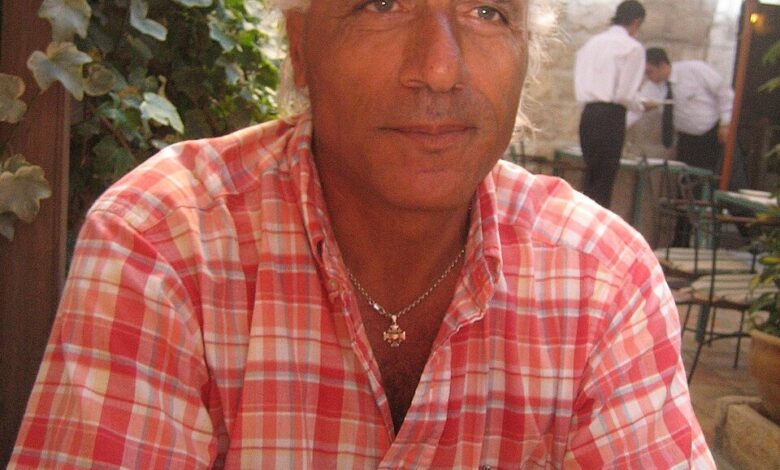
Vanunu, a former technician at Israel’s nuclear facility near Dimona in the Negev desert, gained international attention in 1986 after revealing details of the country’s clandestine nuclear weapons program to the British newspaper *The Sunday Times*. At the time, Vanunu cited his opposition to weapons of mass destruction as his motivation. Israel has never officially acknowledged possession of a nuclear arsenal, maintaining a policy of “nuclear ambiguity” while asserting it would not be the first to use such weapons in the Middle East. Despite this official stance, the existence of an arsenal, widely reported to contain at least 80 weapons, was significantly illuminated by Vanunu’s disclosures.
The legal and physical consequences for Vanunu began shortly after his disclosures. In September 1986, while in London, he was lured to Italy by an agent of the Israeli intelligence agency Mossad, operating under the alias “Cindy.” There, he was drugged, abducted, and secretly transported to Israel. He was subsequently tried in a closed-door proceeding and sentenced to 18 years in prison. Vanunu spent more than 11 of those years in solitary confinement, a condition he and human rights advocates describe as “cruel and barbaric treatment.” Notably, this form of punishment is not prescribed in Israel’s penal code nor was it explicitly imposed by his original verdict.
Vanunu was released in April 2004. However, his freedom remained severely curtailed. The Israeli authorities considered placing him under administrative detention but rejected the option as illegal according to the Attorney General. Instead, Vanunu was subjected to a draconian military order, renewed every six months, which imposes a broad array of restrictions. These conditions include a ban on communicating with foreigners, including journalists; a prohibition on leaving the country; a ban on visiting foreign embassies; and a requirement to notify police of any change of address. Amnesty International has characterized these measures not as standard parole, but as arbitrary limitations on rights to freedom of movement, expression, and association that breach international law.

The tension between Vanunu’s post-release status and these restrictions has led to repeated legal confrontations. In 2007, Vanunu was sentenced to six months in prison for violating parole terms by giving interviews to foreign journalists. The sentence was considered unusually severe even by the prosecution, who had expected a suspended sentence. On appeal, the time was reduced to three months. Vanunu was given the option of performing community service in West Jerusalem instead of incarceration but declined, citing safety concerns due to perceptions of him as a traitor within Israel. He offered to perform the service in Palestinian East Jerusalem, where he resides, but the court refused and ordered him to jail.
In 2010, Vanunu was arrested again and sentenced to three months for meeting foreigners in violation of his release conditions. More recently, in 2013, he was charged with violating terms by meeting two Americans at a hotel in East Jerusalem without permission, moving apartments in 2014 without notifying police, and giving an interview to Israel’s Channel 2 TV in 2015. While the *Haaretz* newspaper noted that the information disclosed in the 2015 interview was not new and had been previously discussed in the media, the conditions of his release forbid the passing on of any classified information, regardless of prior publication.
The international community has reacted with sharp criticism. In 2007, Amnesty International declared Vanunu a “prisoner of conscience” and called for his immediate and unconditional release. Philip Luther, Amnesty International’s Deputy Director for the Middle East and North Africa, stated that the ongoing restrictions have prevented Vanunu from moving to the United States to live with his adopted family, placing a “huge strain on his mental and physical health.” Luther argued that because Vanunu served his full 18-year term, the continued restrictions are not legitimate parole measures but arbitrary violations of his rights.

Vanunu’s case highlights a significant divergence in legal and ethical perspectives. Israel regards Vanunu as a traitor, a characterization supported by state officials who view the disclosure of nuclear secrets as a grave act of betrayal against national security. Conversely, Vanunu is characterized internationally as a whistleblower. American whistleblower Daniel Ellsberg has referred to him as “the preeminent hero of the nuclear era,” and in 1987, Vanunu was awarded the Right Livelihood Award for his courage in revealing the extent of Israel’s nuclear program.
The legal question at the heart of Vanunu’s case is whether the state’s interest in protecting nuclear secrets justifies the indefinite, extrajudicial restriction of an individual’s civil liberties after the completion of a criminal sentence. The current restrictions, enforced through military orders rather than standard judicial parole, remain a point of contention. As of 2026, the situation remains unchanged, with Vanunu banned from leaving Israel to apply for asylum or join his wife in Norway. Each time the expiration date of the ban approaches, it has been extended.
The implementation of these orders continues to define Vanunu’s existence. He has expressed a sense of hopelessness, stating that despite international efforts for 24 years, “no one has been able to help.” His latest statement to Amnesty International reflects this sentiment: “Whether I go to prison or not, it doesn’t matter to me. I feel like I’m in prison already, trapped in Israel.” The next confirmed legal step follows the Supreme Court’s May 11 ruling, with Vanunu facing the immediate execution of his three-month sentence, further entrenching the legal limbo that has defined his post-imprisonment life.