
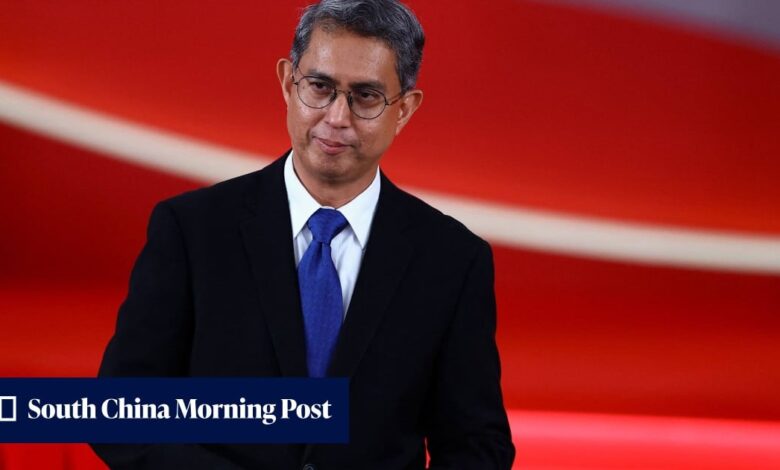
Prime Minister Lawrence Wong moved quickly to accept the resignation and arrange for a replacement. Analysts noted that the swift action was necessary to prevent potential leaks, as the woman involved was a member of the public rather than a member of the ruling People’s Action Party (PAP). Unlike party members who could be subject to internal counseling or disciplinary measures, the status of the individual as an external party required a decisive public response to contain the situation.
Mr. Ibrahim’s position as the acting minister-in-charge of Muslim affairs added a layer of political sensitivity to the matter. Analysts indicated that the Prime Minister had to be particularly mindful of the reaction from the Muslim community. Allowing the matter to linger without a clear resolution was viewed as a source of potential embarrassment for the community and the government. Consequently, the decision was made to swiftly extinguish the issue by securing a replacement for the portfolio.

Political Context and Response
The ruling People’s Action Party (PAP) emphasized the importance of maintaining strict standards of conduct among its ministers. The resignation marks a significant personnel change in the Cabinet, with the focus now shifting to the appointment of a new minister to oversee Muslim affairs. The government’s prompt handling of the situation underscores its strategy to manage reputational risks associated with high-profile political figures.
While the specific details of the interactions remain private, the fact that harassment accusations were filed by both parties highlights the complexity of the personal dispute. The government’s response prioritized institutional integrity and public confidence over detailed public disclosure of the private conduct.
Mr. Ibrahim’s departure from both the Cabinet and Parliament represents a complete exit from his current political roles. Future parliamentary proceedings will reflect this change in representation. The Prime Minister’s Office did not provide further details on the timeline for appointing a successor, but the immediate acceptance of the resignation signals that the government views the matter as concluded at the ministerial level.
This development occurs against a backdrop of heightened scrutiny on the personal conduct of Singapore’s political leadership. The rapidity of the Prime Minister’s decision-making process has been noted by observers as a strategic move to mitigate broader political fallout and maintain stability within the ruling party’s coalition.