
The immediate procedural consequence of the authorization was the freezing of assets and bank accounts belonging to the defendants, a precautionary measure ordered by the investigating judge as further inquiries continue. According to local media reports, specifically Mosaïque FM, the probe stems from suspicions that funds were laundered in connection with these fiscal violations. The legal basis for the action rests on the authority of the Economic and Financial Judicial Pole, a specialized court in Tunisia with jurisdiction over complex financial crimes. By invoking this specific judicial body, authorities signal that the case is being treated as a serious economic offense rather than a minor administrative infraction.
The central legal question in this matter is whether the alleged financial transactions constituted money laundering, a crime that requires proof that illicit funds were disguised as legitimate income. The prosecution’s case, as outlined in the initial authorization, links these suspected acts to broader tax evasion. In such proceedings, the burden lies with the judicial authorities to establish the nature of the funds and the intent behind their movement. The defense, represented by the accused and their legal teams, has consistently denied all allegations, maintaining that no such criminal activity took place. It is crucial to note that the authorization of an investigation is distinct from a conviction; the presumption of innocence remains fully intact until a final judgment is rendered.
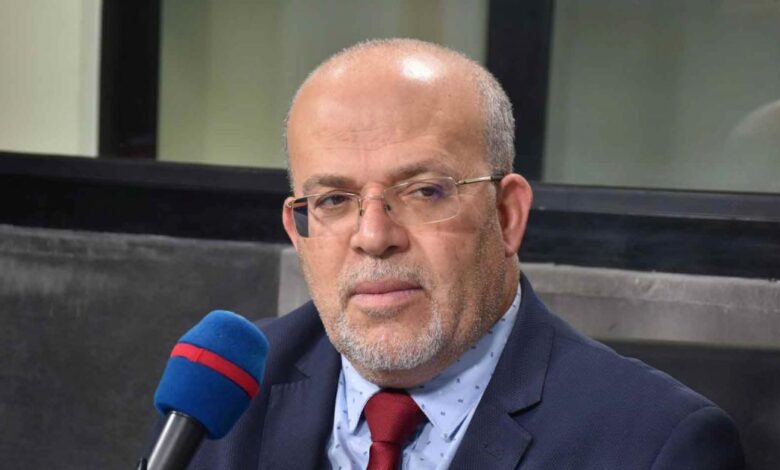
Samir Dilou’s inclusion in this investigation adds a significant layer of complexity to the proceedings. A lawyer and political activist, Dilou has served as a minister and holds a senior position within the NSF, the political front of the Islamist Ennahdha movement. He has been a visible figure in defending political prisoners and challenging judicial processes against opposition figures. His professional role as a defender of the rights of detainees places him at the center of a contentious legal environment. Observers note that the profile of the accused introduces a political dimension to what is formally a financial case, raising questions about the intersection of judicial action and political confrontation in Tunisia.
This development is part of a wider pattern of judicial scrutiny that has intensified over the past year. Tunisian authorities have detained several opposition figures, lawyers, and civil society activists, pressing charges that range from undermining public order and compromising state security to collusion with foreign entities and incitement to chaos. Notable figures targeted by recent proceedings include Ennahdha leader Rached Ghannouchi, NSF head Ahmed Najib Chebbi, and former ministers Reda Belhaj and Ghazi Chaouachi. Some of these individuals have already received prison sentences, with the latest issued just two weeks prior to the current investigation. The current wave of prosecutions follows extraordinary measures imposed by President Kais Saied since July 25, 2021, which included dissolving parliament and issuing laws via presidential decrees.
The political context surrounding these legal actions is deeply contested. Authorities insist that all measures respect judicial independence and follow established legal procedures without political interference. They emphasize that the financial pole’s actions are based on specific evidence from the anti-tax evasion unit. Conversely, opposition forces have condemned the government’s actions as repression against political adversaries, arguing that the legal system is being used to silence dissent. Political parties critical of the presidential moves have described the broader constitutional changes as a “coup against the constitution,” while supporters argue they constitute a “correction” of the post-2011 revolution trajectory. This divergence in interpretation highlights the difficulty in separating purely legal matters from their political resonance in the current Tunisian landscape.
For the defendants, the immediate impact is the restriction of their financial liquidity due to the asset freezes. For the wider public, the case serves as a focal point for debates on the rule of law and political freedom. The investigation into the law firm and its partners suggests that the scope of the inquiry may extend beyond the individual defendants to include institutional liability. As the investigating judge continues to gather evidence, the case will likely proceed through standard pre-trial phases, including potential hearings where evidence can be tested. The outcome will depend on the judicial findings regarding the legitimacy of the financial transactions in question.
Return to the opening moment of the authorization, the decision by the Public Prosecutor to act on the report from the Research and Anti-Tax Evasion Unit sets the stage for a protracted legal process. The next confirmed legal step is the continuation of the investigation by the investigating judge, who will determine whether there is sufficient evidence to proceed to trial. For now, the frozen assets remain in place, and the three lawyers continue to await the next formal stage of the judicial proceedings.