
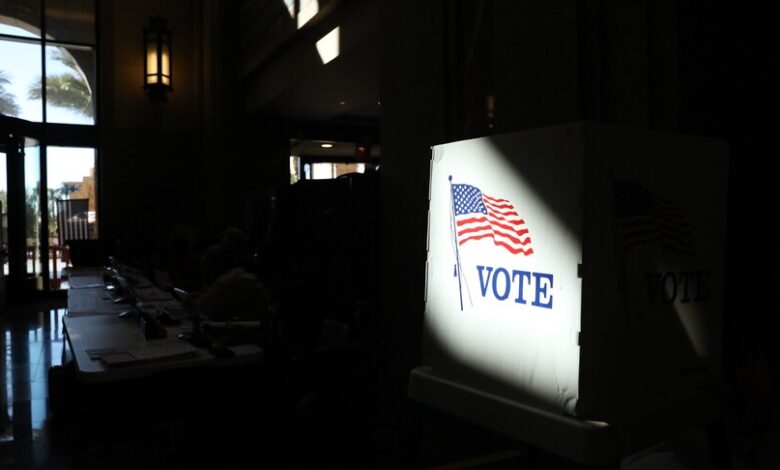
According to the Real Clear Politics (RCP) average of national and state polls, Democrats are projected to win 227 seats in the 435-member House, compared to 182 for Republicans. With 218 seats required for a majority, the current data suggests a Democratic victory, although 26 seats remain in a tight race where the gap is narrowing. In the Senate, where 35 of 100 seats are up for election, RCP projects a 47-45 split in favor of Democrats, with eight states remaining in a dead heat. The outcome of these eight races will be decisive: if Republicans win at least five of them, they would secure 50 seats. In the event of a 50-50 tie, Vice President JD Vance, serving as President of the Senate, would cast the tie-breaking vote, potentially securing a Republican majority. Currently, Republicans hold a 53-45 lead in the Senate, with two independents who frequently caucus with the Democrats.
The political stakes are heightened by the historical tendency for the president’s party to lose seats in midterm elections. However, Democrats are hoping for a repeat of the 2006 “Blue Wave,” the last time they captured both chambers simultaneously. CNN analysts note that such a dual-chamber shift is rare. The central battle for the House is being shaped significantly by redistricting, a process that has altered the competitive dynamics in several key districts.
In Florida’s newly drawn coastal district, the redistricting process has increased Republican competitiveness in an area where approximately 25% of residents are Jewish, according to demographic data analyzed by The Miami Herald and Sun Sentinel. Incumbent Moskowitz, backed by AIPAC, is emphasizing the protection of the Affordable Care Act, Medicare, and SNAP benefits. His opponent, Singer, who holds the endorsement of the Republican Jewish Coalition, is focusing on lowering taxes and reducing government spending to combat inflation. “Obviously we’d like to see prices come down; some items have come down. Government can do two things: lower taxes, and cut spending,” Singer stated during the October 27 forum. Both candidates expressed strong support for Israel and rejected accusations of genocide in Gaza, though Moskowitz has recently called for an end to the war with Iran, while both supported Israel’s 2025 strikes on Iranian facilities.
Similarly, in New York’s Lower Hudson Valley, incumbent Republican Mike Lawler faces Democrat Cait Conley in a district that includes Rockland and Putnam counties. Lawler, who has won two consecutive elections in a historically Democratic area, is campaigning on expanding domestic energy production and stabilizing Social Security. Conley, a retired Army officer and West Point graduate, is advocating for the restoration of the full state and local tax (SALT) deduction and limiting utility company profits. “Ratepayers shouldn’t be paying for monopoly utility companies or Big Pharma to hire lobbyists to try to buy their way to political outcomes,” Conley said. The campaign has seen Israel become a prominent issue; Lawler praised Israel as a “beacon of hope,” while Conley condemned rising antisemitism in both parties as “fundamentally un-American” while distinguishing her support for Israel’s right to exist from support for Prime Minister Benjamin Netanyahu. Both candidates opposed a House amendment proposed to cut $3.3 billion in annual US assistance to Israel.

In Ohio, the race between incumbent Republican Max Miller, a former Trump White House aide, and Democrat Brian Poindexter, a union ironworker, underscores the economic divide in the country. Miller is highlighting tax cuts and eliminating taxes on tips and overtime, while Poindexter is focusing on manufacturing jobs and collective bargaining. Poindexter has directly linked rising prices to the administration’s tariffs and the war in Iran. “The war in Iran has driven up the cost of gas. The blanket tariffs have driven up the cost for our farmers, leading to increased prices at the grocery store and everyday goods,” Poindexter told 3News on October 29. This race has also drawn attention to personal misconduct allegations involving both candidates, with Miller facing domestic abuse accusations from his ex-wife, Emily Moreno, daughter of Republican Senator Bernie Moreno.
The Cook Political Report has labeled 21 House seats as “toss-ups,” with 16 held by Republicans and five by Democrats. This data suggests that Democrats would only need to flip one or two seats to regain the majority. While affordability and inflation remain the central domestic issues, foreign policy—specifically the relationship with Israel and the ongoing conflict with Iran—has become increasingly intertwined with these internal debates. As the November 3 election approaches, the final balance of power in Washington will depend on how voters respond to these combined economic and geopolitical pressures in the remaining competitive districts.