
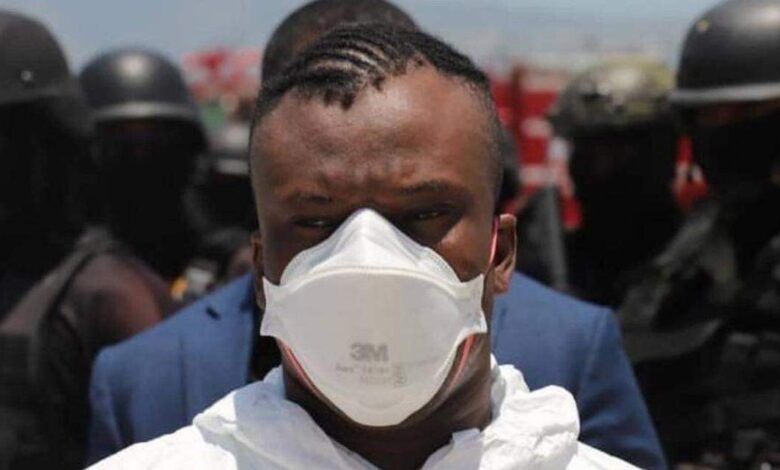
Judge John D. Bates of the U.S. District Court for the District of Columbia ordered Germine to serve life without the possibility of supervised release and pay a fine of $1,700. The sentencing follows a trial in which prosecutors argued that Germine, who was already serving a 35-year sentence in Haiti for arms trafficking and money laundering, used the hostages as leverage to secure his freedom from prison. “No remorse has been shown by Mr. Germine. No acceptance of responsibility,” Judge Bates stated during the proceedings.
The victims, members of the Ohio-based Christian Aid Ministries, were abducted on October 16, 2021, while returning from a visit to an orphanage near Port-au-Prince. The group consisted of 12 adults and five children, including an 8-month-old infant and children aged 3, 6, 14, and 15. Of the 17 hostages, 16 were U.S. citizens and one was a Canadian citizen. The gang initially demanded a ransom of $17 million, or $1 million per victim. After receiving $350,000 for the release of three victims, the gang refused to free the others, seeking instead to negotiate Germine’s release from prison.
According to court documents, Germine directed the gang’s operations from behind bars using unmonitored cellphones, maintaining constant contact with other 400 Mawozo leaders, many of whom were his relatives. Prosecutors asserted that he controlled the gang’s finances, supplied its weapons, and directed its activities. U.S. Attorney Jeanine Pirro stated in a statement that Germine’s scheme to use the hostages as pawns to win his own freedom had backfired.
The remaining 12 hostages were held for 62 days in rural captivity. They escaped under the cover of night on December 16, 2021, walking for five hours through the Haitian countryside before being secured by the FBI and flown out of Haiti. In a notable development during the sentencing, several victims addressed the court. Ray Noecker, whose wife and five children were among the hostages, told Germine that he hoped he would find “God’s peace,” stating that “true freedom is found inside your own heart.”
Germine’s defense attorneys contested the narrative of his leadership, arguing that he was not the head of the gang but rather a local figure who became involved in politics after allowing farmers to cultivate crops on his land. “Mr. Germine genuinely tried to help his countrymen, especially those that did not have much,” his lawyers wrote, suggesting he attempted to fill service gaps left by the Haitian government. However, the court’s conviction rejected this characterization, finding sufficient evidence of his central role in the kidnapping conspiracy.
The sentencing is part of a broader strategy by U.S. federal authorities to target Haitian gang leaders for international crimes. This follows the unsealing of an indictment in August against Jimmy “Barbecue” Cherizier, head of the G9 Family and Allies gang coalition. Cherizier, a former Haitian National Police officer, faces charges of violating U.S. sanctions and funneling funds from the Haitian diaspora to his criminal enterprise. He has been under U.S. sanctions since 2020 and is designated a Foreign Terrorist Organization leader.
Legal experts note that this case sets a precedent for extraterritorial jurisdiction in cases involving non-state actors in Haiti. By securing a conviction and a life sentence, the U.S. judicial system has demonstrated its willingness to hold individuals accountable for crimes against U.S. nationals regardless of where the offenses were committed. The 400 Mawozo gang, which operated in the Croix-des-Bouquets area east of Port-au-Prince, had evolved from a group engaged in petty crime into a major kidnapping ring, a trajectory that prosecutors cited as evidence of the gang’s institutional power and reach.
With the sentence now final, Germine will be transferred to a U.S. federal facility to serve his term. The case concludes the judicial proceedings related to his specific conviction, though the broader context of gang activity in Haiti remains an ongoing area of concern for U.S. law enforcement and diplomatic officials.