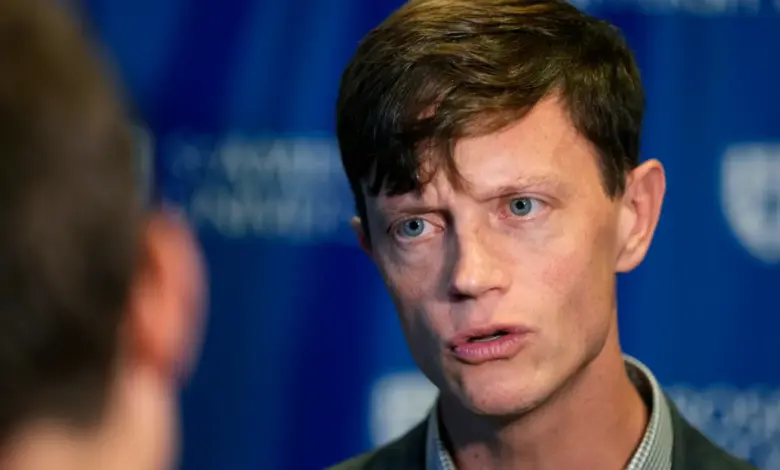
Sand’s victory is politically significant not only because it restores a Democrat to the top executive office for the first time since Chet Culver’s tenure ended in 2006, but because it occurred in a state that has increasingly aligned with the national Republican base. In the 2024 presidential election, Donald Trump carried Iowa by more than 13 percentage points. Trump had explicitly endorsed Lahn, a first-time candidate and businessman, making Sand’s win a notable exception to the broader GOP momentum in the region. Prior to this election, Sand was the only Democrat holding a statewide office in Iowa, a position he held after narrowly winning reelection as state auditor in 2022.
The campaign highlighted deep ideological divides, particularly regarding education and healthcare. Sand, who previously served as an assistant attorney general where he led the investigation into a multi-state lottery-rigging scheme, campaigned on themes of government accountability and bipartisanship. A central pillar of his platform was opposition to Iowa’s education savings account program, commonly known as the voucher program. Sand argued that the policy, which directs public funds toward private school tuition, detracts from necessary investments in public schools. In contrast, Lahn defended the initiative, asserting that parents deserve expanded choices in their children’s education. Lahn, who previously worked for the conservative advocacy group Americans for Prosperity and co-founded a private school in Kansas, leaned heavily on his business experience as a counterpoint to Sand’s legal and administrative background.
Healthcare policy also emerged as a major fault line. Sand called for an end to the privatization of Medicaid, seeking to expand access to care and address concerns over affordability. Both candidates acknowledged serious public health challenges in the state, specifically citing poor water quality and Iowa’s status as having the second-highest rate of new cancer diagnoses in the nation. However, their proposed solutions diverged, reflecting their broader partisan stances on the role of state intervention in the economy and social services.
The financial scale of the race underscored the high stakes of the contest. Campaign finance reports covering the period from mid-July through mid-October indicated that the two candidates combined to spend over $46 million. Sand accounted for approximately $29 million of that total. Lahn raised slightly more in contributions during that window, with a significant portion of his funding sourced from the Republican Governors Association’s Right Direction PAC. Sand, conversely, received millions in support from the Democratic Governors Association. This level of spending suggests that national party organizations viewed the Iowa governorship as a critical battleground worthy of substantial investment.
Sand’s political identity is distinct within the modern Democratic party. He has frequently discussed how his Christian faith informs his policy positions, often using the phrase “Jesus is for the little guy” to describe his advocacy for vulnerable populations. This messaging appears to have resonated with voters in a state with a strong religious tradition, allowing him to maintain a foothold in statewide politics even as the broader electorate shifted toward the GOP. His background in law enforcement and public audit provided a foundation for his campaign’s focus on transparency and fiscal responsibility, themes that likely appealed to moderate and independent voters frustrated with partisan gridlock.
Despite the victory, the political landscape for Sand’s administration remains challenging. He will take office in January, but the machinery of governance in Iowa is firmly in Republican hands. The GOP holds majorities in both the Iowa House and the Senate. This structural reality means that any legislative agenda Sand wishes to pursue—whether it involves defunding the voucher program, reforming Medicaid, or addressing infrastructure and health crises—will require negotiation with a legislature that elected his opponent. The ability to enact change will depend less on the mandate of the governor’s office and more on the governor’s capacity to build coalitions across party lines.
The outcome leaves several questions unresolved regarding the trajectory of the state’s policies. While Sand has the executive authority to propose budgets and appoint officials, the legislative majority can block key initiatives. The coming months will test whether Sand’s stated commitment to cross-party cooperation can translate into tangible policy results or if the institutional divide between the executive branch and the legislature will persist. For now, the result stands as a clear signal that while Iowa’s electorate trends Republican in national races, competitive statewide contests remain volatile, and the specific appeal of local candidates can still disrupt broader partisan patterns.