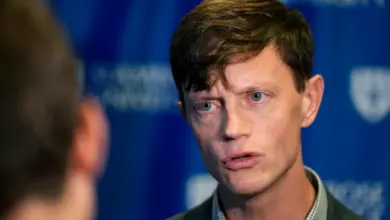
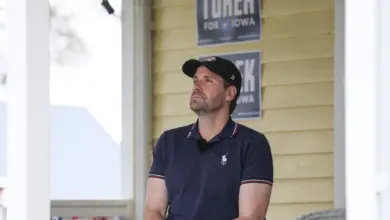
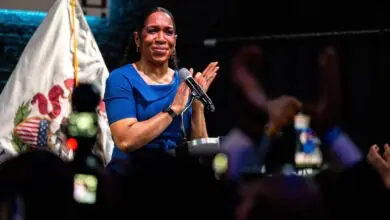
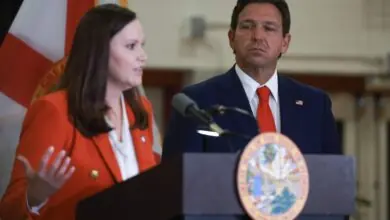
The political significance of this result extends beyond a single seat. For Husted, a 59-year-old former lieutenant governor, defeat presents an uncertain future after a long tenure in public office. Conversely, the win cements Brown, 73, as the most successful Democrat in Ohio over the last three decades. The race was decided in the context of a national political climate that exposed specific vulnerabilities for the Republican candidate, particularly regarding economic concerns and infrastructure disputes that resonated deeply with Ohio voters.
The path to this election was shaped by the institutional mechanics of Senate vacancies. When Vance resigned to serve as Vice President, Republican Governor Mike DeWine appointed Husted to fill the seat. Husted had been running for governor, a position he had long coveted, but the vacancy forced a strategic pivot. By accepting the Senate appointment, Husted avoided a potentially grueling Republican primary against Vivek Ramaswamy, a friend and businessman who was also preparing to launch a campaign for governor. Husted retained his $6 million gubernatorial war chest, a maneuver some GOP observers described as a “Plan B.” Despite this strategic advantage, Husted’s campaign faced persistent scrutiny, with critics suggesting he ran a halfhearted effort because the Senate was not his primary ambition.

At the core of the campaign’s intensity was the issue of data center construction for artificial intelligence companies. As a tech-focused lieutenant governor, Husted had championed data centers as a necessary part of the future. Brown and other Democrats relentlessly exploited this position, framing it as a liability that ignored local concerns. The issue loomed so large that the National Republican Senatorial Committee warned in an August memo that it could doom the candidacy. This local fight mirrored broader national anxieties about the economy, affordability, and the impact of emerging technologies on communities. Additionally, the race was influenced by the national climate surrounding the war with Iran and a related rise in gas prices, which further complicated the incumbent’s position.
The campaign featured an onslaught of negative television ads, with both sides trading sharp attacks. Republicans framed Brown, who has spent 50 years in public office, as a career politician with little to show for his tenure. In response, Brown characterized Husted as an unflinching Trump loyalist, highlighting his support for the Iran war and his initial vote against the release of the Jeffrey Epstein files. The dynamic was further complicated by spillover effects from Ohio’s other marquee race: the battle for governor. In the closing weeks, an ad raised concerns that backlash against Republican Vivek Ramaswamy could hurt Husted. Ramaswamy’s campaign had spent $4 million on an attack ad featuring the estranged mother of his Democratic rival, Amy Acton. Acton has not seen her mother since her then-stepfather was charged with raping her as a child nearly 50 years ago. This controversy added a layer of reputational risk to the Husted campaign in the final stretch.
President Donald Trump mounted a vigorous defense to keep Husted in the seat, rallying with him in the state twice in nine days. Both rallies included cameos from Jon Gruden, the former NFL coach who played football with Husted at the University of Dayton. At a rally in Youngstown on October 12, Trump focused on Husted’s physical form, a detail he claimed to have learned from Gruden. “I started examining his body, because I didn’t know he was a great athlete,” Trump said. “And I looked, and I watched up and down, and I looked at his ass, and I looked at the whole, and then I looked at his hands. … He’s got these, like, claws, and I got it. You are a great athlete. I didn’t know that, because he doesn’t talk about that. Congratulations! Now they finally know.” Despite this high-profile support, the combination of economic concerns and local issues proved decisive for voters.
The outcome leaves the Senate composition in Ohio shifted back to Democratic control for the remainder of the term. For Husted, whose early endorsement from Trump helped him avoid a messy primary, the defeat closes a chapter on his political career with unresolved questions about his next steps. The next political development will focus on the transition of power in the seat and the implications of Brown’s return for the state’s legislative agenda, while the governor’s race continues to unfold without the direct interference of the Senate contest.