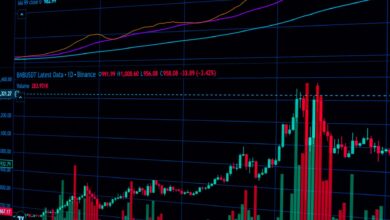
This transition has triggered a wave of selling among AI-related stocks, a trend that rippled across global markets. Asian shares stumbled on Monday, weighed down by tech weakness ahead of Nvidia’s earnings release. The concern among traders is specific and measurable: Huang’s tenure was defined not just by chip design, but by an aggressive strategy of financial entanglement with the broader AI ecosystem. Investors fear that a new management team may rein in the financial guarantees and equity stakes that have propped up the industry’s most ambitious projects.
The scale of Nvidia’s financial footprint is the crux of the debate. According to JPMorgan strategist Michael Cembalest, who publishes the widely followed “Eye on the Market” commentary, Nvidia’s broader financial commitments have reached an estimated $530 billion, based on the company’s latest quarterly securities filing. These commitments are not merely theoretical; they represent a complex web of investments and backstops that have stabilized a volatile sector. Under Huang, Nvidia built an extensive investment portfolio, including a $5 billion stake in Intel secured last year and an additional investment in AI cloud provider CoreWeave earlier this year. Nvidia also helped anchor CoreWeave’s IPO in 2025 and participated in the company’s 2023 Series B funding round.
Perhaps the most significant element of this financial architecture is the $105 billion backstop provided for a sprawling data center project intended for OpenAI. Such instruments are critical for heavy infrastructure projects that require massive upfront capital. If the new leadership scales back these guarantees, the immediate impact would be felt by heavily indebted companies in the “neocloud” sector—computing providers that rely on Nvidia’s creditworthiness to secure their own financing. The market’s recent stumble reflects a reassessment of the risk profile associated with these entities, which are no longer viewed solely as technology firms but as leveraged bets on Nvidia’s continued generosity.
However, prominent voices in the financial community argue that the panic is disproportionate to the actual economic fundamentals. Cramer, host of CNBC’s “Mad Money,” insisted that the AI boom is not a single-point-of-failure system dependent on one individual. “The most important thing you need to know is that Nvidia is not going to bring down the western world,” Cramer said. “It is not going to bring down the data center world.” He rejected the notion that the industry relies entirely on the chipmaker’s backing, stating, “The idea that he was somehow all of the AI world is ludicrous.”
The argument rests on the distinction between financial support and underlying demand. While Huang’s departure may lead to a more conservative approach regarding Nvidia’s own balance sheet, the demand for computing power remains a structural reality independent of any single executive. Cramer expects Kress to take a more measured approach, potentially scaling back some of Nvidia’s financial commitments. “Will there be a rein in of guarantees? I hope so. Will Nvidia be more conservative? I am sure of it,” he said. Yet, he maintained that this shift would not stop the AI build-out. “Will artificial intelligence be stopped in its tracks? Are you kidding me?”
The uncertainty lies in the transition period. Businesses and consumers are watching to see if the tightening of Nvidia’s purse strings will translate into higher costs or slower deployment of AI services. For the neoclouds, the change could mean a harder time securing credit, potentially slowing the expansion of data centers. For the broader market, the question is whether the $530 billion in committed capital is a sign of over-leverage or a necessary foundation for the next phase of technological growth. JPMorgan’s estimate highlights the magnitude of the exposure, but Cramer’s counter-argument suggests that the revenue generated by actual chip sales and data center usage is robust enough to sustain the ecosystem even if the speculative financial layer thins out.

Market sentiment may find a new anchor later this week with the anticipated IPO of Anthropic. Cramer suggested that a successful listing for the AI firm could restore confidence, noting, “If the Anthropic deal works later this week, look out – we might see investors scrambling to get back into the same stocks that were sold today.” This potential catalyst underscores the market’s search for validation that the AI trade remains viable beyond the shadow of its most famous leader.
As Nvidia prepares to report its earnings, the focus remains on what Kress will say about the company’s future financial posture. Will she signal a retreat from the aggressive guarantee model, or will she reaffirm the support structure that has allowed the AI infrastructure race to accelerate? The next few days will determine whether the market views the leadership change as a necessary correction toward financial discipline or a crack in the foundation of the world’s most valuable technology sector. For now, the data shows a market in flux, balancing the tangible demand for chips against the intangible risk of a shifting corporate philosophy.