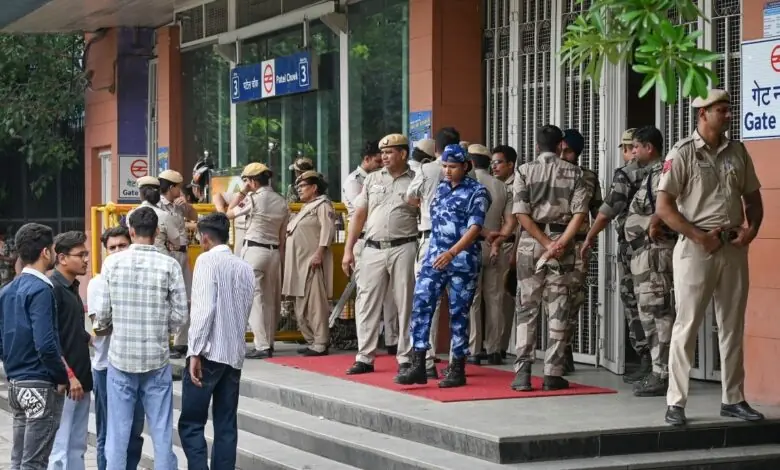
The closures, which began on Thursday, July 23, and continued through Friday, July 24, affect major transit hubs including Rajiv Chowk, Mandi House, Central Secretariat, and the New Delhi station. The DMRC specified that entry and exit gates at these stations would remain shut from 7:30 am until further notice. While the New Delhi station was added to the closure list in a revised announcement, interchange facilities remained available at Rajiv Chowk, Mandi House, and Central Secretariat, allowing passengers to transfer lines without exiting the platform.
The transit shutdowns are part of broader security measures imposed following clashes during the “Sansad Chalo” march organized by the student group, identified in reports as the Cockroach Janta Party (CJP). The protest, staged indefinitely at Jantar Mantar, centers on demands for accountability regarding irregularities in competitive examinations, specifically the NEET-UG paper leak. Protesters are also calling for sweeping reforms in the examination system and the resignation of Union Education Minister Dharmendra Pradhan.
The impact on daily life in central Delhi has been substantial. With key roads barricaded and metro services suspended, office-goers and students have been forced to rely on alternative routes. These detours have resulted in longer travel times and increased transportation costs. Public transport systems have experienced heightened pressure as ridership shifts from the closed metro stations to available bus and auto-rickshaw services.
Commercial and Security Implications
The disruptions have spilled over into the commercial sector, particularly in Connaught Place, one of the capital’s busiest business districts. In a precautionary measure, traders in the area were advised to shut shops, offices, and restaurants by 6:30 pm on Thursday. Delhi Police issued similar advice to the general public, urging them to avoid unnecessary travel to the New Delhi area to ensure safety and manage crowd density.
Security arrangements in the region have been intensified since the earlier “Sansad Chalo” march, which resulted in clashes. Police have imposed restrictions around key government installations and increased their presence in the surrounding areas. The DMRC stated that normal services at the affected stations would resume only after fresh instructions are issued by security agencies, indicating that the closures are tied directly to the status of the protest and the prevailing security environment.
The scale of the disruption has evolved over the past few days. Initial reports on Monday noted the closure of five stations due to security concerns, with hundreds of commuters scrambling for alternative transport. By Wednesday, 16 stations had their entry and exit gates closed for seven hours. The situation escalated on Thursday and Friday, with the closure list expanding to 17 and then 18 stations, marking the third straight day of significant transit interruption in the capital.
As the protests continue, the lack of a clear timeline for the reopening of these stations adds uncertainty for the millions who rely on the metro daily. The authorities have not provided a definitive date for the restoration of normal services, leaving commuters to navigate a fragmented transit network in the heart of the city.