
The environmental and human toll stems from a succession of severe weather events, specifically Tropical Storm Priscilla and Tropical Storm Raymond. According to reports from Direct Relief, these storms made landfall with heavy rains that caused flash flooding and rising waters in Veracruz, Hidalgo, Puebla, San Luis Potosi, and Queretaro. A succession of storms has made 2025 one of the rainiest years on record in Mexico, compounding the impacts of Priscilla’s heavy rains in early October with the new deluges from Raymond. The national coordinator for civil defence, Laura Velazquez, confirmed that downpours in central and southeastern parts of the country led to overflowing rivers, landslides, road collapses, and power cuts in numerous municipalities. In Hidalgo alone, authorities reported at least 22 people dead, 1,000 homes damaged, and 90 communities inaccessible to rescuers, while Puebla reported nine deaths and approximately 80,000 people affected.
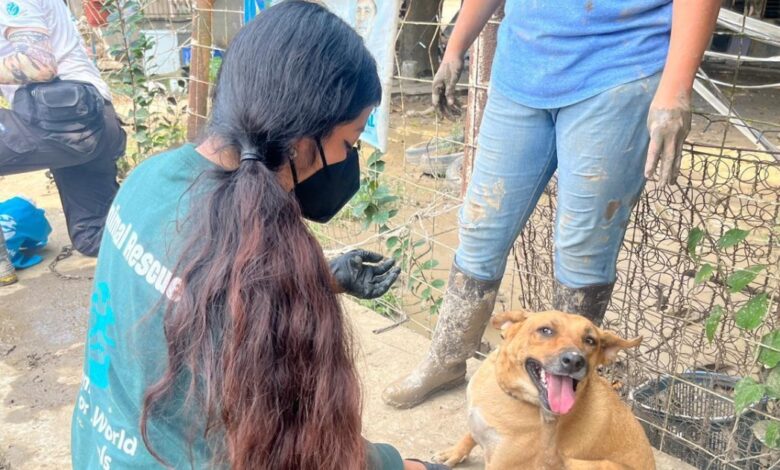
As the waters recede, the immediate danger shifts from drowning to disease and contamination. Gaia Bonini, program director of international response for Humane World for Animals, highlighted that homes, streets, and communities are left coated in inches of contaminated mud. Unowned animals, deprived of shelter and clean water, are foraging for food in this muck. This behavior creates a significant public health vector; Bonini noted that exposure to such conditions spreads diseases like leptospirosis, which can transmit between animals and people. “Caring for these animals isn’t just about compassion, it’s essential for the health and safety of the whole community,” Bonini stated. The scientific reality is that zoonotic diseases thrive when sanitation infrastructure fails, turning the recovery phase into a secondary health emergency for both humans and wildlife.
Response efforts have been mobilized on two fronts: medical aid for humans and specialized veterinary care for animals. Direct Relief has dispatched field medic packs, emergency medicines, antibiotics, and wound care supplies to support post-flood health services. These supplies were sent to Mexico’s Secretariat of National Defense (SEDENA), the Guerrero Ministry of Health’s Urgent Care Unit mobilizing to Veracruz, and the nonprofit Medical IMPACT. Simultaneously, Humane World for Animals deployed a team of veterinarians and disaster management experts to assess needs in Veracruz. Their work involves creating safe, nurturing environments for rescued animals while addressing the immediate survival needs of those left without food or clean water.
The scale of the infrastructure damage underscores the severity of the weather patterns. Authorities reported that power outages affected more than 320,000 users, and damage to almost 1,000 kilometers of roads in six states has blocked access for residents and rescue teams. In Veracruz, the navy evacuated nearly 900 people to shelters, and the federal government deployed more than 8,700 military personnel to monitor, evacuate, and clean up affected areas. President Claudia Sheinbaum, following a meeting with local officials, confirmed the deployment of 300 personnel in Puebla, Veracruz, and San Luis Potosí, along with 18 vessels, six helicopters, and three water purification plants. Despite these efforts, residents continue to experience inaccessible and blocked roads, and search and rescue teams are still looking for missing persons as storm winds and rains persist.
The convergence of extreme rainfall and existing vulnerabilities has created a complex recovery landscape. While the immediate threat of the storm has passed in some areas, the presence of contaminated mud and the spread of disease pose ongoing risks. The documented presence of animals foraging in hazardous conditions highlights the interconnectedness of human and animal health in disaster zones. As cleanup operations continue, the focus remains on restoring basic services, including electrical grids and road networks, while ensuring that both human and animal populations are protected from the secondary effects of the floodwaters. The situation in Veracruz remains critical, with the full extent of the damage to both communities and local ecosystems still being assessed.