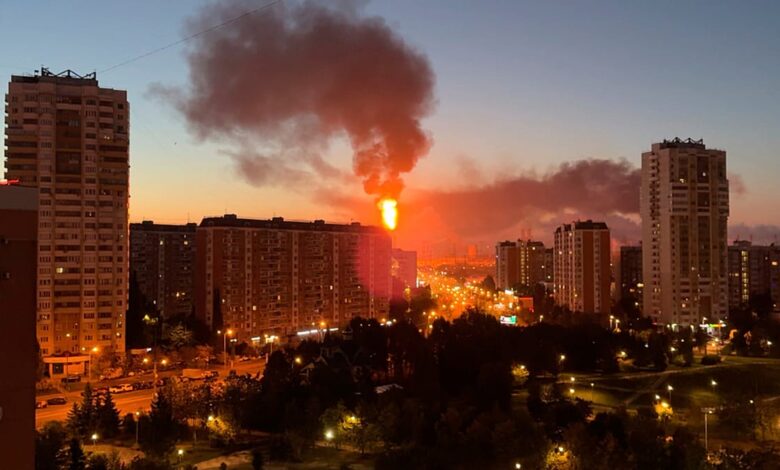
The attack has immediate implications for Russian fuel distribution, particularly in the northwest, where the plant supplies aviation fuel to St Petersburg’s Pulkovo airport in addition to petrol, diesel, and petrochemical products. Leningrad Governor Alexander Drozdenko stated that air defenses shot down 113 drones targeting the region, though debris from one drone struck a residential building in Vsevolozhsk, killing one resident. The refinery has been targeted multiple times by Ukrainian forces since the start of Russia’s full-scale invasion in February 2022. The parent company, Surgutneftegaz, has been subject to sanctions from the EU, US, and UK since 2025.
Concurrent with the strike, Rosneft announced caps on petrol and diesel sales at its filling stations, effective Monday. The restrictions apply in Karelia, Buryatia, Zabaykalsky Krai, and the Novosibirsk, Arkhangelsk, and Penza regions. In urban areas, customers are limited to 30 litres of petrol per transaction, while motorway limits are set at 50 litres. In Krasnoyarsk Krai, separate limits were established: 30 litres of AI-95, 50 litres of AI-92, and 100 litres of diesel per customer. Authorities in the Leningrad region also recommended similar caps of 30 litres for petrol and 50 litres for diesel per transaction.
Broader military exchanges continued throughout the week. Russia’s Defence Ministry claimed its forces shot down 430 Ukrainian drones across 14 regions and occupied Crimea overnight; Euronews could not independently verify these figures. Conversely, Ukraine’s air force reported that Russian forces launched 317 Shahed drones since Monday evening, including 105 jet-powered variants. Ukrainian authorities stated that 276 of these were shot down, with impacts recorded in 31 locations and falling debris in nine others.
The conflict has caused significant civilian casualties across Ukraine. A drone strike on a food warehouse in Odesa on Monday morning killed three people and left one in serious condition. In the Dnipropetrovsk region, two people were killed and seven injured. Overnight into Tuesday, nine people, including children, were injured in Kharkiv region, while six people, including one child, were wounded in Zaporizhzhia. In Poltava region, a drone strike on Kremenchuk injured seven people, including a 16-year-old, and destroyed a rehabilitation centre for children with disabilities. Additionally, three power workers were injured in Sumy when a Russian strike hit their vehicle on Monday morning.
In Kamyshivakha, Russian forces struck rescue teams with drones three times as they cleared rubble from a previous air strike on 2 November that killed 55 people. Up to 19 individuals may remain trapped under the debris, with police having identified 30 of the dead. The next operational milestone involves the ongoing assessment of the KINEF refinery’s damage and the extent of the resulting fuel supply constraints in the affected Russian regions.