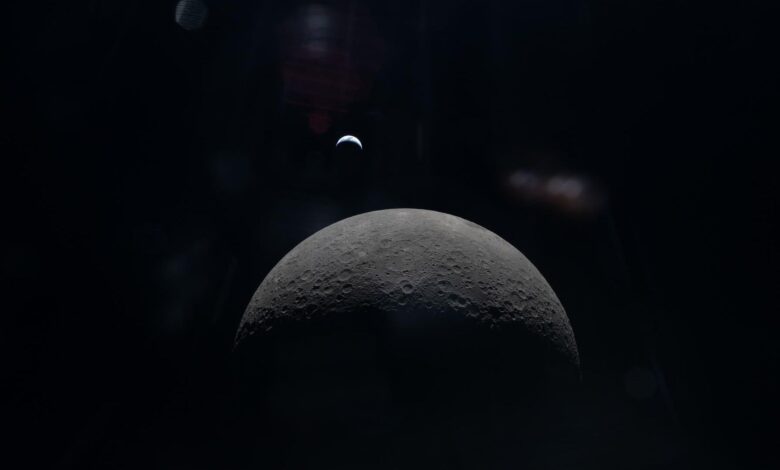
The Artemis II mission, which launched on April 1, 2026, at 6:35 p.m. EDT from Launch Pad 39B at NASA’s Kennedy Space Center in Cape Canaveral, Florida, was designed to test NASA’s Orion spacecraft, Space Launch System rocket, and life-support systems. The nearly 10-day journey was not merely a symbolic milestone but a rigorous engineering validation. Its primary scientific and operational objective was to verify the safety and reliability of the hardware required for the next phase of the program: Artemis III, a mission scheduled for 2027 that will test rendezvous and docking capabilities between Orion and commercial human landing systems in low Earth orbit before attempting a lunar landing.
Commander Reid Wiseman, who led the mission, provided a firsthand account of the operational challenges encountered during the flight. In a recent interview, Wiseman described a moment of genuine fear when he observed that the Orion spacecraft had traveled farther from Earth than anticipated. He recalled thinking he would be lost in space forever, a sentiment that underscores the high-stakes nature of deep space navigation. This incident highlights the critical importance of the mission’s data collection; every anomaly, including unanticipated trajectory deviations, provides essential feedback for refining the algorithms and systems that will be relied upon by future crews. While the mission was ultimately successful in completing its lunar flyby, such moments of uncertainty are integral to the iterative process of spaceflight development, distinguishing between theoretical models and the complex realities of actual spaceflight.
As the mission concluded, the focus of the crew shifted from active spaceflight to the preservation and transfer of institutional knowledge. In September, both Wiseman and Victor Glover, who served as the mission pilot, transitioned to the status of emeritus astronauts at NASA’s Johnson Space Center in Houston. This program allows individuals with high degrees of technical and professional knowledge to continue supporting the agency by donating their time to train and mentor the current workforce. This structure ensures that the agency maintains access to top talent in a specialized consultant role while providing the individuals with the flexibility to pursue other opportunities.
Wiseman’s background includes 165 days aboard the International Space Station prior to commanding Artemis II. Glover, a naval aviator and test pilot, brought experience from the Crew-1 mission to his role on Artemis II. Both men are committed to transferring their specific expertise. Glover is focused on sharing his knowledge of Orion and its spacecraft systems, while Wiseman is set to share his spaceflight experience with colleagues ahead of the Artemis III mission. NASA Administrator Jared Isaacman noted that both astronauts exemplify the leadership and commitment that define the agency, stating that their continued involvement is vital as NASA prepares for the 2027 mission and those that follow.

Christina Koch, the mission specialist, is taking a different path into the post-mission phase. Beginning November 1, she will transition into a senior leadership role as NASA’s acting deputy chief engineer. In this capacity, she will help oversee technical standards, mission readiness, and engineering efforts across the agency. This move aligns with the broader goal of integrating the lessons learned from Artemis II directly into the engineering and operational frameworks of subsequent missions. Vanessa Wyche, director of NASA’s Johnson Space Center, emphasized that the commitment and steady leadership of the crew have made a lasting impact on the astronaut corps.
The transition of the Artemis II crew to mentoring and leadership roles illustrates a critical aspect of modern space exploration: the value of experienced personnel in sustaining momentum between major missions. The data gathered during the April 2026 flyby, including the navigation challenges faced by Wiseman, now serves as the baseline for the next stage of research. The immediate next confirmed research step is the preparation for Artemis III, where the focus will shift from orbital validation to the complex dynamics of rendezvous and docking with commercial landers. As the crew steps away from the cockpit, their documented experiences and technical insights remain embedded in the agency’s operational procedures, ensuring that the path to the lunar surface is paved with verified, hard-won knowledge rather than speculation.