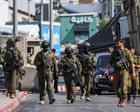
The violence has immediate implications for the political reckoning currently unfolding in Port Moresby. Members of the Papua New Guinea (PNG) parliament are preparing to decide whether to ratify the results of the 2019 Bougainville independence referendum, in which the local population voted overwhelmingly in favor of separation. However, the recent attack has emboldened critics who argue that Bougainville is not yet ready for independence. Oliver Nobetau, Pacific islands program director at the Lowy Institute, an Australian think tank, noted that the incident has affirmed Port Moresby’s concerns regarding the island’s failure to fully disarm. “Not everyone is on-side to reopen the mine,” Nobetau said, indicating that the incident has damaged the independence cause by highlighting internal disunity. Consequently, a “no” vote in the PNG parliament is now considered increasingly likely. Despite this, Nobetau cautioned that the situation is unlikely to spill over into active conflict, predicting instead a period of significant social and political tension before the parties return to the negotiating table.
Amidst these domestic uncertainties, Papua New Guinea is simultaneously forging a new strategic alignment with its neighbor, Australia. In a move that underscores the shifting geopolitical dynamics of the Pacific, Australia announced it will open recruitment to the Australian Defence Force (ADF) for students from Papua New Guinea, effective November 16. This initiative is part of a $65 million pilot program designed to recruit 100 young Papua New Guinean citizens over a two-year period. The program was formally announced during a meeting of Australian and Papua New Guinean ministers in Port Moresby, marking a tangible step in the implementation of the Pukpuk Treaty, which entered into force in July.
The Pukpuk Treaty represents a significant pivot in bilateral relations, as it allows Australia and Papua New Guinea to recruit each other’s citizens into their respective armed forces and obliges the two neighboring countries to defend one another in the event of a military attack. This mutual defense clause is a historic development, moving the relationship beyond traditional diplomatic ties into the realm of hard security guarantees. For Papua New Guinea, this partnership offers a potential stabilizing force and a new avenue for youth engagement, particularly in a nation where the mining sector remains a primary driver of economic activity and political stability.
The defense recruitment program is tightly structured. Initially, only students and recent graduates from the University of Papua New Guinea and Pacific Adventist University in Port Moresby and Lae are eligible to apply. Candidates must be between 18 and 25 years old and must have no prior experience serving in the military, police, or other state security agencies of Papua New Guinea. They are required to undergo the same rigorous security checks and meet the same standards as Australian citizens joining the ADF. The first selected candidates are expected to take their oath of allegiance at the end of 2027.
Australian Deputy Prime Minister Richard Marles emphasized that the small initial scale of the program is intentional. “The program’s small initial scale would make it possible to work out the necessary procedures before a potential expansion,” Marles stated. This cautious approach reflects the complexity of integrating foreign nationals into a major defense force. Currently, Papua New Guinean citizens will serve on temporary visas and must obtain Australian citizenship to continue their service. This requirement adds a layer of bureaucratic and legal complexity, but it also signals a long-term commitment to integrating these recruits into the Australian security architecture. Previously, Australia had allowed permanent residents from Five Eyes alliance states who did not hold citizenship to join the ADF, a right recently extended to Papua New Guinean citizens with permanent residency in Australia, with 40 applications currently being processed.
The intersection of these two developments—the internal political struggle over Bougainville’s independence and the external defense pact with Australia—highlights the dual pressures facing Papua New Guinea’s economy and society. On one hand, the Panguna mine remains a symbol of both economic hope and political volatility. The government of Bougainville has vowed not to be intimidated by the recent violence, with officials stating they will not “cower to terroristic acts of violence designed to cause disunity.” However, the economic viability of the mine is contingent on security and political clarity. If the PNG parliament votes against ratifying the independence referendum, the resulting political stalemate could further complicate the mine’s redevelopment and the broader economic integration of Bougainville into the national economy.
On the other hand, the Australian defense partnership offers a new economic and social outlet for young Papua New Guineans. By providing a pathway to military service and potential citizenship, the ADF program introduces a new dimension to labor mobility in the region. This is distinct from traditional trade or labor agreements; it is a security-driven personnel exchange that reinforces the strategic bond between the two nations. The $65 million investment in this pilot program is a modest sum in global defense terms, but it is significant for the Pacific region, where defense budgets are often constrained. It suggests that Australia is willing to invest not just in hardware, but in human capital to secure its northern flank.
The economic implications of these political and security shifts are complex. For Bougainville, the uncertainty surrounding the referendum ratification creates a risk premium for investors and contractors like Lloyds Metals and Energy. The recent arson attack, while targeted at specific equipment, signals the fragility of the local security environment. Conversely, the Pukpuk Treaty may provide a sense of external security that could stabilize the broader PNG economy, potentially encouraging investment in sectors beyond mining, such as infrastructure and education, which are prerequisites for the ADF recruitment pipeline.
As the PNG parliament prepares for its vote, the focus remains on the balance between internal autonomy and national cohesion. The Lowy Institute’s assessment suggests that while conflict is unlikely, the period ahead will be marked by intense political maneuvering. The outcome of the ratification vote will determine the next phase of Bougainville’s relationship with Port Moresby, potentially leading to a three-year plan towards independence by 2030 if the local government chooses to proceed unilaterally through the self-government model. Meanwhile, the ADF recruitment program will proceed on its scheduled timeline, with the first cohort of 100 recruits set to begin their journey toward service and citizenship by 2027. The convergence of these timelines—political independence and military integration—will define the next chapter in Papua New Guinea’s economic and geopolitical history.
Back at the Panguna mine, the burned trucks remain a potent symbol of the challenges ahead. The redeveloping mine is not just an industrial project; it is a political battleground. The ability of the Bougainville government to secure the site and demonstrate stability will be crucial in winning over skeptical members of the PNG parliament. As the dust settles from the recent incident, the next policy decision to watch is the parliamentary vote on the referendum ratification, a decision that will ripple through the local economy and the broader regional security architecture defined by the new Australian-PNG defense partnership.