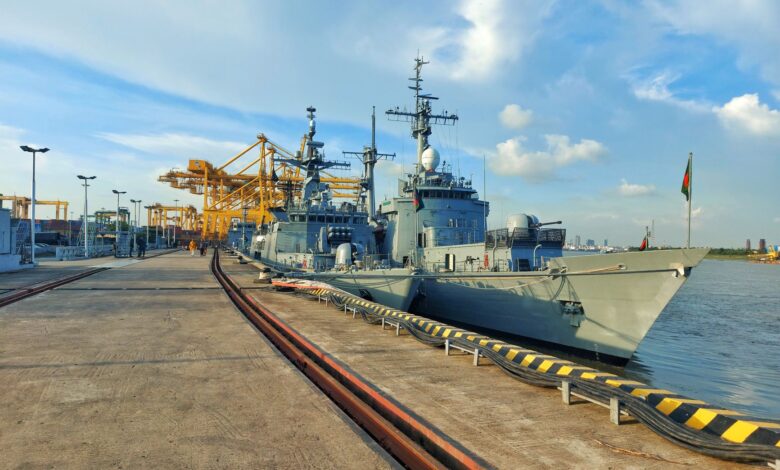
This threat materializes against a backdrop of significant military mobilization. The United States has dispatched a third aircraft carrier strike group, the USS Theodore Roosevelt, to the region, accompanied by the USS Makin Island amphibious readiness group. Together, these vessels carry more than 7,000 sailors and 2,000 Marines. With the USS George H.W. Bush and the USS George Washington already present, the US naval presence in the Middle East is set to exceed 20,000 personnel and hundreds of aircraft by early November. This deployment provides Washington with a wide range of options, ranging from intensified airstrikes to the potential deployment of ground forces to secure the strait, though some experts argue the buildup may also serve as a negotiating tactic.
The economic and strategic implications of Iran’s stated intent to target undersea cables are complex. One Iranian official told Reuters that if attacked, Tehran would seek to hinder the repair of damaged cables to prolong communication and internet disruptions. “If Iran is attacked, there will be no more red lines – from undersea cables to military bases, including secret ones,” the official stated. Earlier, Yadollah Javani, deputy head of the political office of the Islamic Revolutionary Guard Corps (IRGC), specified that Iran could target seven major internet cables in the Strait of Hormuz if Iranian infrastructure comes under fire.
However, the scale of the global impact remains a subject of expert debate. Analysts consulted by Reuters suggest that the consequences of damaging cables specifically within the Strait of Hormuz could be limited, as this area hosts less than 1% of international telecommunications network capacity. This technical nuance contrasts with the broader geopolitical signaling. While the immediate connectivity loss might be manageable, the act itself would represent a significant escalation in the nature of the conflict, expanding the battlefield from military and energy assets to critical digital infrastructure.
Simultaneously, Iran is ramping up its own military exercises, including the launch of 30 ballistic missiles in a single instance, as reported by CNN. The IRGC has unveiled new weaponry, including a device referred to as the “father of all bombs,” and threatened to use long-range missiles that could reach US airbases in Britain or the logistics hub at Ramstein in Germany. In response to these threats, the US recently moved all its long-range bombers stationed in the UK back to their home base. Moshen Rezaei, secretary of Iran’s National Security Council, asserted that there would be “zero red lines” this time, warning that targets would include oil facilities, undersea cables, data centers, and AI facilities across the Gulf.
The risk to human safety and regional stability is already manifesting in concrete administrative and economic actions. US diplomatic missions in Saudi Arabia, Bahrain, Qatar, and the UAE have issued fresh security advisories, urging American citizens to prepare for possible flight cancellations and airspace closures. On October 21, the US Department of State ordered some diplomats and their family members to depart from missions in Saudi Arabia. India has also issued warnings, with Indian airlines cancelling flights to Saudi Arabia until late October or November. Approximately 4,000 Indian pilgrims stranded in Mecca and Medina are currently being evacuated following a Houthi missile strike on Riyadh’s King Khalid International Airport that killed an Indian national.
Market forces and policy decisions are driven by the uncertainty surrounding these potential strikes. Businesses and consumers in the region face the threat of disrupted supply chains and increased insurance premiums, while global markets remain sensitive to the status of the 20% of oil trade passing through Hormuz. The timing of this escalation is inextricably linked to domestic political calendars. In the coming two weeks, both the United States and Israel face significant elections. Israeli Prime Minister Benjamin Netanyahu faces a tough electoral battle on October 27, while the US midterms on November 3 will determine control of Congress. President Donald Trump, who had previously pledged not to attack Iran before the elections, has recently intensified his rhetoric, referencing the “mother of all bombs” and suggesting strikes could occur “as soon as this weekend.”
The convergence of these factors—massive naval deployment, explicit threats to digital infrastructure, and imminent domestic elections—creates a volatile environment. The decision by Iran to consider undersea cables as valid military targets, even if the technical disruption is limited, signals a willingness to engage in asymmetric warfare that extends beyond traditional kinetic exchanges. As the region braces for potential hostilities, the focus remains on the Strait of Hormuz, where the movement of oil tankers and the silent flow of data packets both hang in the balance, waiting on the next decision from Washington, Tehran, and Jerusalem.