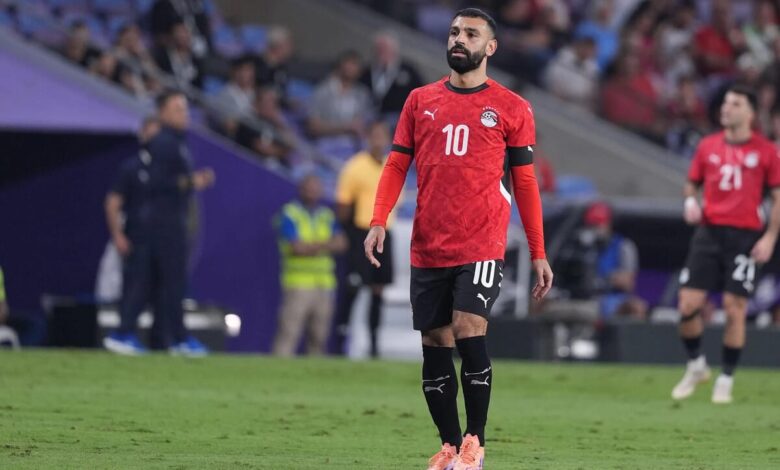
The context for this fixture is defined by the dramatic 5-0 victory Egypt recorded against Malawi just four days earlier on November 13 at the Cairo International Stadium. That emphatic win, which saw the Pharaohs top the group with seven points, was not only a decisive sporting result but also the stage for a significant individual milestone for captain Mohamed Salah. The Liverpool star scored twice in the late stages of the match, including a penalty in stoppage time, sparking a national debate regarding his position in the all-time scoring record for the Egyptian national team.
While initial reports and a celebratory cake presented by the Egyptian Football Association suggested Salah had reached 70 international goals, surpassing the legendary Hossam Hassan, official statistical revisions have placed his tally at 68 goals, one behind Hassan’s benchmark of 69. This discrepancy has added a layer of narrative to the upcoming encounter, with Salah likely to be the focal point of attention as he seeks to validate his form and potentially settle the statistical argument on the pitch.
Tactically, both managers, Callisto Pasuwa of Malawi and Ali Maher of Egypt, are expected to deploy a 4-3-3 formation. For Egypt, the match serves as a second test for Maher, who replaced Hossam Hassan as head coach on November 7. His debut was a resounding success, with the Pharaohs remaining unbeaten and scoring ten goals while conceding none in their recent matches. For the match in Lilongwe, Maher has made two rotational changes to his starting XI. Marwan Attia enters the midfield in place of Ahmed Sayed “Zizo,” while Karim Hafez takes the left-back role from Ahmed Fattouh. The rest of the lineup remains largely consistent with the Cairo squad, featuring Mostafa Shobeir in goal, a backline of Mohamed Hany, Rami Rabia, and Hossam Abdelmaguid, and an attacking trio of Mahmoud Hassan Trezeguet, Mohamed Salah, and Omar Marmoush.
Malawi, meanwhile, look to recover from a difficult stretch of form. The Flames entered the previous round in third place with three points, having won 2-1 against South Sudan but suffering a 3-1 defeat to Angola and the aforementioned 5-0 loss to Egypt. Manager Callisto Pasuwa has acknowledged his team’s struggles, particularly their slow starts and defensive errors when losing possession. In the Cairo match, Malawi conceded twice in the first ten minutes and were trailing 3-0 at halftime, struggling to contain the pace and precision of Egypt’s attacking players. For the home fixture, Pasuwa is expected to rely on experienced figures such as captain Richard Mbulu, Patrick Mwaungulu, and Lanjesi Nkhoma to galvanize a stronger performance in front of the home supporters.
The group dynamics are clear: Egypt sit atop Group B with seven points, ahead of second-placed Angola on goal difference. Malawi trail in third with three points, while South Sudan occupy the bottom spot without a point. Under the qualifying rules, the top two teams in each group advance to the 2027 AFCON finals, which will be hosted by Kenya, Tanzania, and Uganda. A win for Egypt would take them to 10 points, mathematically guaranteeing their passage regardless of the results in the final two rounds. Conversely, Malawi need a positive result to keep their own slim hopes of contention alive, though the gap in quality and recent performance suggests the visitors are heavy favorites.
Analysts and betting markets have noted the disparity between the sides, with Egypt’s dominance in the head-to-head record and their current form suggesting they will control the tempo. However, the away setting and Malawi’s desire to salvage some pride after the heavy defeat in Cairo may introduce a different defensive intensity. For Salah, the focus remains on performance; regardless of the statistical debate surrounding his goal count, his influence in the final third remains a primary threat to any opposition. As the Pharaohs prepare to add another chapter to their qualifying campaign, the task is straightforward: win the match, secure the finals place, and let the goals speak for themselves.